
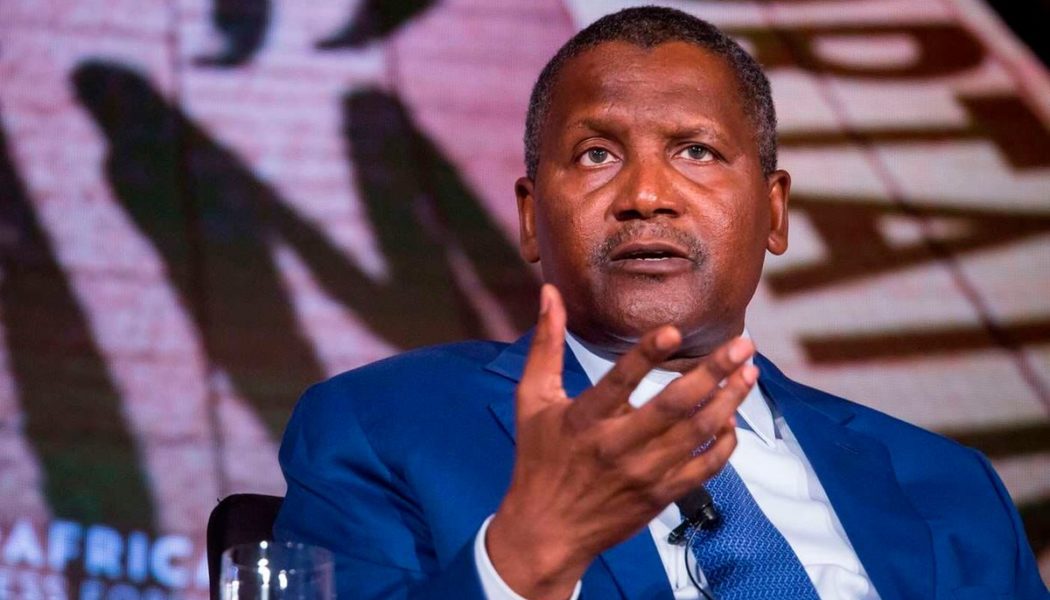
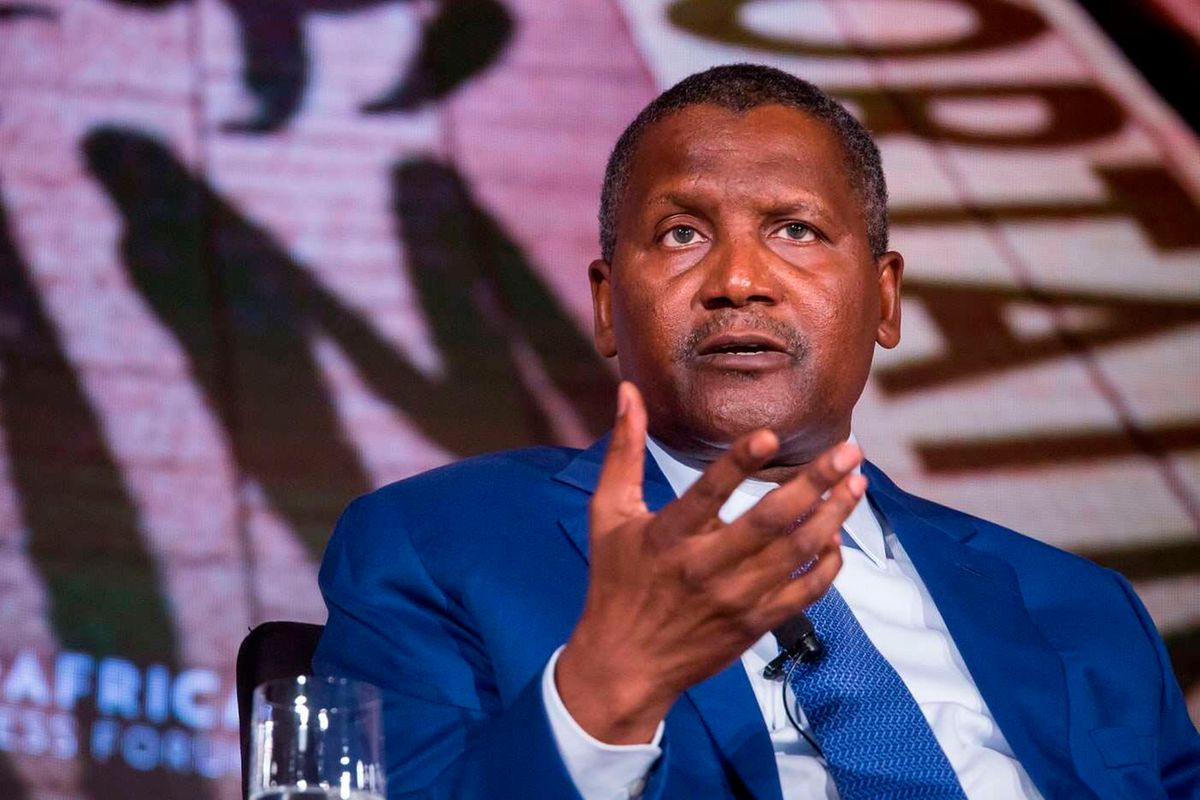
Africa’s richest man, Aliko Dangote, will rely heavily on debt to finance the proposed multi-billion shilling oil refinery in Lamu, with construction of the project expected to begin by October this year.
Mr Dangote disclosed that 70 percent of the estimated $16 billion (Sh2.07 trillion) project will be financed through debt, replicating the highly leveraged funding model commonly used for large infrastructure projects. The remaining 30 percent will be financed through equity.
This means lenders will provide roughly Sh1.45 trillion, while shareholders—including Mr Dangote and other investors—will inject about Sh621 billion.
Debt is often preferred to equity for large infrastructure and industrial projects because it allows project sponsors to retain control and ownership.
While equity requires giving away a permanent slice of future profits, debt is a temporary obligation that ends once the loan is fully repaid.
The financing structure marks a departure from Mr Dangote’s flagship refinery in Lagos, Nigeria, which was ultimately financed through a roughly 50:50 debt-to-equity mix after construction costs rose to about $20 billion.
Despite the project’s scale, Mr Dangote expressed confidence that financing would not pose a challenge for what is set to become one of East Africa’s largest private investments.
“The financing mix will be 30 percent for equity and the rest will be debt. We don’t have a problem getting the money,” Mr Dangote said in an interview with the BBC.
The Nigerian billionaire said the refinery’s cost has fallen from an earlier estimate of $17 billion after his team concluded it could be completed within four years, significantly reducing financing costs.
“We first thought it was going to cost $17 billion, but it will cost less than that, about $16 billion,” Mr Dangote said.
He attributed the lower cost to the shorter construction period and the experience gained from building the group’s flagship refinery in Lagos.
Construction of the refinery, which is expected to process about 700,000 barrels of crude oil a day, is scheduled to begin shortly after the groundbreaking ceremony.
“Once we do the groundbreaking, we will start very soon,” Mr Dangote said.
The project would become one of the largest private investments ever undertaken in Kenya and the biggest oil refinery in East Africa, surpassing the capacity of the recently completed Dangote refinery in Lagos, which processes 650,000 barrels of crude oil a day.
Mr Dangote said the new refinery would serve markets across eastern and northern Africa, including Egypt, underscoring its ambition to become a regional export hub rather than solely supplying Kenya.
President William Ruto has already disclosed that Kenya intends to acquire a stake in the refinery through the National Infrastructure Fund, although the size of the government’s investment has yet to be announced.
“We have an infrastructure project for the development of an East African refinery. Dangote tells me that this project will cost anywhere between $16 billion and $20 billion. Kenya will invest through the National Infrastructure Fund. We do not want to be held hostage any more by the Strait of Hormuz,” President Ruto said.
The refinery is expected to process crude from Uganda’s oil fields, which will be transported through the East African Crude Oil Pipeline to Tanzania, as well as future production from Kenya’s Turkana oil fields. It will also have the flexibility to import crude by sea through the Port of Lamu.
East Africa currently imports virtually all its refined petroleum products, mainly from the Middle East, exposing the region to supply disruptions and volatile prices whenever geopolitical tensions disrupt global shipping routes.
The proposal comes months after disruptions around the Strait of Hormuz during the Iran conflict highlighted Africa’s vulnerability to imported fuels and strengthened the case for expanding local refining capacity.
However, Mr Dangote said government support would be critical if the refinery is to compete with imported fuel.
He said President Ruto would need to provide land, mobilise regional financing and protect the refinery against what he described as the dumping of cheap refined petroleum products from countries such as Russia and India.
“There is no refinery in the world that can survive without that protection. If we have an agreement, we can start this year,” Mr Dangote told the Financial Times.
The investment would further deepen Mr Dangote’s presence in Kenya.
His investment vehicle, Alterra Capital, last year acquired Pollman’s Tours and Safaris for about Sh4 billion before teaming up with private equity firm Phatisa to acquire restaurant chain Java House from Actis earlier this year.
Mr Dangote has also explored investing in Kenya’s cement industry after obtaining limestone prospecting rights in Kitui County, although plans to establish local manufacturing plants were shelved.
According to Forbes, Mr Dangote has an estimated net worth of $28.5 billion, built largely through interests in cement, sugar, fertiliser and oil refining.
The announcement on the Kenyan project comes as Mr Dangote prepares a multi-billion dollar initial public offering of his Nigerian refinery, a move expected to broaden its investor base while providing additional financial flexibility as the group pursues expansion across Africa.