

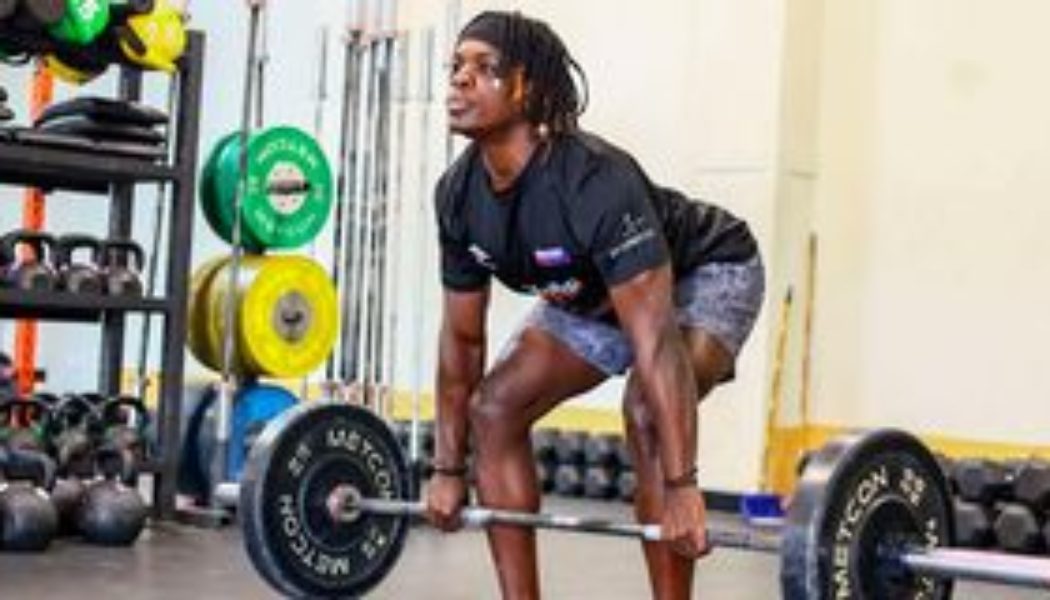
The deadlift is one of the most effective exercises for those looking to build strength, lose fat and develop a leaner physique. By working multiple muscle groups at once, it also improves posture and makes everyday movements easier, both in and out of the gym.
Wilson Otieno, a fitness coach, performs a barbell deadlift at FirstPower CrossFit Waterfront Karen in Nairobi on July 4, 2026.
Photo credit: Wilfred Nyangaresi | Nation Media Group
After six years of coaching CrossFit, Wilson Otieno says it remains the foundation of any good strength programme that every person should learn, no matter their fitness goals.
“Deadlift is a compound movement. This means it works more than one muscle,” he says, adding, “it will work the hamstrings, glutes and lower back, but the benefits do not stop at the back of the body. It also works on your core, your forearm and shoulders.”
One of the most common questions Wilson gets in the gym is, who should actually be doing deadlifts? Some assume the lift is only for bodybuilders or competitive strength athletes.
“It is one of the fundamental movements that anyone, as long as you exercise, needs to do,” he says. “Anyone can do deadlifts, from pregnant women, beginners, pro athletes, powerlifters, crossfitters…”
Wilson Otieno, a fitness coach, performs a dual kettlebell deadlift at FirstPower CrossFit Waterfront Karen in Nairobi on July 4, 2026.
Photo credit: Wilfred Nyangaresi | Nation Media Group
Choosing the right starting weight is one question Wilson often addresses for beginners nervous about getting it wrong.
“That depends on a case-by-case basis,” he says. “There are people who are naturally stronger, but a good place to start is with your body weight.”
He uses his own weight as an example. “If I weigh 80kg, there’s no way you can get injured with that weight. Ideally you should be able to lift at least two or three times your bodyweight whenever you’re doing deadlifts,” he says, adding, “I’m 80kg, I should be able to hit around 160kg.”
Wilson Otieno, a fitness coach, performs a single-arm dumbbell row at FirstPower CrossFit Waterfront Karen in Nairobi on July 4, 2026.
Photo credit: Wilfred Nyangaresi | Nation Media Group
But lifting that heavy or even 60 kg should never be rushed.
“It’s really important to learn the proper mechanics before you start lifting heavy,” he says.
So, how should a deadlift should be done properly? Wilson says form is one area of concern he spends most of his coaching energy on. He says form starts long before the barbell leaves the floor.
“The key is to start in the right position and brace your core by taking a deep breath and tightening your stomach muscles before you lift.”
From that braced position, pick the bar upward while keeping the spine steady and controlled.
“You want to have a neutral back as you are driving the barbell up to your mid-thigh,” he says.
The deadlift itself is not a single fixed movement. You can choose between two main styles depending on your body and your goals.
“The most popular deadlift is called a conventional deadlift,” he says. “And secondly, we have what we call a sumo deadlift. With a sumo deadlift, you lift while your legs are wider, and you have a narrower stance, a narrower grip on the barbell. For the conventional deadlift, the grip is narrower, and your hands are just outside your hips.”
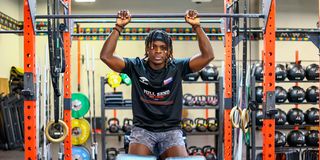
Wilson Otieno, a fitness coach, poses for a photo at FirstPower CrossFit Waterfront Karen in Nairobi on July 4, 2026.
Photo credit: Wilfred Nyangaresi | Nation Media Group
Beyond safety, how heavy someone lifts depends on what you want: fitness or muscle build?
“If you want to train for growth or muscle hypertrophy [an increase in the size of muscle fibres], you will need to go a bit lighter than you would,” he says. “Then think of doing a high volume, high repetitions. If you want to train for powerful strength, think of higher percentages of your one-repetition (rep) maximum, then fewer repetitions or less volume.”
A belt or not
He translates that into practical numbers.
“If you want to train for maximum strength, you would stay in the ranges of five sets and three reps,” he says. “If you want to train for muscle building, you want to do anywhere between 10 sets and around 10 reps.”
Beyond strength building, the deadlift also helps in fat loss and a leaner physique.
“You can deadlift your way to both fat loss and greater strength.”
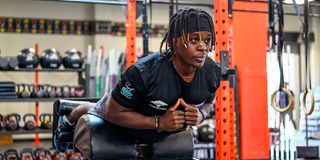
Wilson Otieno, a fitness coach, performs the GHD Hip extensions exercise at FirstPower CrossFit Waterfront Karen in Nairobi on July 4, 2026.
Photo credit: Wilfred Nyangaresi | Nation Media Group
Recovery, he stresses, is just as important as the lifting itself. Muscles grow and repair during rest, not during the workout.
“Ideally, I would recommend doing deadlifts two to three times a week,” he says, explaining why spacing out sessions matters so much for this particular lift.
“Skipping a day or two allows the muscles on the hamstrings, glutes, and lower back to recover better.”
For more advanced athletes, who recover a bit faster compared to others, you can do it maybe every other day.
Once the fundamentals are in place, the right gear can support a heavier lift. The belt, a piece of equipment nearly every advanced lifter uses, serves a very specific purpose.
“The belt helps you to brace and stay in a proper position whenever you are lifting heavy,” he says.
Frequent mistakes
So, what is the one mistake he sees people make over and over again?
“The most common mistakes are starting in the wrong position, failing to tighten your core before lifting, and rounding your back during the movement. These mistakes make the lift less effective and increase the risk of injury.”
He shares warning signs that should never be ignored.
“If your back starts to round during a deadlift or you feel yourself losing control of your core, that’s a sign the weight is too heavy,” he says. “Reduce the weight, focus on your technique and build up gradually.”
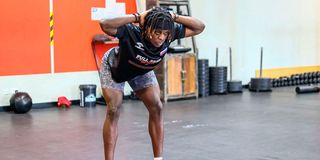
Wilson Otieno, a fitness coach, performs a bodyweight good morning exercise at FirstPower CrossFit Waterfront Karen in Nairobi on July 4, 2026.
Photo credit: Wilfred Nyangaresi | Nation Media Group
Many people believe the exercise inevitably leads to back pain or injury. Wilson disagrees.
“That is a myth,” he says. “You just need to learn the proper mechanics before going heavy.”
He adds that the opposite of this common fear is actually true. “Deadlifts are actually known to strengthen your back rather than injure it.”
Preparation before a session also matters.
“Before you start your session, always warm up properly. Warm up your hamstrings, your glutes, your lower back. Get your heart rate going up a bit.”
After warming up, build towards your heaviest set gradually instead of loading the bar with your maximum weight straight away. For example, if your goal is to lift 80kg, start with the empty bar, then progress to 20kg, 40kg and 60kg before attempting 80kg. This helps prepare your muscles, joints and nervous system for the heavier lift while reducing the risk of injury.
“Before you get to your maximum load, build up to it slowly by slowly, maybe after three sets. Then now get into your working set.”
Protein intake
Nutrition also plays a supporting role in recovery, particularly protein intake.
“A good recommendation for your protein intake is like 1.5 grammes per kg of your body weight.”
Timing matters too, he adds, suggesting eating protein shortly after finishing a session, roughly 30 minutes later.
Carbohydrates, on the other hand, can help before a session begins, giving you the fuel you need to push through heavy sets.
“If you can do what we call carbohydrates loading, it will definitely help your energy levels,” he says. “Carb loading is basically taking more carbohydrates than you normally do about 30 minutes to an hour before a session. This gives you the energy to actually go through with it.”
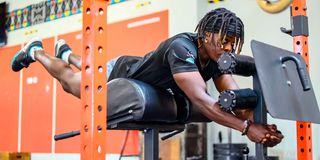
Wilson Otieno, a fitness coach, performs the reverse GHD Hip extensions at FirstPower CrossFit Waterfront Karen in Nairobi on July 4, 2026.
Photo credit: Wilfred Nyangaresi | Nation Media Group
His three key pieces of advice for anyone using the deadlift to build strength, lose fat and develop a lean physique are: “One, learn the proper form. Technique is always key. Two, be patient in terms of how you load up the barbell. Progressively load the barbell maybe every two weeks. Then thirdly, find the proper gear.”
For those wondering just how much weight the human body can lift, Wilson points to the elite level of the sport.
“The current world record is about 500 kilogrammes, but that’s achieved by professional strength athletes who train and compete at the highest level,” he says.