
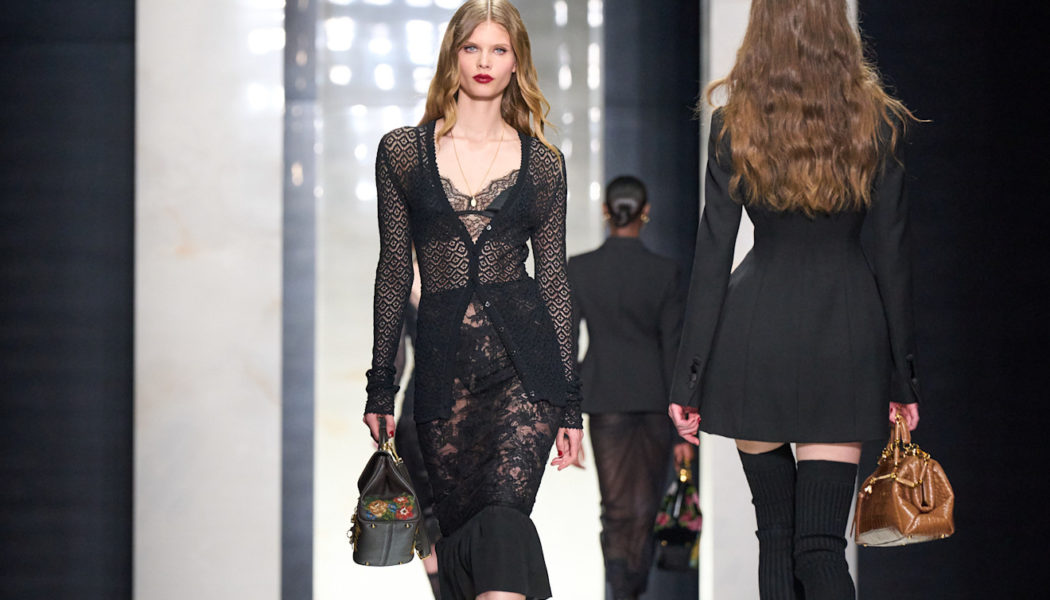
In a Milan season defined by transition, Dolce & Gabbana made a pointedly steady statement. While much of the city’s fashion houses are exploring new directions under fresh creative leadership, Domenico Dolce and Stefano Gabbana leaned into what they know best: a language of identity rooted in history, heritage, and unmistakable Sicilian emotion. Their fall 2026 collection, titled Identity, was less about reinvention and more about presence, a reminder that authenticity and tradition can be radical in a city chasing the next new thing. “Identity is the ultimate luxury,” the show notes, posted on the label’s social media, declared. “This is not nostalgia. It is presence.”
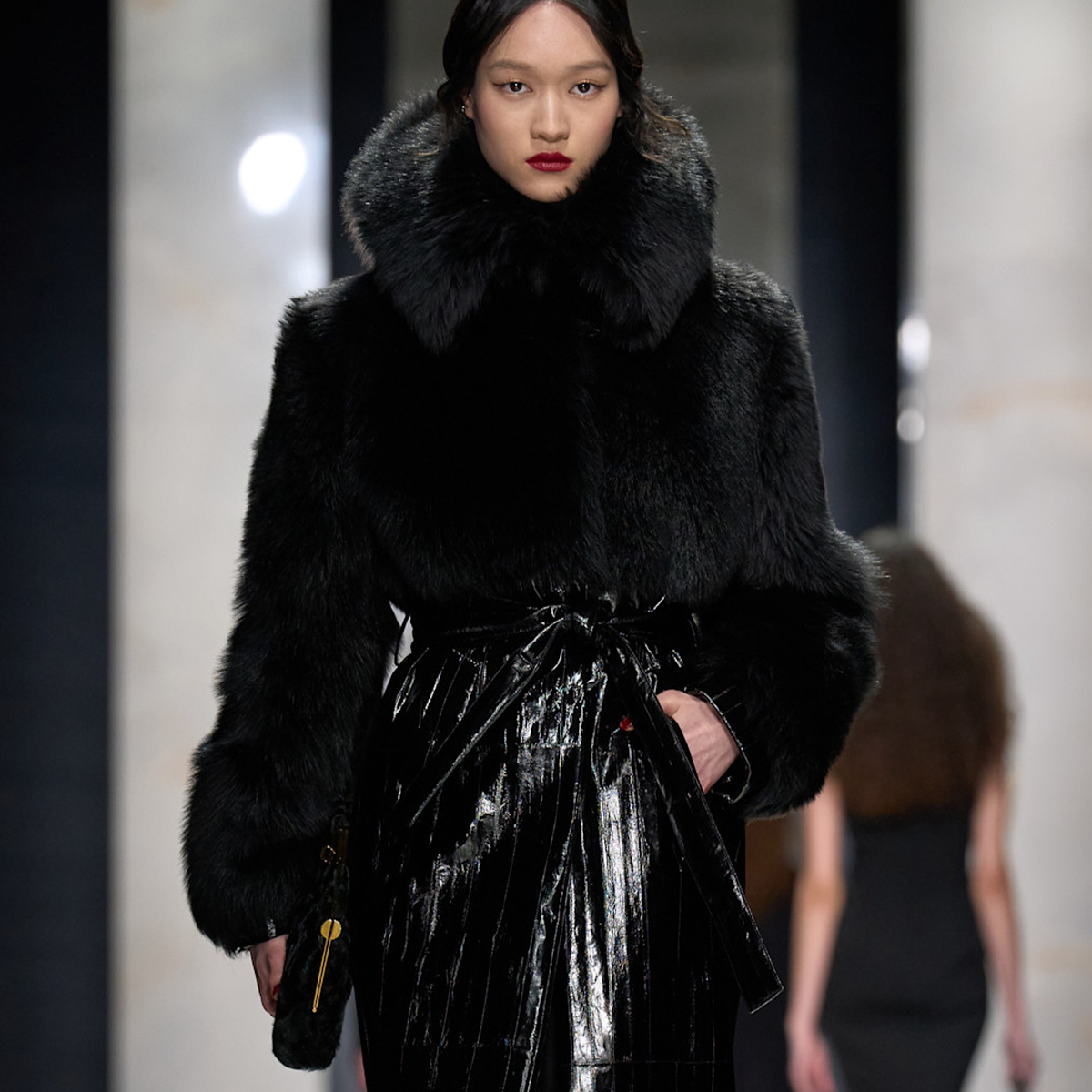
Naturally, the runway felt like a manifesto of the house’s enduring codes. Black dominated the palette, tailoring reinforced the structure, and lace and texture layered sensuality atop authority. The silhouettes affirmed the body without hiding it, blending femininity (in the form of moody lace slips) and masculinity (in classic, oversize striped suits) in ways that felt both intimate and bold.
In a season of experimentation, Dolce & Gabbana stood as a quiet counterpoint, showing that remaining true to yourself can be its own kind of luxury and that a house rooted in its own story can still feel entirely of the moment. The Dolce & Gabbana fall 2026 show reminded Milan that confidence doesn’t come from change—it comes from knowing who you are.
A Bold Return to House Identity

(Image credit: Launchmetrics/Spotlight; Pictured: Dolce & Gabbana fall/winter 2026)
At a time when Milan is in the throes of creative recalibration—new creative directors are tenures at houses like Gucci, Fendi, and Marni—Dolce & Gabbana stands apart in its refusal to dilute its irreverent codes. Rather than recalibrate with the rest of the market, designers Domenico Dolce and Stefano Gabbana doubled down. The fall/winter 2026 show was steeped in Sicilian history—Catholic iconography, widow’s black, baroque sensuality—signaling not reinvention but reaffirmation in where the brand gets its historic roots.
Where other brands chase newness through minimalism or conceptual pivots, Dolce & Gabbana leaned into a vocabulary it has spent four decades refining. The sharp tailoring, corsetry, lace, and veiled drama were less about nostalgia and more about stability.
Milanese Color Codes
The runway was almost entirely submerged in black—a choice that felt both aesthetic and anthropological. Black, in Milan, is less trend than uniform. Unlike the flamboyant color narratives of Rome or the bourgeois polish of Paris, Milanese style has long communicated power through restraint. The city’s fashion DNA—industrial, pragmatic, quietly sensual—has historically favored sharp tailoring and a subdued palette.

(Image credit: Launchmetrics/Spotlight; Pictured: Dolce & Gabbana fall/winter 2026)

(Image credit: Launchmetrics/Spotlight; Pictured: Dolce & Gabbana fall/winter 2026)

(Image credit: Launchmetrics/Spotlight; Pictured: Dolce & Gabbana fall/winter 2026)
Honoring Madonna
The presence of Madonna in the front row felt less like celebrity placement and more like homecoming. Few figures are as intertwined with Dolce & Gabbana’s ascent in the 1990s. They dressed her during the height of her erotically charged, Catholicism-reframing era—when lingerie-as-outerwear, crucifixes, and Sicilian widow silhouettes became global pop iconography.
Fall 2026 seemed to channel that precise moment: the dark lace slips, sharp corsetry, sheer veiling, and controlled sensuality evoked Madonna’s late-’90s wardrobe: powerful, slightly dangerous, steeped in religious tension. Her influence on fashion cannot be overstated—she legitimized the fusion of sacred and profane, a tension Dolce & Gabbana has long mined in its 40-year run.

(Image credit: Getty Images)
Behold, Nonna-Core
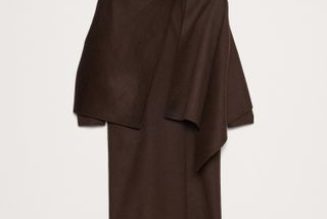
Amid the high-gloss sensuality, there was elderly tenderness. Crochet shawls draped over shoulders. Needlepoint-embroidered handbags evoked heirloom upholstery and Sunday sitting rooms. The references were unmistakably nonna-esque—the Italian phrase for grandmother—but elevated beyond gimmick into respect. The designers behind Dolce & Gabbana have always cited their mothers and Sicilian upbringing as creative bedrock. Since their earliest collections in the 1980s, the archetype of the Italian matriarch—devout, resilient, commanding—has shaped their sartorial worldview.

(Image credit: Launchmetrics/Spotlight; Pictured: Dolce & Gabbana fall/winter 2026)

(Image credit: Launchmetrics/Spotlight; Pictured: Dolce & Gabbana fall/winter 2026)

(Image credit: Launchmetrics/Spotlight; Pictured: Dolce & Gabbana fall/winter 2026)
Era-Defining Beauty
Beauty has always been central to Dolce & Gabbana’s storytelling, and fall 2026 sharpened that legacy. The makeup was unapologetically defined: inky eyeliner, sculpted brows, and bold lips in oxblood and deep crimson. Hair was sleek, controlled—often center-parted and smoothed close to the head—once again a nod to the first moments of virality the brand had pre–social media days.
The look echoed the house’s 1990s runway heyday, when supermodels embodied a distinctly Mediterranean glamour: polished yet faintly undone and sensual yet slightly unaware.

(Image credit: Launchmetrics/Spotlight; Pictured: Dolce & Gabbana fall/winter 2026)