

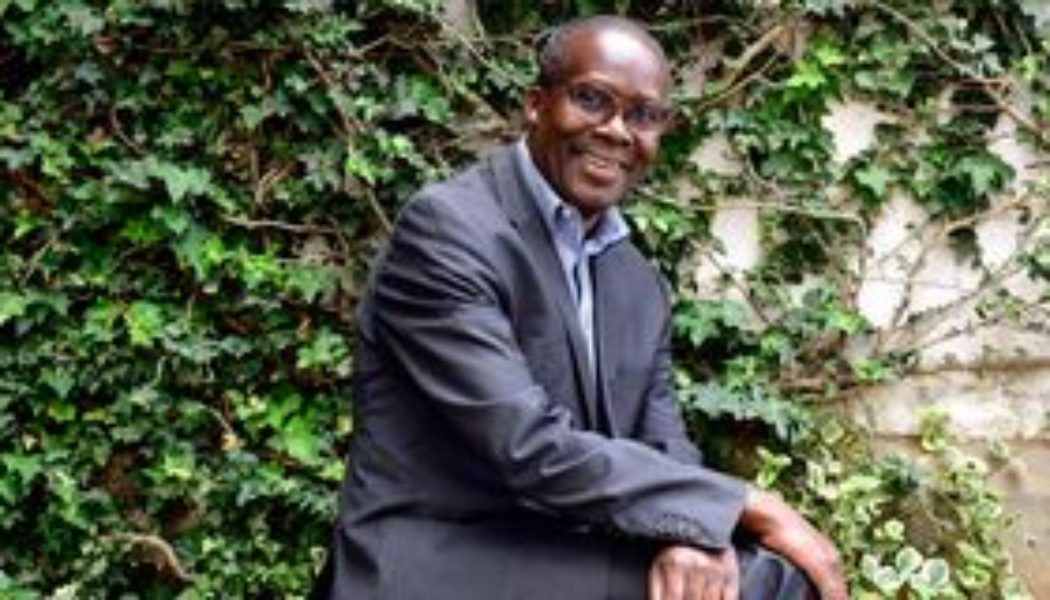
Duncan Onyango did not just grow up near a bank. He grew up inside one. His father was a Citibank man – old Nairobi Citibank, the original branch on Wabera Street, back when the lender was still establishing itself on the continent. Duncan remembers Christmas parties in the banking hall, he and his siblings running between tellers, the decorations, the noise of it.
Later, the parties moved to the CEO’s home in Muthaiga. But the earliest memory is the hall. All that marble and money and quiet institutional power, and a small boy loose inside it, soaking in something he wouldn’t be able to put a finger on for years.
What he absorbed was actually hunger. “There’s this thing within you,” he says, “which is just not satisfied.” He carried that thing to London, where he built a robust career in finance. He was good at it. Promotions came. He asked to take on more responsibilities, getting another in-tray. He travelled more, burnt enough midnight oil to ignite a cargo ship, and all this drifted him further from the people waiting at home.
Naturally, his first marriage crumbled like a pack of cards. “I was more wedded to my job than I was to my wife,” he admits, without self-pity, but without flinching either. Because he has had time to sit with the truth of it.
It is only in later years, he will tell you, that the hunger has calmed enough for him to actually see what is in front of him. Today, he runs Trade Catalyst Africa, the trade infrastructure arm of TradeMark Africa, where the work is continental in ambition – closing a financing gap he puts north of $150 billion a year, not through grants or government goodwill, but by making the economics so compelling that institutional capital comes of its own accord. “We don’t want to go around begging for money,” he tells me. “We want to create an asset class.”
What did your father do, and did you ever want to be like him?
[Chuckles] I’m probably the only one who followed a career closely aligned to my dad’s. He was a banker. A city banker. We basically grew up in Citibank, back then it was on Wabera Street, their very first branch before they moved to that tall tower. They were probably among the first people to really establish Citibank as a business and a brand in Africa.
I remember Christmas time vividly. We would have parties right there in the banking hall, running around, enjoying the decorations. Later the parties moved to the CEO’s home in Muthaiga. That’s what my dad did until he retired. Then he passed away almost 26 years ago, a couple of days after the millennium.
Pole, was he unwell?
I’m led to believe he was. He had retired to the village. But I also think when he moved there it must have been lonely, because we had lived in Nairobi almost all our lives.
At some point Nairobi becomes your village – that’s where your friends are, your connections, your networks. He settled into village life and, yeah, he didn’t live very long after that.
Are you connected to the village in any way?
I am, to a certain extent. But what I’ve done is shift my village. Where my parents come from, we are literally strangers. We only visited occasionally and I never felt at home. So I bought land not too far away and I’m doing a bit of farming. I’ve created my own village near people I went to school with. The people are familiar, so I feel more welcome.

Trade Catalyst Africa CEO Duncan Onyango poses for a picture after an interview at his office on May 26, 2026.
Photo credit: Francis Nderitu | Nation Media Group
London still remains home in many ways because my family and children all live there. I moved around 1986. I have three children, all in London. Two have flown out of the nest. My daughter got married a year ago and blessed me with a grandson.
After so many years in London, what finally pulled you back home?
When you’ve been away a long time, there comes a point when you think very deeply about returning. Usually it’s circumstances that determine whether you actually do. In my case, my wife and I separated. That made me ask myself a lot of questions. We had simply grown apart, and we grew apart because of my career.
I was more wedded to my job than I was to my wife. I was traveling constantly and, as you become more upwardly mobile, your life takes a very different trajectory from your spouse’s. You’re away more, meeting new people, exposed to different worlds, and eventually you become strangers.
After that I took voluntary redundancy and started freelancing. Then, the way life works, one consultancy opportunity brought me back to Kenya. Being back brought me closer to my siblings and my mother. That’s really how it began, around 2006 or 2007.
Knowing what you know now, would you still give your career so much and save the marriage?
You know, I’ve asked myself that question several times. [Pause] I’ve asked myself that many times. Later I remarried. She’s Kenyan and we have a son together now in school in the UK.
After everything that happened, I told myself there were things I would do differently. I remember when things got serious with the woman who was then my girlfriend, I sat her down and said: “I know myself. I get deeply wedded to my work. This is who I am. I will spend a lot of time working, but that doesn’t mean work is replacing my relationship with you.”
I didn’t do that in my first marriage because we were young. You meet, fall in love, and move through life without really knowing what you don’t know. The second time I committed to being more open and to communicate, especially as things changed. Those are the things I failed at before.
You mentioned that you were away from your children’s lives for a while, how did you eventually reconcile that?
Again, with this one I was lucky because my next career allowed me to travel more and spend more time in London. Even if I was only stopping over for a few hours in transit, I would make time to see the children – a restaurant, a meal, reconnecting. The children would also come to Nairobi during the summer holidays.

Trade Catalyst Africa CEO Duncan Onyango poses for a picture after an interview at his office on May 26, 2026.
Photo credit: Francis Nderitu | Nation Media Group
If you saw us together, you probably wouldn’t think ours was a broken family. One of the dangers when long relationships break down is that parents use children against each other.
That didn’t happen with us because our separation wasn’t caused by betrayal, we had simply grown apart. We made very intentional decisions about access. We wanted the children to know they still had both a father and a mother. And because of that, when I became more present again, reconnecting was much easier.
It sounds like a blended family is working for you…
It kind of worked out. I introduced my girlfriend to their lives early. Whenever the children came to visit, they met her, and I was always open about the new relationship. Later, when we married and had our son, I brought the families together, so the children grew up knowing each other as siblings.
Looking back, it all seems coherent, almost planned. But honestly, I don’t think it was. Circumstances simply forced us to do things a certain way, and fortunately it worked.
What have you ever struggled with so much?
That’s a difficult question. [Pause] I think the best way to answer that is through ambition. Not because I struggled with ambition, but because I was very ambitious. I was always chasing the next thing.
Early in my career I quickly realised that to progress, you need not just ability but also influence and visibility. So I was always eager to take on the next project, sometimes more than I probably should have. It propelled my career because people noticed. But it also meant I was constantly exhausted.
Success is tiring…
[Laughs] Yeah, it was. You’re always on show, always wanting to prove yourself, and burnout is never far away. There was always this hunger in me, this feeling of never quite being satisfied. You keep trying to fill it through promotions, bigger responsibilities, recognition. You just keep chasing.
It’s only as I’ve grown older that I’ve learned to manage that and become more content with what’s in front of me. But it took a long time. As you grow older you also grow wiser. You accumulate perspective and foresight, and eventually you become more relaxed in how you approach life.
How did that form your view on wealth and money and everything related to that?
I don’t know whether growing up in a bank shaped me, because we were very young then. But when you grow up around banking and successful people, it leaves an impression. As I grew older, I found myself exposed to wealth – seeing peers doing very well. You start wondering how people get there.

Trade Catalyst Africa CEO Duncan Onyango poses for a picture after an interview at his office on May 26, 2026.
Photo credit: Francis Nderitu | Nation Media Group
So I learned early about the importance of money and the comfort it can bring. But I also learned, sometimes painfully, that you can make expensive mistakes trying to keep up appearances.
I remember wanting to be like the Joneses – taking children to expensive schools then struggling to pay fees. Those experiences taught me you have to cut your coat according to your cloth. Manage money in a way that creates wealth instead of living an opulent life you can’t afford.
What does your wife find really annoying about you?
[Laughs] I think there must be a lot. [Chuckles] I have moments when I just want to withdraw from people and be alone. Sometimes I can sit quietly in the garden doing absolutely nothing and enjoy it completely.
I’m actually very social and engaged when I need to be. I draw energy from people, but I also have this other side where I retreat into myself. And when I’m in that mood, I become very quiet.
That can be difficult because my wife is extremely social. She might invite a house full of people over at the exact moment I want silence and solitude, and I’m left wondering why the house is suddenly full. But we navigate our way through it. It takes effort, but eventually it works.
In what environments do you find yourself to be vulnerable?
As a CEO, the environment where vulnerability shows up most is probably the boardroom. Preparing for board meetings can be intense. You’re dealing with people who understand the issues deeply and can challenge you from angles you may not have considered. Over time I’ve learned the best way to navigate that is not to resist vulnerability but to accept it.
Vulnerability can be a strength. It allows people to trust you because they know you’re not pretending to have all answers. Once you stop fearing what you don’t know, those environments become much easier to handle.