

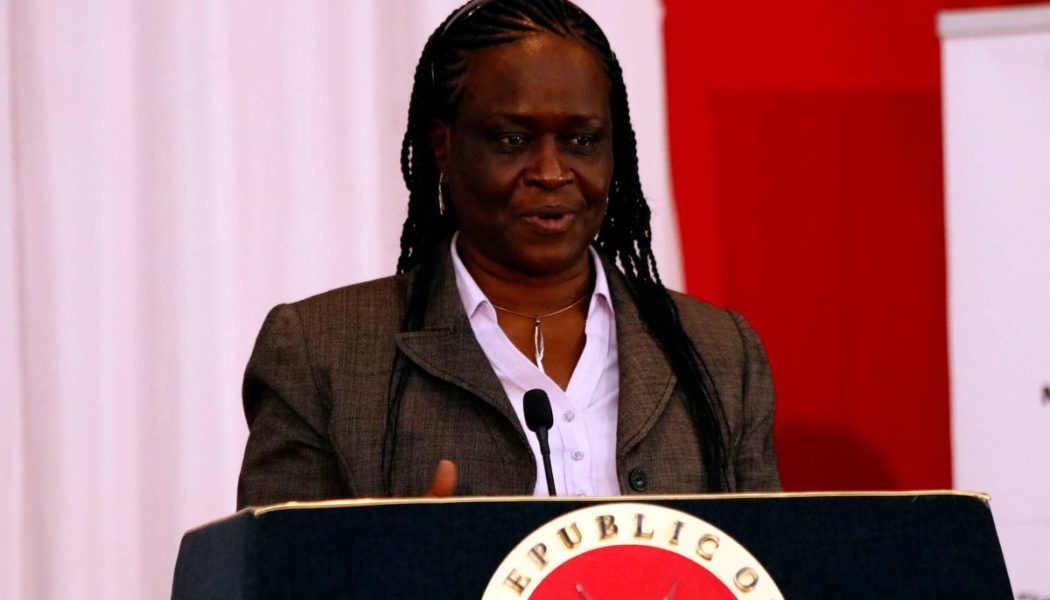
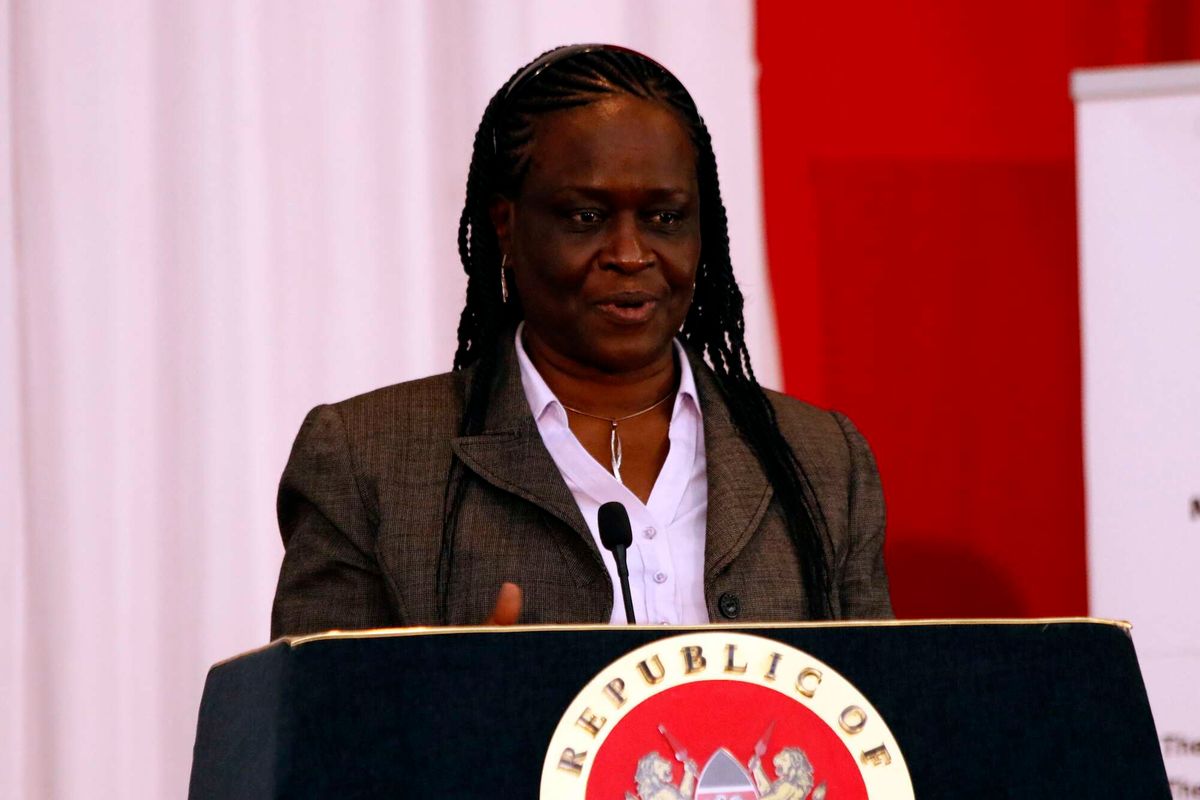
Former Principal Secretary Esther Koimett has emerged as the largest shareholder in Middle East Bank Kenya following a multi-billion shilling wealth transfer from her late father, Nicholas Biwott.
Regulatory disclosures from the bank show that Ms Koimett holds a 17.48 percent stake, making her the single-largest investor in the institution, which has roots in Dubai and was initially owned by the Al-Futtaim Group, associated with Carrefour supermarkets.
The shareholding places her at the centre of strategic decision-making in the bank, where she joined the board on February 26, 2024.
The investment cements Ms Koimett’s activities in Kenya’s private sector after nearly three decades of public service, including as PS in several ministries and CEO of Kenya Post Office Savings Bank.
It’s unclear when she acquired the top stake in the bank that Al-Futtaim Group established in August 1981, before the UAE-based conglomerate ceded ownership to locals in the early 1990s.
Ms Koimett did not respond to phone calls and text message seeking comment.
Previous reports linked her late billionaire father, Mr Biwott, to a stake in the bank amid talk that the powerful Cabinet minister in the Moi era acquired the ownership following Al-Futtaim’s exit in April 1991.
The exit of Al-Futtaim was touted as an attempt to “Kenyanise” the bank’s ownership structure. Mr Biwott succumbed to kidney failure on July 11, 2017 at the age of 77.
Mr Biwott succumbed to kidney failure on July 11, 2017 at the age of 77. Mr Biwott entered politics in 1974 – almost 10 years after Kenya gained independence from British rule – and later became personal assistant to President Daniel arap Moi when he was vice-president. Mr Moi died in 2002.
While in government, Mr Biwott built massive wealth spread across industries, which was recently passed to his heirs. He bequeathed to each of his children, including Ms Koimett, from the four wives an equal one-fourteenth share of his estate.
Other top owners of Middle East Bank Kenya are MEB Holdings (11.58 percent), Mustang Limited (10.47 percent), Baumann Management Services Limited and Good Fortune Limited, which hold 6.6 percent stake each.
The bank’s ownership structure reflects a predominantly local investor base. Disclosures indicate that local shareholders account for 90.22 percent of ownership while foreign investors hold 9.78 percent.
Ms Koimett is among the 20 individuals who hold a 20.31 percent stake in the bank that is 79.69 percent owned by 21 corporate shareholders.
Her 17.48 percent holding means the remaining 19 individuals in the lender own 2.83 percent.
Middle East Bank Kenya posted a net profit of Sh264.37 million in the year ended December 2025, marking a 22.2 percent rise from Sh216.34 million. In the first quarter ended March this year, net earnings rose 16.9 percent to Sh35.29 million.
Ms Koimett’s ownership in Middle East Bank emerges in a period when local banks have become a target for large African lenders seeking buyout deals for expansion into Kenya and to use the country as a launch pad into the East African market.
Kenya’s appeal lies in its gateway role to the East African Community, a fast growing bloc expanding by at least 5.0 percent a year.
This has placed the owners of local banks on the cusp of making outsized capital gains as big African banks buy them out for a piece of Kenya’s crowded banking sector.
Ms Koimett’s stake and directorship in Middle East Bank Kenya cements her boardroom dealings in corporate Kenya. She is currently the chairperson of M-Pesa Holdings Company and AAR Insurance Kenya, and also sits on the boards of Kenya Airways, Car & General and the African Trade and Investment Development Insurance.
Her career as head Kenya Post Office Savings Bank, Permanent Secretary in the Ministry of Tourism and Information and investment secretary at the Treasury earned her the moniker: the iron lady of Kenya’s public service.
Middle East Bank Kenya was one of the 10 banks that raced to increase their capital last year in response to the decision by the Central Bank of Kenya (CBK) to raise the minimum capital from Sh1 billion to Sh3 billion by last December.
Six of the 10 lenders, including M-Oriental Bank, Africa Banking Corporation (ABC), Middle East Bank of Kenya, CIB Kenya, Premier Bank and UBA Kenya, raised their core capital above Sh3 billion by the end of March this year.
Middle East Bank Kenya’s core capital rose to Sh3.07 billion at the end of December 2025 from Sh2.11 billion in September.
The CBK proposes to raise the capital to Sh10 billion by 2032 in what is expected to spur further consolidation in Kenya, which also appeals as a hub for travel and regional bank headquarters. Relatively solid financial regulation, easy repatriation of dividends and the freely traded shilling add to the attraction.
African banks have been busy dealmaking as global giants such as Standard Chartered and Societe Generale exit smaller markets to focus on core ones such as Kenya, while a growing need to invest in technology has prompted deals to gain scale.
Nigeria’s Access bought National Bank of Kenya from KCB Group in a deal that was completed halfway through last year.
South Africa’s slow growth and mature sector are pushing its biggest banks to expand elsewhere.
Nedbank agreed earlier this year to acquire a majority stake in Kenya’s NCBA as part of its regional expansion, beating South African rival Standard Bank, which operates in Kenya as Stanbic, to the prize.
South Africa’s Absa group is also increasing its stake in its Kenya subsidiary from 68.5 percent to 85 percent in a Sh31 billion deal.
Kenya’s big banks command market shares in the low-to-mid teens, while second-tier lenders, such as Family Bank, are typically in the high single digits. There is also a long tail of smaller banks, including Middle East Bank of Kenya.