
Nearly four years after Kenya bought out private equity investor Helios from Telkom Kenya, the transaction continues to generate legal fallout, with businessman John Ngumi seeking court protection from anti-graft investigators despite prosecutors twice declining to pursue charges.
The latest petition has revived scrutiny of one of Kenya’s biggest and most politically sensitive corporate transactions, exposing how a deal intended to secure State control of a strategic telecommunications asset evolved into a web of investigations, arbitration proceedings and competing institutional decisions that still cast a shadow over the company.
For investors, the Telkom saga offers an unusual case study of the uncertainties that can arise when governments serve simultaneously as commercial counterparties, regulators and investigators.
Former President Uhuru Kenyatta’s administration initiated the sale of 60 percent of the shares to Helios in September 2022, but his successor William Ruto’s government rescinded that decision in October of the same year, just a month after taking office.
The exit
The government completed the acquisition of Helios’ 60 percent stake in Telkom Kenya in the 2022/23 financial year at a cost of about Sh6 billion. The buyout followed Helios’ decision to exit its investment through Jamhuri Holdings Limited, its investment vehicle in Telkom.
The Cabinet approved the proposed exit and the government agreed to acquire the 60 percent stake held by Jamhuri Holdings, restoring Telkom Kenya to full State ownership.
Since the approximately Sh6 billion needed for the acquisition had not been appropriated in the annual budget, the Treasury invoked Article 223 of the Constitution, which allows the national government to spend money not planned for under limited circumstances.
The Controller of Budget approved the withdrawals, and Parliament was later notified. Questions emerged over whether the expenditure had been lawful, whether all approvals had been obtained, and whether the process had benefited insiders.
The Ethics and Anti-Corruption Commission (EACC) opened investigations and submitted files to the Director of Public Prosecutions.
Official records reviewed by the Business Daily show that the exit process began years earlier.
According to documents later examined by the Office of the Director of Public Prosecutions (ODPP), Helios communicated its intention to exit in July 2021 through a contractual “put option” contained in shareholder agreements.
The approval
The National Treasury engaged the investor and sought additional details on the proposed terms of exit.
The matter subsequently moved through the highest levels of government.
The National Security Council endorsed the proposal. Cabinet later approved the exit plan, authorised the government to acquire Helios’ shareholding and approved a budgetary provision of Sh5.9 billion to facilitate the transaction, according to the ODPP’s review of the evidence.
The Treasury eventually authorised payments amounting to more than $51 million (Sh6.6 billion), including principal and accrued interest owed to Jamhuri Holdings.
The transaction, however, immediately attracted controversy. Questions emerged over whether all the necessary approvals had been obtained, whether the payments complied with public finance laws and whether senior officials and advisers involved in the transaction had benefited improperly.
After President Ruto took power in 2022, the EACC opened investigations and submitted files to the ODPP for consideration of possible criminal charges. Among those targeted was former National Treasury Cabinet Secretary Ukur Yatani.
The prosecutors’ conclusions, however, differed sharply from the suspicions surrounding the deal.
In October 2023, President Ruto’s administration announced that Cabinet had revoked the earlier nationalisation arrangement, citing governance concerns. Instead, Treasury said Infrastructure Corporation of Africa, a United Arab Emirates-based entity, had been selected through a competitive process to acquire the 60 percent stake previously held by Helios.
At the time, Treasury described the ICA arrangement as a fresh start for Telkom Kenya. Jamii Holdings was aggrieved with this development and lodged a complaint at the arbitration tribunal in London.
Yet nearly three years later, questions remain over implementation of that transition and the precise status of Telkom’s ownership structure.
In an April 7, 2025 letter to EACC, the ODPP directed that the inquiry file be closed, finding that the evidence gathered was insufficient to sustain proposed charges relating to conflict of interest and corruption in the acquisition.
The closure
After EACC sought reconsideration, the ODPP revisited the matter and, in a second letter dated July 4, 2025, reaffirmed its earlier decision.
“Based on the above analysis, we reiterate our initial direction communicated to your office … directing closure of the inquiry file for lack of sufficient evidence to support the proposed charges,” the ODPP, through Prosecutor Joseph Riungu, wrote.
The prosecutors found that the government had sought and obtained relevant approvals during the acquisition process and that the use of Article 223 of the Constitution to finance the expenditure had been regularised.
Article 223 permits the national government to spend money not appropriated by Parliament where existing appropriations are insufficient or urgent expenditure arises, subject to subsequent parliamentary approval.
The ODPP concluded that the Cabinet Secretary for the National Treasury had constitutional authority to invoke the provision and that the Controller of Budget had sanctioned the withdrawals.
It also found that Parliament had later been notified of the expenditure.
The prosecutors further reviewed a Management Incentive Plan established by Telkom Kenya in 2017 and found that the programme had been approved by the company’s board and implemented through corporate resolutions.
The ODPP concluded that payments made under the scheme could not support criminal charges against beneficiaries identified by investigators.
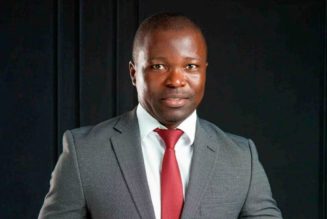
Among those examined was Mr Ngumi, the former Kenya Commercial Bank chief executive and investment banker who advised Jamhuri Holdings on the Helios exit.
According to the ODPP’s findings, Mr Ngumi acted under a separate advisory arrangement, declared taxes on his fees and was not a party to the government’s share purchase agreement.
Yet the legal fallout did not end with the prosecutors’ directions.
Mr Ngumi has now petitioned the High Court seeking orders against EACC, arguing that the anti-graft agency has continued pursuing investigations despite the ODPP’s closure directives, thereby violating his constitutional rights and exposing him to prolonged uncertainty.
The court declined to certify the application as urgent and directed that it proceed through the ordinary hearing process.
The petition has reopened questions about whether State institutions are acting consistently in high-profile commercial investigations and how prolonged inquiries affect individuals and businesses linked to strategic transactions.
At the same time, the Telkom dispute has expanded beyond Kenya’s borders.
Court documents in separate procurement proceedings reveal that Kenya is defending itself in arbitration proceedings in London involving Jamhuri Holdings under the London Court of International Arbitration rules.
The litigation arose from a dispute over the National Treasury’s procurement of legal services at Sh358 million to represent Kenya in the arbitration.
The court declined the challenge and noted that counsel had already appeared before the arbitral tribunal and warned that disruption of representation could prejudice the State’s position in proceedings involving potentially substantial financial exposure.
“It is also not lost on the court that a binding legal contract has already been executed to represent the country, and proceedings pursuant to that contract are underway,” the judge said, adding that withdrawing from the contract could prejudice Kenya’s representation and expose it to “potential liability and reputational harm in the ongoing arbitration proceedings.”
The ongoing arbitration attempt demonstrates that the Helios exit, which the government intended to resolve through the buyout, continues to generate legal and financial consequences years after the transaction closed.
The sequence of events has been striking. Helios expressed its intention to exit. The government negotiated terms and obtained approvals. Public funds were deployed to complete the acquisition. Anti-corruption investigations followed. Prosecutors twice directed closure of the inquiry.
A constitutional petition was filed by one of the transaction’s advisers. International arbitration proceedings then emerged.
Throughout that period, Telkom Kenya itself has remained caught in the middle.
The telecommunications operator occupies a strategically important position in Kenya’s digital economy. It competes in a market dominated by larger rivals while requiring continued investment to modernise infrastructure and expand services.
The risk
The prolonged legal and institutional disputes surrounding its ownership have unfolded against the backdrop of government’s efforts to position Nairobi as East Africa’s leading destination for foreign investment and technology capital.
For investors assessing political and regulatory risk, the Telkom saga illustrates how even transactions involving formal approvals and state participation can continue generating uncertainty long after implementation.
The uncertainty has coincided with broader challenges facing the telecommunications operator. Telkom’s market position has weakened over time amid intense competition from larger rivals.
Reports have indicated that employees have expressed frustration over delays in securing a strategic investor and concerns over the company’s future direction.
The episode also highlights the costs of unresolved disputes for governments seeking to reassure investors about policy consistency and predictability.
Whether the remaining legal battles eventually bring closure may determine how the Telkom transaction is remembered.
What began as a government-backed effort to secure control of a strategic asset has evolved into a cautionary account of how difficult it can be to conclude major State-linked deals.
Nearly four years after Helios sought the exit, the Telkom story remains unfinished.