
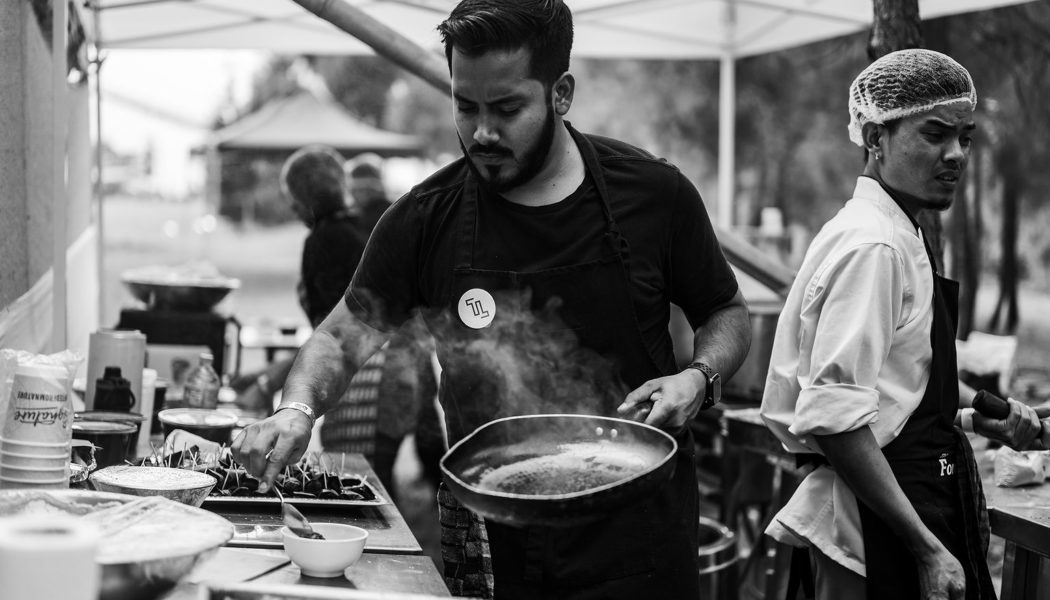
As chef of the iconic Bombay Canteen, Thomas Zacharias helped ignite fresh interest in local ingredients and lost food traditions. Now, through his fast-growing Local Food Club, he’s building something far more ambitious.
Thomas Zacharias, better known in India as Chef Zac, has cooked in some of the world’s top kitchens. After an educative but bruising stint in the upper echelons of New York fine dining, he returned to India to open the iconic Bombay Canteen, where he helped spark a movement in the country around local ingredients and forgotten food traditions. But he found his true calling as a storyteller, first through his popular “Chef on the Road” video series, then through his platform The Locavore, which he founded in 2021 after leaving the restaurant world to highlight sustainable food practices (he also put together our first League of Travelers journey to India). With his latest endeavor Local Food Club, Chef Zac is bringing these conversations off the page and into communities across the country.

Charly Wilder: Did you always know you wanted to be a chef?
Chef Zac: I grew up in Kerala, and I spent a lot of time in my grandmother’s kitchen. Both my parents worked full-time, so afternoons, weekends and summer holidays were spent with her. She was a very experimental cook. In retrospect, she cooked locally and seasonally—just as a way of life.
Back in the ’90s in India, there was no concept of celebrity chefs. I didn’t even know being a chef was a real profession until I was about 15 or 16. Once I knew, I was sure. I studied hotel management in India—because back then, we didn’t have culinary schools—and then I went to the Culinary Institute of America in New York.
After graduating, I applied to a few of the top restaurants I admired. One of them was Le Bernardin. I’d read On the Line, Eric Ripert’s book about how the kitchen worked, and I was obsessed. But when I got there, it was awful. I was severely bullied by a senior cook.
Charly Wilder: Have you watched The Bear?
Chef Zac: It was exactly like The Bear. That first season? That’s literally what I went through—every day.


Charly Wilder: Insane that shit goes on still.
Chef Zac: I think it’s less now. This was more than 15 years ago, and I’ve seen people being fired for things like that in recent years. But back then it was bad. And because I was on a student visa, I was too scared to speak up. I didn’t know what would happen to my immigration status. So I just waited out my visa and left.That experience made it clear: if I ever had my own kitchen, it would be the opposite of that.
Charly Wilder: So you moved back to India?
Chef Zac: Yeah. I started working at Olive in Mumbai, a modern Mediterranean restaurant, and after a few years, I took a sabbatical to travel through Europe. But then I realized: I had spent all my savings exploring foreign cuisines, and I’d done nothing to explore my own. So at that point I decided to make an 180 degree shift and started focusing on Indian food.
Serendipitously this was the exact time that the people behind Bombay Canteen were looking for a chef. So I joined in 2014, but I still knew very little about Indian cuisine. I realized that I couldn’t really learn from any texts or cookbooks because we didn’t have reliable ones in India. The only way for me to learn about regional cuisine was to travel.

Charly Wilder: So this is how “Chef on the Road” started?
Chef Zac: Yes, I started documenting my travels through the prism of a curious, exploratory chef, very expired by Bourdain. I did a food road trip across 18 regions in India. I found recipes, techniques, stories, and ingredients I’d never seen before—stuff that wasn’t in any cookbook, wasn’t being taught, wasn’t on restaurant menus. What I saw and experienced blew my mind.
Charly Wilder: Can you give an example?
Chef Zac: I remember going just 50 miles outside Mumbai and meeting native tribal communities who were still foraging and cooking with ingredients passed down for generations—plants and herbs that nobody in the city had even heard of. I like to ask people: how many of you know avocado? Everyone raises their hand. Then I say: how many of you know shevla? Nobody does. But shevla grows right here, just outside the city. That moment really stuck with me.
The long-term dream is a Local Food Club in every neighborhood in India.
Charly Wilder: And you translated this to the table at Bombay Canteen?
Chef Zac: Yes, that was the point where I found a stronger sense of purpose and we made it our mission to bring these regional foods and stories to the forefront. We were the only restaurant in the country doing that at the time. It got national attention. Awards. But I was still traveling, going to farms and villages, and I realized: we’re losing so much. So many traditions. So much biodiversity. And meanwhile, in the restaurant, I felt more and more disconnected from the impact I actually wanted to make. So after seven years, I decided to leave, and start The Locavore. I didn’t want to just be a chef—I wanted to build a platform that could champion the people doing the real work on the ground and connect them to the people who never get to hear their stories.
Charly Wilder: How do you describe The Locavore to people unfamiliar with it?
Chef Zac: In a nutshell, The Locavore is a platform that champions local food and sustainability across India through storytelling, through events and social impact projects, and through partnering with farmers and grassroots organizations. In a sense, it’s a lot of businesses in one, working across themes and geographies.


Charly Wilder: The stories you tell are so deeply reported and locally focused….
Chef Zac: Yes, we’re only putting out 8-10 stories a month, but when we tell a story, for instance, of a producer, we talk about why we love them and then we break down their practices: what they’re doing with traditional knowledge, how they’re packaging their products, what’s in their products, how they compensate and treat their workforce. Are they organic? What are they doing with the community? And then we lead readers to products they can buy to close the loop.
Charly Wilder: Let’s talk about the Local Food Club. What is it, and how did it come to be?
Chef Zac: From the beginning with The Locavore, we wanted to create more than just a storytelling platform or an impact consultancy. We realized there aren’t many spaces around food where people feel like they truly belong—especially those who care about sustainability, culture, community. We used to do one-off events around the country, and every time, people would say, “We love this. We found our people. We want to do more. But you’re going to leave now—and what happens here?” That kept happening.
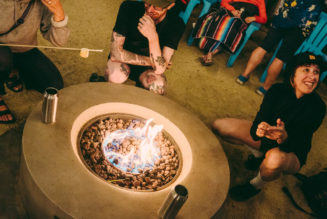
So I thought: what if we didn’t have to be there in person? What if we created a decentralized model where we are the hub, but the actual events are hosted by the community? That’s how the Local Food Club started. We provide the programming and structure—monthly themes, newsletters, conversation prompts. But the events themselves are hosted by volunteers. Restaurants and cafés offer their spaces for free. And every first Sunday of the month, from 4 to 7 p.m., the potlucks happen all over the country.

Charly Wilder: How big is it now?
Chef Zac: We started in May in six cities. In August, we’ll be in 23 locations. We already have 3,000 members and 26 WhatsApp groups. It’s kind of wild. Even in big cities like Mumbai, where we have more than 500 members, we cap each potluck at 35 people to keep it intimate. So now Mumbai has five different neighborhood potlucks each month.
Charly Wilder: So what does a typical Food Club gathering look like?
Chef Zac: It’s from 4 p.m. to 7 p.m. People arrive and while they’re waiting, we usually have something fun—like a whiteboard where they draw themselves as a food or ingredient. Then we do what we call the Locavore Shuffle—it’s basically speed dating with food questions. People sit opposite each other and rotate every five minutes, using prompts about food memory, anthropology, culture. It completely transforms the room—strangers become friends.
We follow that with a group activity around the theme of the month. Last month it was Monsoon Sharing Circle—people talked about monsoon memories, what the season means to them, the ingredients they grew up with, seasonal dishes in their families. And then we do a potluck sharing circle. You don’t have to bring a dish—you can bring a hyperlocal ingredient, a family utensil, or a food story. Everyone shares, and then we eat together.

Charly Wilder: What do people actually cook and bring?
Chef Zac: We nudge people to think seasonally and locally. Like during monsoon season, we encourage people to cook with monsoon vegetables or use ingredients their grandparents used. Some folks are already cooking that way, others are learning from each other.
We’re not rigid, though. Someone brought chocolate chip cookies—but with flour from native wheat and chocolate sourced from a single-origin Indian cacao grower. It’s all about intention. Recently I was in Jaipur and corn was in season. There were a couple of corn dishes, some amazing fritters, and a dish called arbi ki kachri—which I’d never tasted before.
Charly Wilder: Is the idea just to gather and eat, or do the clubs take on bigger projects?
Chef Zac: Right now the focus is on gathering—creating space, building trust, making it fun. But over time, each club can start taking on local projects. One might document traditional markets. Another might start a composting initiative. Another might revive a lost recipe tradition. Eventually we want Local Food Clubs in villages, too—not just cities. We’re already piloting this with grassroots organizations in rural areas. The long-term dream is a Local Food Club in every neighborhood in India.

Charly Wilder: What’s the big-picture mission?
Chef Zac: At The Locavore, we work across themes: food sovereignty, seed preservation, nutrition, climate resilience, livelihoods. But we don’t want to dictate what each club does. We believe any impact is good impact. You might as well lean into what people are excited about—and then we help champion that.
Charly Wilder: What did you draw yourself as on the whiteboard?
Chef Zac: Jamun. It’s a monsoon berry—really purple, really local. It’s unique, it’s versatile. I like that it leaves a mark. It makes your tongue purple. I like to think I leave an impact.
Charly Wilder: Yes, you’re turning tongues purple all across the world. Thank you, Zac!
For more information on how to visit India with Chef Zac and the League of Travelers, visit our trip page: The Other Side of Goa