

Congress
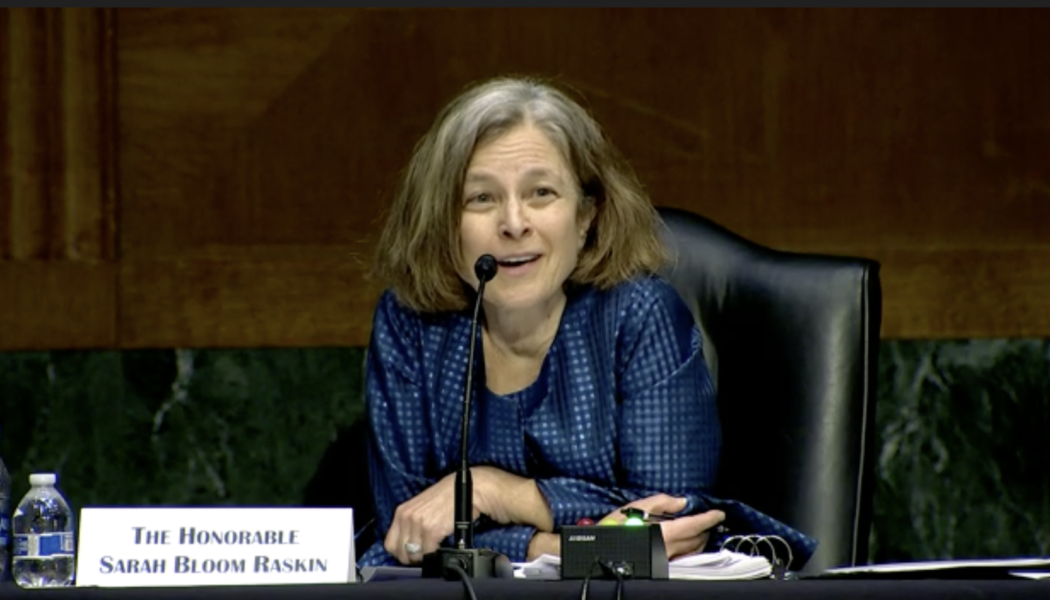

Concerns over Fed nominee may stop Senate from confirming Biden’s picks: Report
Members of the U.S. Senate Banking committee have reportedly divided along party lines regarding President Joe Biden’s pick of Sarah Bloom Raskin as vice chair for supervision for the Board of Governors at the Federal Reserve. According to a Tuesday report from Reuters, Senator Pat Toomey, the ranking member on the Senate Banking Committee, said he had asked the 12 Republican senators on the committee to not attend a meeting in which members were expected to vote on President Biden’s nominees for the Fed. Toomey reportedly said that Democratic leadership can proceed with “five of the six nominees” put forth by the President and expect Republican support — with the exception of Raskin. Republicans’ boycott is reportedly due to concerns over allegations that the prospective Fed vice chair fo...
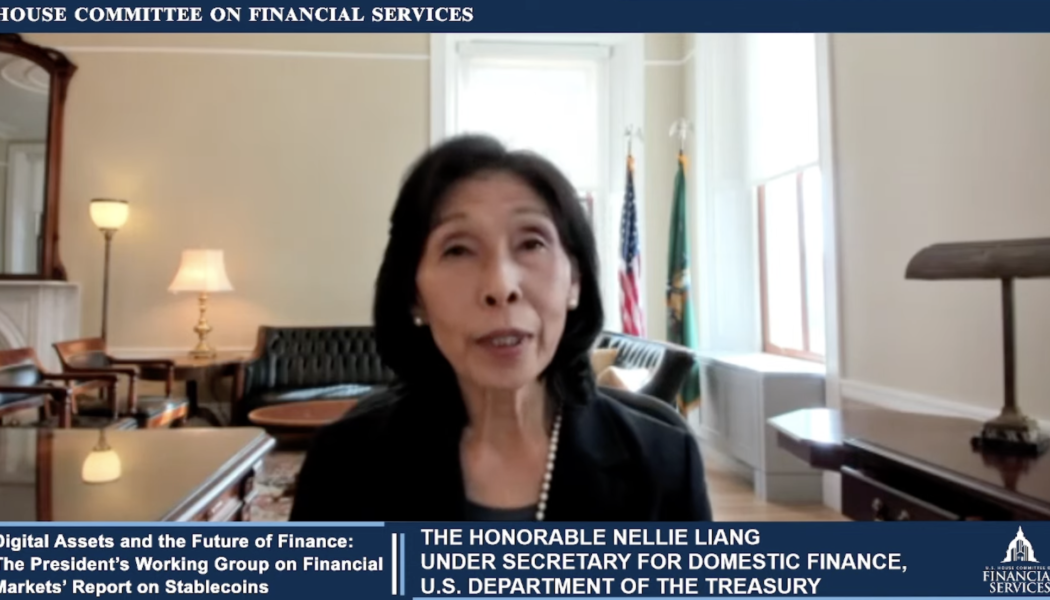

US lawmaker pushes for state-level regulations on stablecoins at hearing on digital assets
Whether regulations on stablecoins and digital assets should be addressed at the state or federal level was the topic of discussion among at least two U.S. lawmakers in a hearing for the House Committee on Financial Services. Speaking virtually at a Tuesday hearing titled “Digital Assets and the Future of Finance: The President’s Working Group on Financial Markets’ Report on Stablecoins,” North Carolina Representative and ranking committee member Patrick McHenry asked the committee to consider state-level regulatory frameworks in lieu of a comprehensive federal law on stablecoins. In response to McHenry, Jean Nellie Liang, the Under Secretary for Domestic Finance at the U.S. Treasury Department, said there was no explicit law governing stablecoins and digital assets at the federal level bu...


Jack Dorsey on UBI: Bitcoin encourages transparency, long-term thinking
Twitter co-founder and Block (previously Square) CEO Jack Dorsey discussed the implications of a Bitcoin (BTC)-powered universal basic income (UBI) strategy with US congressional candidate and a full-time elementary school teacher, Aarika Rhodes. “Obscurity of information forces and incentivizes people to negative (financial) behaviors that don’t work for them, their community or family,” said Dorsey while pointing out the lack of transparency within the existing centralized financial system. “If there’s one thing to focus on in Bitcoin — the operations are transparent, the code is transparent, the policy is transparent.” This base foundation of BTC is what Dorsey believes has the potential to solve numerous use cases and problems as a direct result of using fiat currency. Through bu...


Fossils vs. Renewables, PoW vs. PoS: Key policy issues around crypto mining in the U.S.
On Jan. 27, a group of eight U.S. lawmakers, led by Senator Elizabeth Warren, sent letters to the world’s six largest Bitcoin mining companies, demanding to reveal the detailed data on their electricity consumption. This isn’t the first time Senator Warren requested this information from a mining operation — last month a similar letter was sent to Greenidge Generation, which uses a natural gas plant to power its facility. These moves highlight the increasing regulatory pressure on crypto mining businesses in the United States. But, as last week’s Congress hearing showed, the growing scrutiny might turn out to be an opportunity to align the mining sector’s development with the broader political push for clean energy. Here are some of the key themes around crypto mining that have captured th...

House members urge US Treasury Secretary to clarify definition of broker in infrastructure law
A bipartisan group of members from the U.S. House of Representatives called on Treasury Secretary Janet Yellen to clarify the language in the infrastructure bill signed into law in November around the definition of “broker.” In a Wednesday letter, House Financial Services Committee ranking member Patrick McHenry and ten other representatives urged Yellen to reference the Keep Innovation in America Act to “ensure that any future guidance” in the November infrastructure bill would provide “the necessary clarity to the digital asset ecosystem.” In addition to the reporting requirements, the lawmakers said that the Treasury Department should narrow the scope of the information a broker can capture, as it would risk “the creation of an unlevel playing fie...

U.S. Congressman calls for ‘Broad, bipartisan consensus’ on important issues of digital asset policy
In a letter to the leadership of the United States House Financial Services Committee, ranking member Patrick McHenry took a jab at “inconsistent treatment and jurisdictional uncertainty” inherent in U.S. crypto regulation and called for the Committee to take on its critical issues. McHenry, a Republican representing North Carolina, opened by mentioning that the Committee’s Democrat Chairwoman Maxine Waters is looking to schedule additional hearings addressing matters pertinent to the digital asset industry. He further stressed the need for identifying and prioritizing the key issues and achieving a “broad, bipartisan consensus” on the matters affecting the industry that holds immense promise for the financial system and broader economy. Citing the confusion that the industry faces due to ...


House members call for an end to lawmakers trading stocks — is crypto next?
Congresspeople currently HODLing or actively trading in crypto may have to stop doing so while in office if recent pushes to ban lawmakers from investing in stocks gain enough support. In a Monday letter addressed to Speaker Nancy Pelosi and Minority Leader Kevin McCarthy, 27 members of the U.S. House of Representatives called for action “to prohibit members of Congress from owning or trading stocks.” Among the bipartisan group of lawmakers who signed onto the letter was Illinois congressperson Bill Foster, who is also a member of the Congressional Blockchain Caucus. In addition, the letter seems to have support from politicians diametrically opposed on major issues like Progressive Democrat Rashida Tlaib and Republican Matt Gaetz, who is reportedly under investigation by the Justice Depar...


Early birds: U.S. legislators invested in crypto and their digital asset politics
According to some estimates, as many as 20% of Americans were invested in cryptocurrencies as of August 2021. While the exact number can vary significantly from one poll to another, it is clear that cryptocurrencies are no longer just a niche passion project for tech enthusiasts or a tool for financial speculation. Rather, digital assets have become a widespread investment vehicle with the prospect of becoming mainstream. Optimistic as that is, this level of mass adoption still does not enjoy a commensurate political representation, with senior United States politicians largely lagging behind the curve of crypto adoption. This makes the very narrow group of congresspeople who are also hodlers particularly interesting. As a lawmaker, does owning crypto, or at least having some crypto ...


Law Decoded: First-mover advantage in a CBDC conversation, Jan. 10–17
Last week saw an unlikely first move in the opening narrative battle around a prospective U.S. central bank digital currency: Congressperson Tom Emmer came forward with an initiative to legally restrict the Federal Reserve’s capacity to issue a retail CBDC and take on the role of a retail bank. This could be massively consequential as we are yet to see a similarly sharp-cut expression of an opposing stance. As a matter of fact, it is not even clear whether other U.S. lawmakers have strong opinions on the matter other than, perhaps, condemning privately issued stablecoins as a digital alternative to the dollar. By framing a potential Fed CBDC as a privacy threat first, Emmer could tilt the conversation in the direction that is friendly to less centralized designs of digital money. Below is ...


ConstitutionDAO, a ‘crypto red alert’ and other cases of crypto-powered social action in 2021
From the very beginning of the cryptocurrency movement, the societal potential of Bitcoin (BTC) has been one of the fundamental selling points. The decentralized design of crypto-based systems introduces the possibility of bringing individuals together to work toward shared goals, as well as enabling them to pool resources while remaining insulated from outside control. 2021 saw a number of cases that could serve as evidence of this emancipatory power of digital assets. ConstitutionDAO: $49 million raised in a few days Arguably, the most high-profile case of a massive fundraising effort enabled by a decentralized autonomous organization in 2021 was ConstitutionDAO. The group was formed in November with the sole objective of purchasing an original copy of the United States Constitution, whi...


Law Decoded: Three regulatory trends of 2021, Dec. 20–27
It is that time of the year: Singular events must be abandoned in favor of end-of-year, big-picture narratives and yearly lessons learned. As many governments across the globe finally had to face the rapidly mainstreaming realm of digital finance, the year is packed with developments in crypto policy and regulation that are impossible to fit into a neat little summary. However, it is possible to try and distill several major trends that have come to the fore during the past 12 months, and that will keep shaping the relationship among societies, state power and the crypto space as we roll into 2022. Below is the concise version of the latest “Law Decoded” newsletter. For the full breakdown of policy developments over the last week, register for the full newsletter below. U.S. Congress notic...

Bitcoin book for American policymakers gets 5x funding on Kickstarter
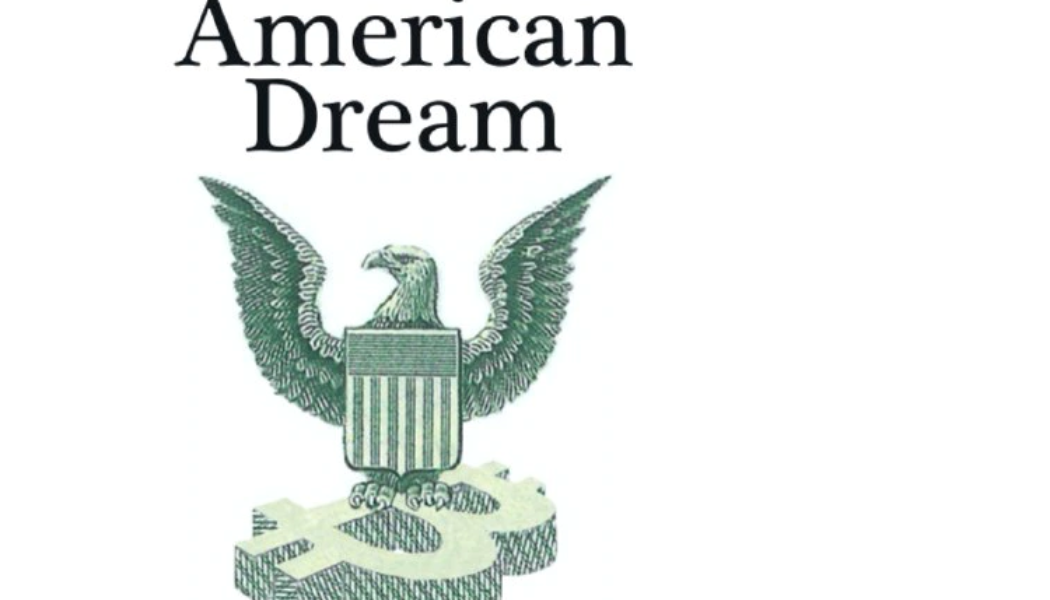
A group of eight Bitcoin (BTC) enthusiasts launched a Kickstarter campaign to publish an educational book for America’s federal policymakers, to reduce their reliance on the traditional media narrative on cryptocurrencies. The campaign managed to attract $23,151 in funding, nearly five times the goal of $5,000. The book was conceptualized soon after the United States House of Representatives passed the $1.2 trillion bipartisan infrastructure bill, which mandates stringent reporting requirements for the crypto community. According to the authors: “We set out to write a book to help policymakers understand where Bitcoin users are from and what they care about. We want to dispel the notion that it’s a nerd money and show how it’s impacting so many people in America.” Possibl...
