

Congress


Law Decoded: Three regulatory trends of 2021, Dec. 20–27
It is that time of the year: Singular events must be abandoned in favor of end-of-year, big-picture narratives and yearly lessons learned. As many governments across the globe finally had to face the rapidly mainstreaming realm of digital finance, the year is packed with developments in crypto policy and regulation that are impossible to fit into a neat little summary. However, it is possible to try and distill several major trends that have come to the fore during the past 12 months, and that will keep shaping the relationship among societies, state power and the crypto space as we roll into 2022. Below is the concise version of the latest “Law Decoded” newsletter. For the full breakdown of policy developments over the last week, register for the full newsletter below. U.S. Congress notic...

Bitcoin book for American policymakers gets 5x funding on Kickstarter
A group of eight Bitcoin (BTC) enthusiasts launched a Kickstarter campaign to publish an educational book for America’s federal policymakers, to reduce their reliance on the traditional media narrative on cryptocurrencies. The campaign managed to attract $23,151 in funding, nearly five times the goal of $5,000. The book was conceptualized soon after the United States House of Representatives passed the $1.2 trillion bipartisan infrastructure bill, which mandates stringent reporting requirements for the crypto community. According to the authors: “We set out to write a book to help policymakers understand where Bitcoin users are from and what they care about. We want to dispel the notion that it’s a nerd money and show how it’s impacting so many people in America.” Possibl...

Senate hearing on stablecoins: Compliance anxiety and Republican pushback
On Dec. 14, the United States Senate Banking, Housing and Urban Affairs Committee held a hearing titled “Stablecoins: How Do They Work, How Are They Used, and What Are Their Risks?” The testimonies, both spoken and written, focused largely on the last two issues, as anxieties over Know Your Customer compliance and the U.S. dollar inflation threat dominated the discussion. Held less than a week after the House of Representatives Financial Services Committee’s hearing on digital assets, which was generally perceived as “constructive”, the meeting held by the Banking Committee was expected to be tough. Senator Sherrod Brown, a Democrat from Ohio who chairs the Committee and had called the hearing, is infamous for his critical stance on the crypto industry, and the November report from Preside...
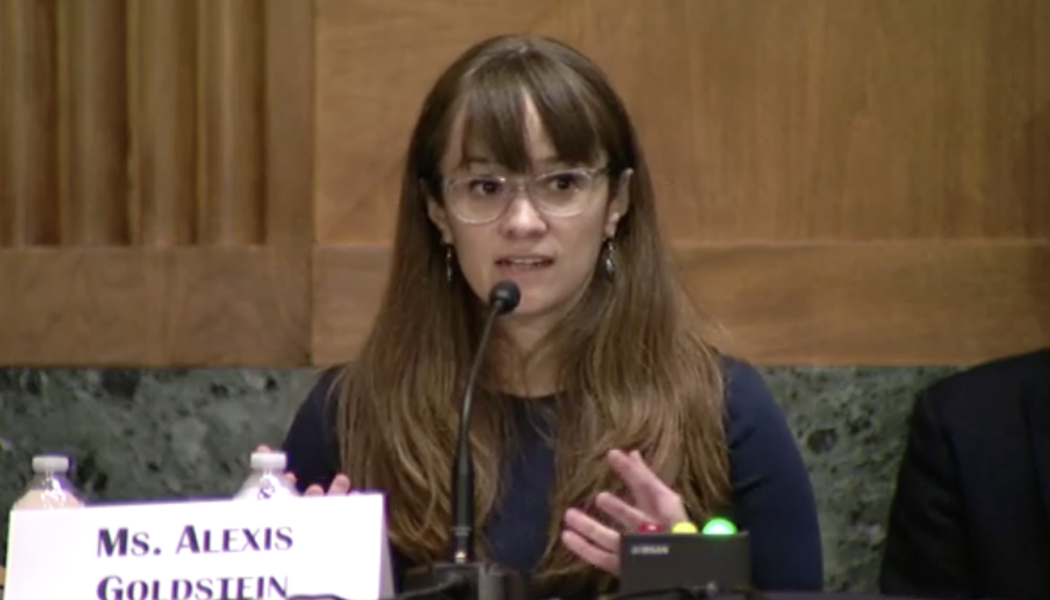

Witnesses offer differing opinions on approach to stablecoins at congressional hearing
The Senate Committee on Banking, Housing and Urban Affairs heard from several expert witnesses with knowledge of stablecoins who urged lawmakers to establish a clear regulatory framework but could not seem to agree on where lines would be drawn. In a Tuesday hearing on “Stablecoins: How do They Work, How Are They Used, and What Are Their Risks?” Hilary Allen, a professor at the American University Washington College of Law, Alexis Goldstein, director of financial policy at Open Markets, Jai Massari, partner at Davis Polk & Wardwell, and Dante Disparte, chief strategy officer and head of global policy at Circle, addressed U.S. senators regarding some of the risks stablecoins may pose to the U.S. financial system and how lawmakers could handle regulating the space. Goldstein’s written te...

‘DeFi is the most dangerous part of the crypto world,’ says Senator Elizabeth Warren
Massachusetts Senator Elizabeth Warren did not hold back in her criticism of decentralized finance (DeFi), expressing concern about how a run on stablecoins would affect the average investor. In a Tuesday hearing with the Senate Banking Committee discussing stablecoins, Warren questioned Hilary Allen, a professor at the American University Washington College of Law, as to whether a run on stablecoins could potentially endanger the United States financial system. Though Allen said an “en masse” redemption of stablecoins from people who had lost faith in the tokens would be unlikely to have “systemic consequences” for traditional markets at present, the DeFi system would be more likely to feel the effects. Warren countered that because stablecoins provided “the lifeblood of the DeFi eco...

Law Decoded: A different Congress hearing, Dec. 6–13
The biggest regulatory story of the week was a United States House Committee on Financial Services hearing squarely focused on crypto. Even the event’s title — “Digital Assets and the Future of Finance: Understanding the Challenges and Benefits of Financial Innovation in the United States” — conveyed a different vibe than countless previous Congressional meetings that had been first and foremost about investor protection or security risks or threats to financial stability. Judging from reactions from many industry participants and experts, the exchange has been received as an overwhelming net positive, with legislators asking informed questions and otherwise acting like their goal was to understand this new thing rather than act on preconceived notions. Of course, there were tired qu...

4K Hate: AOC Blasts GOP Minority Leader For Running “Ku Klux Klan Caucus”
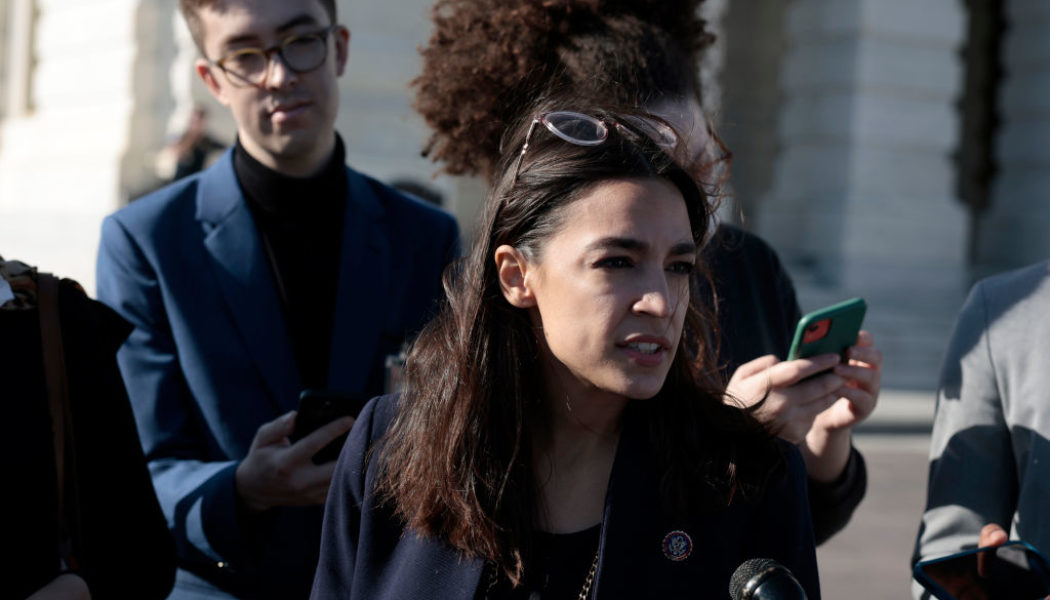
HipHopWired Featured Video Source: Anna Moneymaker / Getty Representative Alexandria Ocasio Cortez laid into GOP Minority Leader Kevin McCarthy for yet more silence in the face of hateful attacks, this time against another Congressional colleague. AOC’s fellow Democratic congresswoman, Rep. Ilhan Omar of Minnesota, has been the focus of renewed racist & Islamophobic attacks as a result of vitriol that has been uttered by Rep. Lauren Boebert of Colorado comparing her to a suicide bomber and alleging she was trying to harm people on January 6th during the storming of the Capitol last week. Omar then held a press conference on Wednesday (December 1st) to share a vile voicemail calling her the N-word as well as a jihadist. She had been receiving the messages after Boebert’s comments, sayin...

GOP Shoe Buffer Sen. Tim Scott Allegedly Lied About “Defunding The Police” Claims In Policing Reform Discussions
HipHopWired Featured Video Source: Kevin Dietsch / Getty Sen. Tim Scott has a record of being something of a stooge for the Republican Party and often gets marched out in front of cameras to serve in an elevated token Black role. The GOP senator made explosive claims that policing reform talks in Congress fell apart due to defunding the police being included in measures, but it appears Scott lied about it, allegedly. According to a report from The Washington Post, the South Carolina politician issued the claims after Democrats ended the talks after Sen. Cory Booker and Rep. Karen Bass stated that they made several compromises to satisfy the demands of their GOP counterparts but their side was unwilling to relent. This lead to Scott publicly saying that Democrats were pushing for a “defund ...


Cross River: Igbo leaders to partner with police on community policing
President of Igbo Congress Cross River chapter, Prince Raymond Atulomah, has stated that Ndi Igbo would partner with police command in the area of community policing. Speaking during a courtesy call on the Cross River Commissioner for Police, Mr Sikiru Akande, in his office in Calabar on Friday, Atulomah said Igbo leaders crave for a crime-free society and therefore would contribute to ensuring that the police Command succeed in the area of crime fighting. He said Igbo are committed to promoting a peaceful co-existence between them and host communities especially in local security. He said: “We are here to pay solidarity visit to the Commissioner and congratulate him on his appointment. We pledge to collaborate with your office in the area of community policing. We promise to be law abidin...


Anambra election: 22 political parties storm INEC office, want participation
Twenty-two political parties, on Friday, stormed the headquarters of the Independent National Electoral Commission (INEC), in Abuja, to submit names and particulars of candidates for the November 6 Anambra governorship election. The parties, which were part of the 74 political parties deregistered by INEC last year, insisted that they must be on the ballot as they had obtained a declarative judgment by the Appeal Court quashing their deregistration by the INEC. The electoral body, however, rejected their request, insisting that the parties remained deregistered. It would be recalled that the parties had, on March 18 this year, submitted letters of notice for the conduct of the governorship primaries for the Anambra poll. But INEC, then, in a swift reaction, signed by INEC National Commissi...


NLC urges National Assembly to transform NNPC to public liability company
The Nigeria Labour Congress has cautioned the National Assembly to handle with utmost care what it described as the very sensitive issue of the unbundling of the Nigeria National Petroleum Corporation. It urged the lawmakers to transform the NNPC to a public liability company as part of the reforms of the oil and gas sector captured in the Petroleum Industry Bill. The NLC President, Ayuba Wabba, said this on Tuesday, in a statement lauding the passage of the PIB titled, ‘Congress commends the national assembly for passing the petroleum industry bill – demands that the NNPC be transformed into a public liability company.’ It stated, “We know that the process of making the PIB a law has not been completely consummated as the passed bill would still need to be harmonized by a conference of th...


Imo council chairs petition President Buhari over ‘lopsided appointments’ in NDDC
The Oil Producing Local Government Areas (LGAs) in Imo State under the auspices of Urashi Peoples’ Congress (UPC) has called on President Muhammadu Buhari to reverse what it described as persistent lopsided appointment in the management of the Niger Delta Development Commission (NDDC). In an open letter addressed to the president, which was signed by the Coordinator, Mr. Reginald Uwakwe, a copy of which was made available to newsmen yesterday, the group lamented that the appointments into key positions i.e. the managing director of the NDDC, have been allegedly skewed in favour of only four states of Rivers, Akwa-Ibom, Bayelsa and Delta, out of the nine member states that made up the commission. It said between 2001 and 2021, the list of managing directors and their states included Dr. God...
