

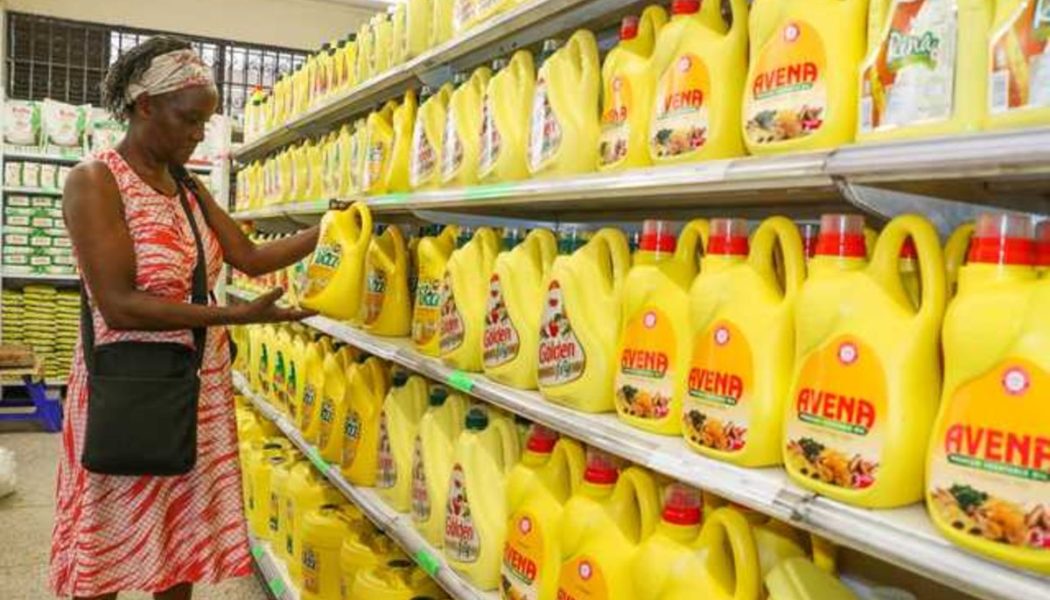
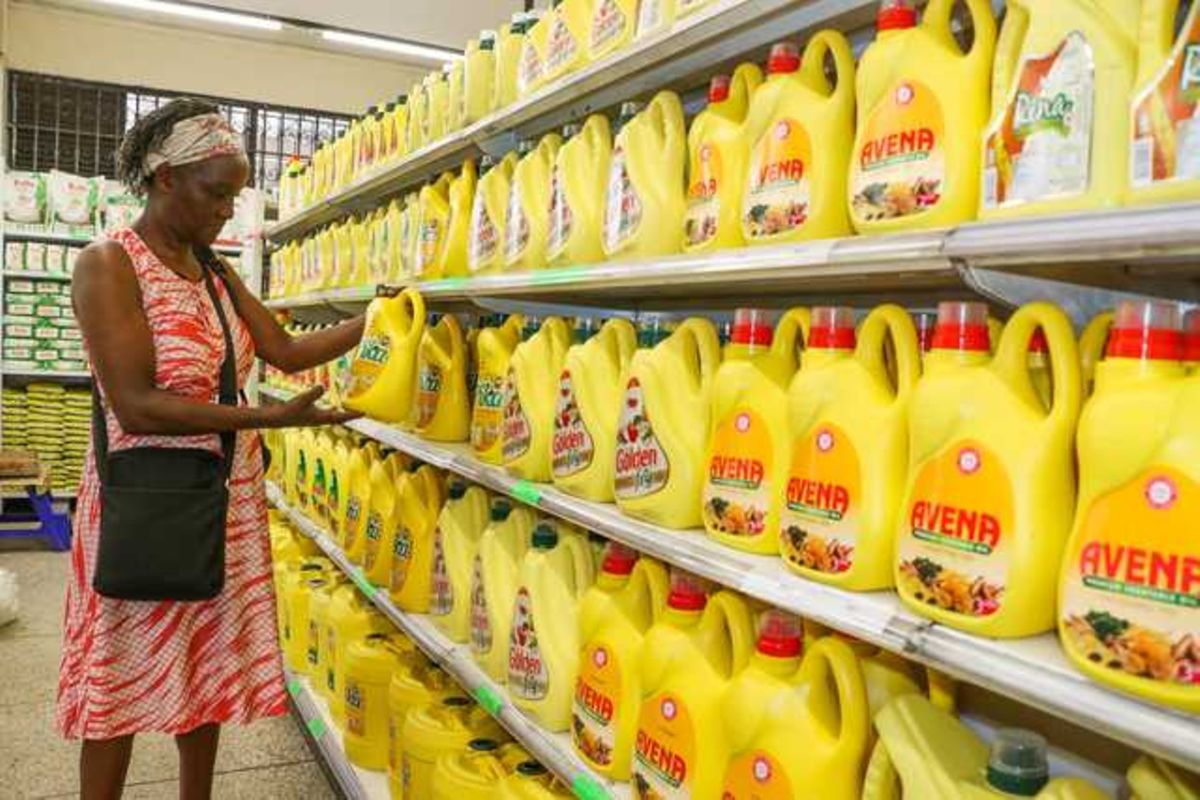
The price of cooking oil has climbed back to its highest level since the global food crisis of 2022, exposing households to renewed pressure from international commodity markets and reviving concerns over Kenya’s heavy dependence on imported edible oils.
Data from the Kenya National Bureau of Statistics (KNBS) shows that the national average retail price of a litre of salad cooking oil stood at Sh358.09 in July, the highest since October 2022, when it averaged Sh366.48.
The latest price is only Sh21.75 below the Sh379.84 reached in September 2022 during the commodity price shock triggered by Russia’s invasion of Ukraine.
The return to crisis-era prices comes after nearly two years of relative stability, suggesting much of the relief consumers enjoyed after the global supply chain disruptions has gradually been eroded.
Reports by the Food and Agriculture Organization (FAO) show that global vegetable oil prices rebounded in mid-2026, fuelled by higher prices of palm and rapeseed oil. The FAO international vegetable oil price index rose 3.8 percent (7.0 points), which is about 23.3 percent higher than the figures recorded a year prior. Kenya is an importer vegetable oil and global price changes reflect locally.
The Central Bank of Kenya (CBK) had earlier in the year warned that renewed pressure was building in international edible oil markets. For example, international palm oil prices rebounded in June, supported mainly by expectations of tighter export availability from Indonesia, on account of stronger domestic feedstock demand for biodiesel and potentially lower output due to declining yields. Global rapeseed oil prices also continued to rise, driven largely by firm biofuel demand and unfavourable weather conditions affecting plantings in Australia and Canada.
Following the Monetary Policy Committee meeting in April, CBK Governor Dr Kamau Thugge said global edible oil inflation had accelerated as prices of palm, soybean, sunflower and rapeseed oils increased.
“Edible oils price inflation increased on account of higher prices of palm, soy, sunflower and rapeseed oils,” Dr Thugge said.
He attributed the increase in palm oil prices to spillover effects from higher crude oil prices following the conflict in the Middle East and lower production in Malaysia, while soybean oil prices rose on expectations of stronger biofuel demand in the United States.
“Sunflower and rapeseed oil prices increased on tight supply and prospects of strong demand amid elevated energy prices,” the CBK chief said.
His comments underscore how developments in global commodity markets continue to determine the price Kenyan consumers pay for one of the country’s most essential household items.
The experience of the last cooking oil crisis, however, suggests that international markets are only part of the reasons for price increments in Kenya.
An investigation by the Common Market for Eastern and Southern Africa’s (Comesa’s) Competition Commission found that Kenyan consumers may have paid an estimated $525 million (Sh67.9 billion) more for cooking oil between July and December 2022, after manufacturers continued raising retail prices even after the cost of crude palm oil and shipping had started to fall.
The findings, released in November 2024, showed that Kenyan consumers paid an additional $525 million for cooking oil during the six months, more than seven times the estimated $60 million (Sh7.8 billion) extra paid by consumers in Zambia.
Comesa said retail prices initially reflected soaring global crude palm oil prices and freight costs between early 2021 and the first quarter of 2022. However, it found that the gap between production costs and supermarket prices widened after international prices started reducing.
“The pricing of vegetable oil and, in particular, the very high increases and the sustained high consumer prices even after input costs returned to their earlier levels, points to weak levels of competition,” the watchdog wrote in the report on vegetable oil value chain in East and Southern Africa.
It described the trend as the “rockets and feathers” phenomenon, where prices rise rapidly when costs increase but fall only slowly after input costs decline.
While the Comesa watchdog stopped short of concluding there had been collusion, it said the pricing patterns warranted further investigation because they could reflect weak competition.
Kenya’s edible oil industry is highly concentrated, with Bidco, Pwani Oil and Kapa Oil accounting for nearly 90 percent of the country’s refining capacity among about six processors.
Manufacturers had argued during the 2022 crisis period that shortages of crude palm oil and difficulties accessing US dollars from local banks kept production costs elevated despite easing international prices.
Kenya remains vulnerable because local refiners import most of the crude palm oil used to manufacture cooking oil, largely from Malaysia and Indonesia.
According to Comesa, crude palm oil accounts for about 80 percent of production costs, with transport charges, import declaration fees at 2.5 percent of customs value, the railway development levy at 2.0 percent and value-added tax at 16 percent further increasing the cost before products reach retailers.
The KNBS data shows that average retail prices fell from the September 2022 levels to about Sh318 per litre by mid-2023 before stabilising around Sh326 to Sh333 through much of 2024.
Prices then began climbing steadily, rising from Sh342.98 in December 2025 to Sh358.63 in June before easing marginally to Sh358.09 in July, leaving cooking oil above Sh353 per litre for four consecutive months.
The renewed increase comes nearly four years after the government intervened directly in the market through the Kenya National Trading Corporation (KNTC), awarding controversial contracts worth Sh16.5 billion to import edible oil in a bid to lower consumer prices.
The programme later came under scrutiny after KNTC disclosed losses of at least Sh6.5 billion, fuelling questions about whether the intervention delivered value for taxpayers.
The latest jump is also expected to renew debate over Kenya’s efforts to reduce dependence on imported edible oils.
The government in 2023 announced plans to work with Indonesia to promote commercial palm oil farming in western Kenya and parts of the Coast through large-scale plantations and out-grower schemes.
Studies by the Kenya Agricultural and Livestock Research Organization indicate that the crop can thrive in several counties, but production remains too small to meet domestic demand.