

Digital Transformation News


Blue Prism’s Greg Newton on the Digitalisation of Customer Experience
Greg Newton, Country Manager, South Africa, Blue Prism. Blue Prism is a global leader in intelligent enterprise automation. The company says it can transform the way work is done and accelerate the operational efficiency of organisations by “…making it easy for your people to automate the processes that matter most.” The automation of processes is one of the cornerstones for the digital transformation of enterprises, because it eliminates the need for cumbersome legacy tasks, like paper-based communications, and allows organisations to focus on one of the real keys for success in the digital age – customer experience. With this in mind, ITNA’s Luis Monzon had to opportunity to reach out to Greg Newton, Country Manager – South Africa at Blue Prism, to discuss how increasing business automat...


Why A Future-Proof Data Centre Environment is Key to Digital Transformation
Image sourced from Capacity Media. According to a recent report, Africa needs 700 data centre facilities to meet the growing demand for capacity and density in today’s digitally-driven operating environment. This is easier said than done given the power, land, and water requirements of modern data centres. And yet, this has become a non-negotiable at a time when cloud adoption has accelerated and become a top business priority. “These mission-critical facilities require resilient infrastructure to ensure uninterrupted services that enable business, operations, and systems to function effectively and continuously – especially given the ongoing lockdown conditions still experienced in many African countries, but for a post-pandemic future too,” says Peter Hodgkinson, Managing Director, WSP, ...


Harish Lala, CEO of Zensar SA, on Mindsets for Successful Digital Transformation
Harish Lala, CEO of Zensar South Africa. Harish Lala is the CEO of Zensar South Africa, a technology consulting and services company present in 33 locations globally. Zensar specialises in helping organisations with their digital business transformation, and the company has experience with firms in the banking, financial services and insurance, retail, hi-tech and manufacturing sectors. With more than two decades of experience in the industry, Harish is a wealth of insightful observations, and his knowledge of digital transformation runs deep. Recently, Harish revealed that Zensar SA is 100% digital, with employees mostly working remotely and daily business operations monitored through company apps on his personal mobile device. With this in mind, IT News Africa’s Luis Monzon had the oppor...


Jonas Bogoshi, CEO of BCX SA, on Digital Transformation & The Future of Work
Jonas Bogoshi CEO of BCX SA. Image sourced from The CEO Magazine. Jonas Bogoshi is the CEO of BCX South Africa, an ICT company based in Johannesburg that offers solutions to help future proof businesses. The company says, “We take care of your technology so that your workforce is free to focus on your customers’ needs, build productivity, grow profits, and embark on the journey to Digital Transformation.” In 2004 the company was listed on the Johannesburg stock exchange and has grown from strength to strength. Today, BCX works with businesses from new start-ups to JSE-listed enterprises and international corporations. Appointed to his current role in June of 2018, Jonas is a big proponent of digital transformation and the benefits it holds. One of his personal goals for BCX is to see the c...

Why Technology Needs to Be Harnessed for Africa to Recover from the Pandemic
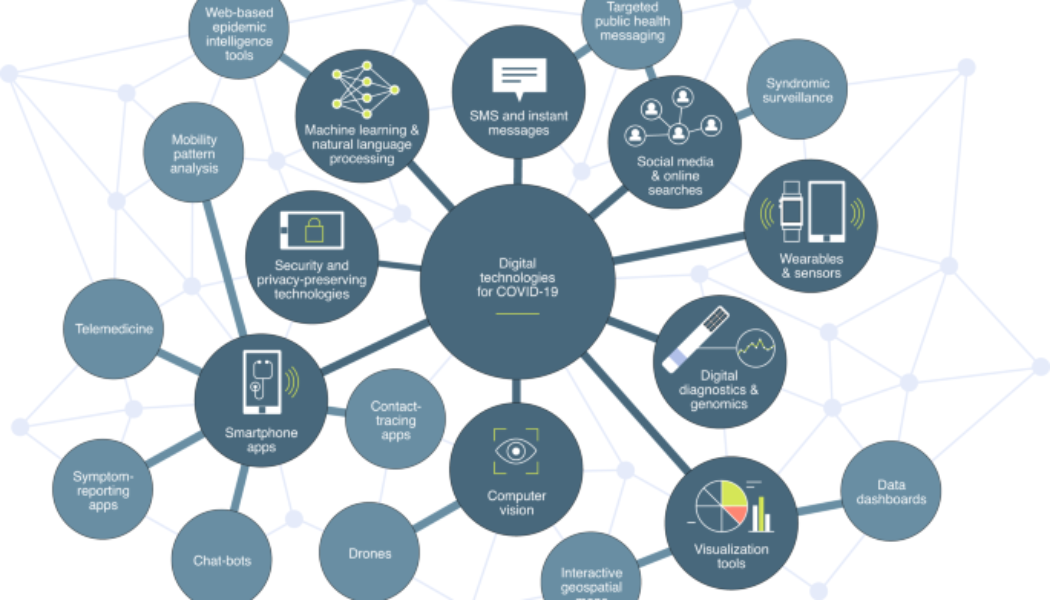
Sourced from Redbubble and iStock. Despite the economic devastation caused by the COVID-19 pandemic on African economies, there is no doubt that the continent has the potential to recover given the fact that with a large youth population it promises to be a major consumption market in the years ahead with significant capacity for growth. However, it urgently needs to achieve faster economic growth in order to create jobs, grow its export revenue and become more globally competitive. The African Continental Free Trade Agreement (AfCFTA), which came into effect earlier this year after being delayed in 2020 as a result of the COVID-19 pandemic, aims to promote trade on the continent by creating the largest free trade area globally. This agreement plans to remove some of the main obstacles to ...


SEACOM Launches SD-WAN Services in Kenya
Image sourced from the Design Quarter. SEACOM, a leading pan-African ICT service provider, is expanding to bring its software-defined wide-area networking (SD-WAN) services to Kenyan businesses, offering reduced connectivity costs, increased security, agility, and local support to customers. SEACOM’s experience with ICT infrastructure in Africa is extensive; the company launched Africa’s first broadband submarine cable system in 2009 and provides continent-wide secure Internet. SD-WAN Solves Modern Network Problems for Businesses With the increased global adoption of cloud applications, mobile workforces, and voice and video communications becoming the new norm, traditional networks have been placed under significant pressure to meet increasing demands. Using a legacy network solution can ...


3 Biggest Wastes of Money When Investing in Digital Transformation, According to Expert
Digital transformation is a business imperative, yet many industries have struggled to put this into practical effect. Thanks to COVID-19, lockdown and forced work from home (WFH) restrictions, remote employees and clients’ expectations needed to be met in an unrestrained, highly competitive environment. Successful industries who invested in Artificial Intelligence for IT Operations (AIOps) in 2020 will most certainly have seen a return on their investment – but how have they done this? “With COVID-19, everyone is seeing digital acceleration, but few organisations are tracking what their business outcomes are from these,” says James Anderson, research VP at Gartner. “Where are companies wasting money? They’re not using business metrics to influence investment. They’re doing what people tel...


Should More Companies Embrace Digital Self-Service?
Image sourced from Sourceforge. Counter to the tired comedy tropes about customers wishing they could “just speak to an actual human being”, most people would actually rather solve queries and problems themselves. In fact, research shows that more than two-thirds of customers prefer self-service over talking to a customer representative. That is, of course, assuming that they are enabled to effectively self-serve. COVID-19 has only accelerated that desire, taking self-service from a nice extra to a must-have. For obvious reasons, many people would rather help themselves via channels such as WhatsApp and social media chatbots than have to come into close contact with an assistant in a shop, branch, or office. Fortunately, with the emergence of intelligent digital experts, customers no longe...
Challenges Faced in South Africa Haven’t Stopped Its Race to Join a Digital Future
The health of the IT landscape in South Africa and the country’s position in both the continental and worldwide markets could come into question. But we really need to be looking within our borders as to how South Africa will fare in the long run and how the tech sector can aid in a more positive outcome. South Africa’s Race to Join the Digital Global Village The race is on. South Africa has been slow to adopt technology in the past, but due to COVID-19, we’ve seen improved connectivity, digital competition, and more and more evidence that we are part of a global village. This has opened us up to massive opportunities outside the borders of South Africa and created a huge number of jobs in the local technology sector. Regardless of what sector, most organisations, including those in South ...
How Close Are We to an Inclusive Internet in South Africa?
Sourced from Getty Images. The Internet has changed our lives, transforming the way we work, learn and have fun. During the pandemic, network traffic increased between 25% and 45%: 100 countries adopted confinement plans, 1.2 billion students switched to online learning and 60% of companies had more than half of the employees work remotely. Remote Work Leads to Better Productivity in Digitally Transformed Companies According to Remote Working in South Africa 2020, a study conducted among 400 enterprises by World Wide Worx for Cisco Systems, the shift to remote working led to improved productivity for only 29% of companies, in general. However, among companies that had already fully rolled out digital transformation strategies, productivity leapt by a massive 70%. Globally, the internet wen...
Addressing Data Storage Challenges in Healthcare Can Empower its Digital Transformation
Sourced from Getty Images. The healthcare industry has been one of the greatest beneficiaries of digital transformation in the last 12 months. Essential remote care services, critical real-time hyper-localised data in tracking pandemic trends, and the rapid rollout of a worldwide vaccine have been facilitated by digitalization. This growing reliance on digital operations brings with it vast amounts of data – according to IDC in May 2020, more than 59 zettabytes (ZB) of data would be created, captured, copied, and consumed in the world last year alone. This sudden and exponential increased digital demand has meant that the essential data infrastructure that healthcare relies on has come under enormous pressure and must handle critical data and workloads. At the same time, improvements in te...

Huawei Pens Deal with African Telecom Union in Bid to Boost Digital Transformation in Africa
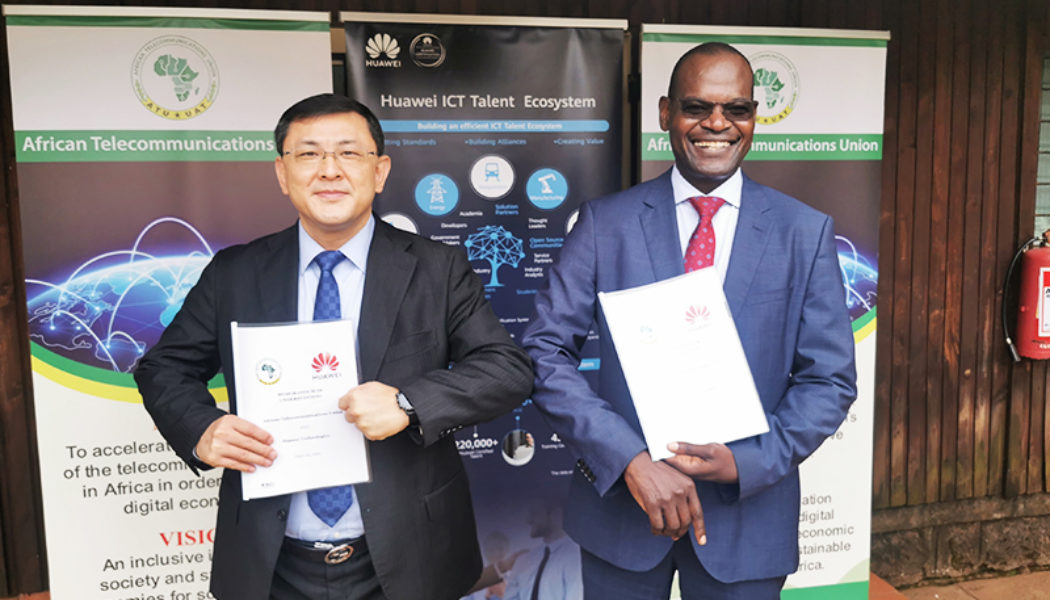
Left to right: Samuel Chen, Vice President at Huawei Southern Africa region, Mr. John OMO, Secretary-General of the ATU. The African Telecommunications Union (ATU) has signed a Memorandum of Understanding (MoU) with Chinese tech giant Huawei that will see African countries and organizations build capacity for ICT transformation. Under the agreement, Huawei will provide training on skills development, including reskilling and upskilling for ATU members. The MoU will also see the two organizations collaborate to support local innovation, share information on the latest trends, challenges and solutions in Africa and globally, and expand the digital economy as well as rural connectivity, in the continent, through furthering research. Digital Transformation is Vital for Africa A 2019 report by ...
