

government
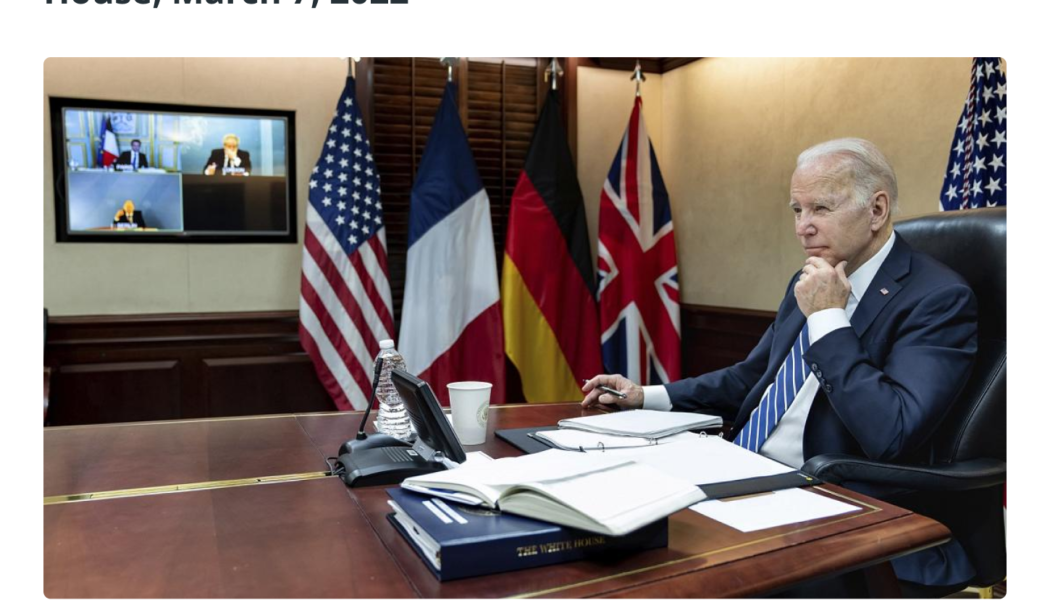

US crypto regulation bill aims to bring greater clarity to DAOs
On June 7, United States Senators Cynthia Lummis and Kirsten Gillibrand launched the much anticipated Responsible Financial Innovation Act, proposing a comprehensive set of regulations that address some of the biggest questions facing the digital assets sector. By providing holistic guidance to the rapidly growing industry, the bill offers a bipartisan response to President Biden’s call for a whole-of-government approach to regulating crypto. Among its many proposals, the bill establishes basic definitions, provides an exemption for digital currency transactions and harmonizes the roles of the Securities and Exchange Commission (SEC) and the Commodity Futures Trading Commission (CFTC), delineating regulatory swim lanes and granting a significant jurisdictional expansion to the CFTC. The bi...

Singapore’s financial watchdog considers further restrictions on crypto
The Monetary Authority of Singapore, or MAS, has been “carefully considering” adding restrictions that could affect how retail investors handle crypto, according to one of the government’s senior ministers. According to parliamentary records published on Monday, Singapore senior minister and MAS chair Tharman Shanmugaratnam said the financial watchdog may consider “placing limits on retail participation” for crypto investors as well as introducing rules on the use of leverage for crypto transactions. Shanmugaratnam also called for regulatory clarity among financial regulators around the world, “given the borderless nature of cryptocurrency markets.” In January, the MAS barred crypto service providers from advertising or marketing in public spaces, and was behind regulations to shut down cr...

US govt delays enforcement of crypto broker reporting requirements: Report
The provision in the U.S. infrastructure bill signed into law in November, which will require financial institutions and crypto brokers to report additional information, could reportedly be delayed. According to a Wednesday report from Bloomberg, the United States Department of the Treasury and Internal Revenue Service may not be willing to enforce crypto brokers collecting information on certain transactions starting in January 2023, citing people familiar with the matter. The potential delay could reportedly affect billions of dollars related to capital gains taxes — the Biden administration’s budget for the government for the 2023 fiscal year previously estimated modifying the crypto tax rules could reduce the deficit by roughly $11 billion. Under the current infrastructure bill, Sectio...
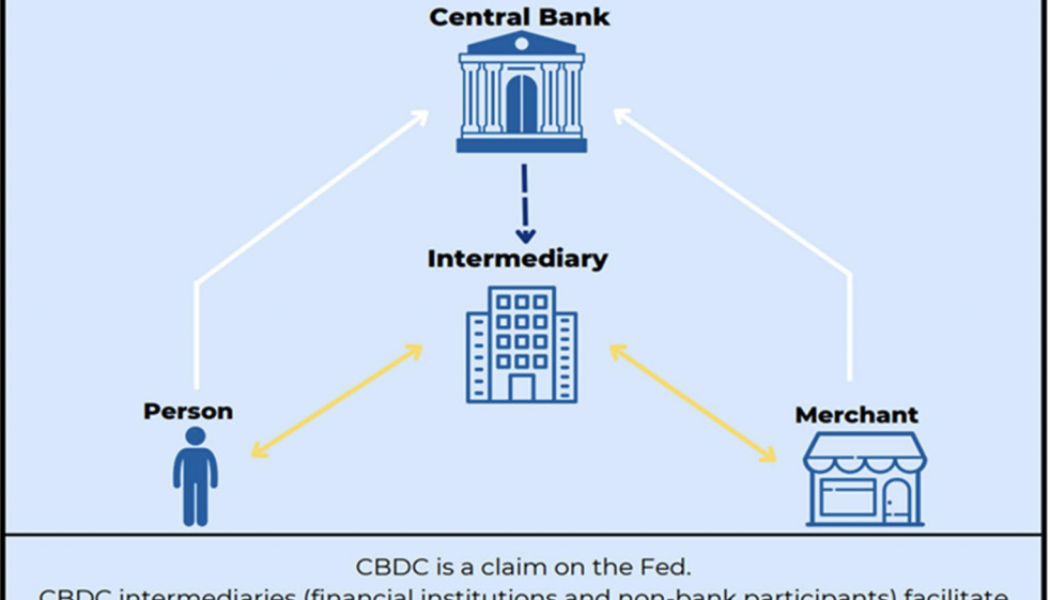

US lawmaker lays out case for a digital dollar
Connecticut House of Representatives member Jim Himes has released a proposal aiming to start a dialogue on the United States potentially launching a central bank digital currency, or CBDC. In a white paper released on Wednesday, Himes urged Congress to begin exploring the rollout of a digital dollar issued by the Federal Reserve to prevent the government from falling behind in innovations in financial technology. According to the U.S. lawmaker, a CBDC “should not be thought of as replacing legacy payment systems and currencies but as an additional alternative for consumers and businesses.” The white paper laid out a proposal in which a CBDC could present concerns over transparency, security and privacy when compared with fiat currency. Himes added that any regulatory framework on CBDCs en...


HM Treasury changes course on collecting data around unhosted crypto wallets
The government of the United Kingdom said it intends to modify a proposal that would have required crypto firms to collect personal data from individuals holding unhosted wallets that were the recipients of digital asset transfers. In its Amendments to the Money Laundering, Terrorist Financing and Transfer of Funds updated on Wene, HM Treasury said it will be scaling back its requirements for gathering data from both the senders and recipients of crypto sent to unhosted wallets, unless the transaction poses “an elevated risk of illicit finance.” The U.K. government added that unhosted wallets could be used for a variety of legitimate purposes, including asan additional layer of protection as is sometimes the case for cold wallets. “There is not good evidence that unhosted wallets present a...


Elusive Bitcoin ETF: Hester Perice criticizes lack of legal clarity for crypto
The crypto sector may be maturing, but regulatory clarity around the treatment of digital assets continues to remain cumbersome. This was recently highlighted by Commissioner Hester Peirce — also known as the United States Securities and Exchange Commission’s (SEC) “crypto mom” — in remarks she made at “The Regulatory Transparency Project Conference on Regulating the New Crypto Ecosystem: Necessary Regulation or Crippling Future Innovation?” Peirce began her speech by emphasizing the importance of “regulating the new crypto ecosystem.” While this may be, Peirce also noted that the crypto industry is still in search of an actual regulator. She said: “A bipartisan bill announced last week attempts to answer that question. Some people in the crypto industry are celebrating the all...


Regulations and exchange delistings put future of private cryptocurrencies in doubt
The core principles of cryptocurrency were based on financial independence, decentralization and anonymity. With regulations being the key to mass adoption, however, the privacy aspect of the crypto market seems to be in jeopardy. In 2022, even though no particular country has come up with a universal regulatory outline that governs the whole crypto market, most countries have introduced some form of legislation to govern a few aspects of the crypto market such as trading and financial services. While different countries have set different rules and regulations in accordance with their existing financial laws, a common theme has been the strict implementation of Know Your Customer (KYC) and Anti-Money Laundering (AML) regulations. A majority of crypto exchanges operating with a license obt...


US Air Force taps SIMBA Chain to develop budgeting and accounting system
For many years, the United States Military has been experimenting with blockchain in a number of settings to enhance its operations. Now, the U.S. Air Force (USAF) is adopting blockchain into its budgeting and accounting processes. According to a Thursday press release, the USAF has enlisted SIMBA Chain, a blockchain-as-a-service platform, to develop a blockchain-based system for tracking and monitoring the military’s cash flow and supply chain quality and management. The goal of the project, dubbed Digital Blockchain Budgeting Accountability and Tracking (DiBaT), is to tokenize all dollars within the USAF supply chain budget, as well as track fund movement across billing centers, purchasing teams and suppliers. DiBaT, as per the release, uses SIMBA Blocks to track and audit funds in...


The crypto industry must do more to promote encryption, says Meltem Demirors
“I like to call myself a future, or aspiring, cult leader,” Meltem Demirors, chief strategy officer of CoinShares — a publicly listed investment firm managing around $5 billion in assets — told Cointelegraph. Demirors, who first entered the Bitcoin (BTC) space in late 2012, further mentioned that it has been “fun to see how big the crypto sector has become,” noting that people from all walks of life are now interested in the cryptocurrency space. As such, Demirors explained that “crypto cults” are bringing people together in a positive manner, especially since it gives people a sense of purpose and belonging. When it comes to regulations — one of the most important topics facing the crypto industry today — Demirors expressed skepticism. “Having been in this industry professiona...


DeFi pulls the curtain on financial magic, says EU Blockchain Observatory expert
As decentralized finance continues its victorious march — although the road is sometimes bumpy — some significant questions on its nature remain. How can DeFi applications be protected from becoming nonoperational under extreme stress? Is it really decentralized if some individuals have way more governance tokens than others? Does the anonymous culture compromise its transparency? A recent report from the EU Blockchain Observatory and Forum elaborates on these questions and many others around DeFi. It contains eight sections and covers a range of topics, from the fundamental definition of DeFi to its technical, financial and procedural risks. Conducted by an international team of researchers, the report formulates some important conclusions that will hopefully make their way to the eyes an...


CZ visits Palau to kick off BNB Chain-supported ID NFTs for digital residency program
The Republic of Palau announced Friday that it will issue identification cards to its digital residents in the form of nonfungible tokens (NFTs) on Binance’s BNB Chain blockchain. Binance founder and CEO Changpeng Zhao (CZ) was on hand in the Pacific Island nation for the unveiling of the NFTs and to meet with Palauan President Surangel S. Whipps, Jr. Palau introduced its Root Name System (RNS) Digital Residency program in January. California-based Cryptic Labs took part in the development of the program, which provides global citizens with identity cards issued by the government of Palau. Physical cards already exist. Planned uses for the new RNS ID NFTs include Know Your Customer (KYC) functions, access to digital banking, verified on-chain signatures and accessing services requiring gov...


A life after crime: What happens to crypto seized in criminal investigations?
Earlier this year, during the annual Queen’s Speech in the United Kingdom, Prince Charles informed the Parliament about two bills. One of them — the Economic Crime and Corporate Transparency Bill — would expand the government’s powers to seize and recover crypto assets. Meanwhile, the United States Internal Revenue Service (IRS) seized more than $3 billion worth of crypto in 2021. As digital currencies’ monetary stock grows and enforcers’ scrutiny over the maturing industry tightens, the amount of seized funds will inevitably increase. But where do these funds go, assuming they aren’t returned to the victims of scams and fraud? Are there auctions, like there are for forfeited property? Or are these coins destined to be stored on some kind of special wallet, which might end up as a perfect ...
