

tech news


Why Unlocking Data is Setting CIOs Up for Success
Whilst companies used to build one to three-year transformation plans, today technological advancements and customer expectations are changing much faster. Everything companies do have to be driven by flexibility, agility and customer-centricity. Connecting with and serving customers, building the right data architecture, and embedding an open data culture throughout the organisation are all part of digital transformation. It also entails training its workforce to effectively and transparently share and leverage data. In many cases, it is not technology that is holding companies back. Rather, this is caused by the ways in which companies have set up their systems to handle data. According to MuleSoft’s 2020 Connectivity Benchmark Report, 85% of organisations admit that integration challeng...


Intel Introduces 2 New Core Processors
Sourced from Unsplash. /* custom css */ .tdi_4_101.td-a-rec-img{ text-align: left; }.tdi_4_101.td-a-rec-img img{ margin: 0 auto 0 0; } Intel has introduced two new additions to its lineup of 11th Gen Intel Core processors. These new processors, combined with Intel’s co-engineering work with independent software vendors (ISVs) and original equipment manufacturers (OEMs), are expected to continue Intel’s leadership in mobile computing. “We’ve taken the world’s best processor for thin-and-light Windows laptops and made the experience even better with the addition of our two new 11th Gen Intel Core processors with Intel Iris Xe graphics,” says Chris Walker, VP of Mobility Client Platforms at Intel. “In addition, we know real-world performance and connectivity are vital to our partners and the ...
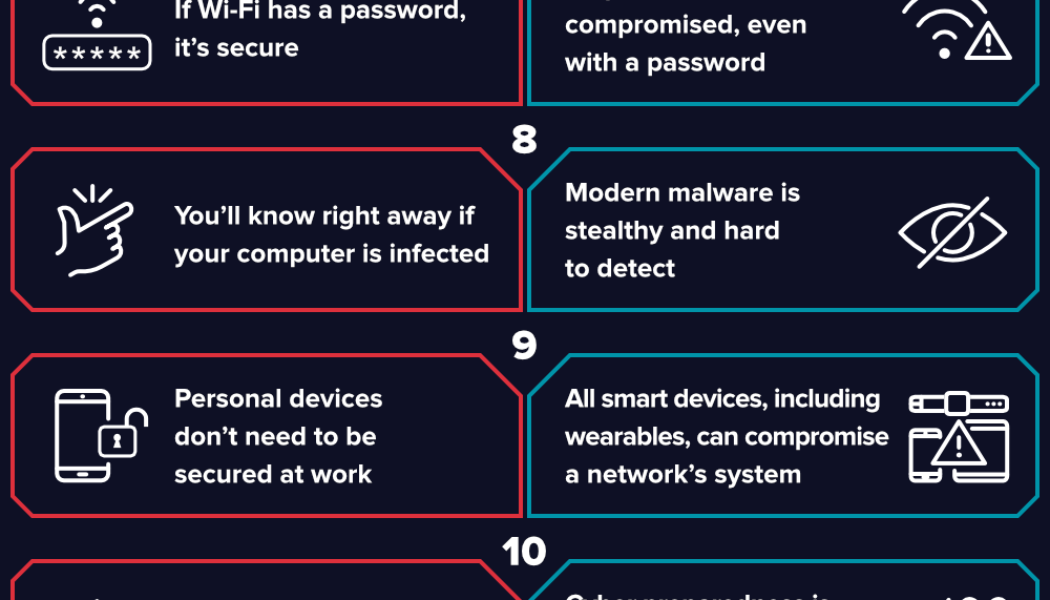

Top 10 Cybersecurity Misperceptions
Between more sophisticated cybercriminals and immense pressure to ensure governance on compliance, 2021 is already shaping up to be a minefield. And as such, cybersecurity has risen to the top of most organisations’ agendas. With this in mind, research from Sophos shows the top 10 cybersecurity misperceptions: Misperception 1: We are not a target; we are too small and/or have no assets of value to an adversary. Many cyberattack victims assume they are too small, in a sector of no interest or lacking the kind of lucrative assets that would attract an adversary. The truth is, it doesn’t matter: if you have the processing power and a digital presence, you are a target. Misperception 2: We don’t need advanced security technologies installed everywhere. Some IT teams still believe ...


MTN Group Eyes Second Ethiopian Operating Licence
MTN Group CEO, Ralph Mupita has revealed that the telco would consider bidding for the second Ethiopian operating licence after initially losing to Safaricom. “We took an approach that the opportunity, as strategic as it was, needed to meet our capital allocation framework and the hurdles that we saw given the licence conditions. We were particularly focused on the lack of mobile money in the licencing regime, and there were some issues around how the telco constructs would be accommodated within Ethiopia. We certainly priced for those things and near-term risks that we saw, and we felt that the financial bid there was appropriate.” He says that although it was disappointing that they did not win the initial bid, they may take another shot at it. “There are views that the Ethiopian authori...


ProLabs Explains Why 5G Mobile Networks are ‘Fibre Networks in Disguise’
Service providers are investing in 5G as it will deliver speeds approaching 10 gigabits per second. That is 600 times faster than standard 4G speeds, and more than 10 times faster than some residential fibre offerings. This is according to ProLabs, a global leader in optical networking infrastructure. The company notes that fibre optics have replaced copper for almost all links in the 5G networks used in delivering the required speed from the mobile antenna to consumers’ phones. Thus, “5G networks are really fibre optic networks with a short wireless connection at the end.” ProLabs is distributed in sub-Saharan Africa by value-added distributor, Networks Unlimited Africa. Craig Copeland, Networking and Storage Director at Networks Unlimited Africa, explains, “The fifth generation of mobile...


Safaricom Introduces New Video Streaming Platform
Image sourced from Techweez Safaricom has launched Baze – its new video streaming platform – in Kenya. This subscription-based mobile-first service is expected to offer a wide selection of local and regional short-form videos in entertainment, music, news and sports. The telco says it is placing the entertainment Kenyans want at their fingertips while providing local content creators with an additional platform to share their stories and monetize their content. “The new service will offer customers a wide variety of video content and provide content creators an additional platform to monetize their content. We are looking to get the best forms of monetisation for creators and to give users a worry free experience when using the platform” says Kenyan business person, Sylvia Mulinge. “As we ...


Vodacom South Africa Launches the Nokia 2720 to Promote a more “Inclusive Digital Society”
Vodacom has joined forces with Nokia to launch the Nokia 2720 in South Africa – a smartphone designed to provide greater access for senior citizens, people living with disabilities and those who experience other communication barriers. “For more than two decades, Vodacom has been addressing the need for more inclusive technologies by providing products and services that are accessible to all. By expanding our portfolio with Nokia, we now offer a device equipped with features that meet the specific communication needs of the elderly or those living with disabilities,” says Karen Smit, Principal Specialist for Specific Needs at Vodacom. This 4G-enabled device is the first of its kind created for the special needs market. It is durable with useful features such as a 2.8” internal display, 1.3...


How Emotion AI Can Make the World a Better Place
Most of us take it for granted that we can read another person’s emotions through subtleties such as body language, yet this is a real struggle for many others. Enter emotion AI. Researchers at Stanford University modified Google’s augmented reality glasses to read emotions in others and notify the wearer. The glasses detect someone’s mood through their eye contact, facial expressions and body language, and then tell the wearer what emotions it’s picking up. “Emotion AI taps into the individual,” explains Zabeth Venter, CEO and co-founder of Averly. “If you think about facial recognition, which is a kind of emotion AI, I can pick up if you like what I’m saying by whether your smile is a smirk or a real genuine smile.” Such nuances go deeper. Another example is polling: what is your favouri...


5 Ways to Ensure Your Organisation is POPIA Compliant
Sourced from Europa EU. On 1 July, the grace period for compliance with the Protection of Personal Information Act (POPIA) will come to an end. That means organisations found to be in breach of the act will be liable for fines and even criminal persecution. Given the long lead up to POPIA’s implementation, most organisations should be compliant by now. However, the flurry of activity when the European Union’s General Data Protection Regulation (GDPR) grace period came to an end in 2018 shows that this won’t necessarily be the case. And while POPIA will affect most organisations, it’s pivotal that they pay extra care when ensuring that they’re POPIA compliant. Here are five ways to do just that: Understand the data you deal with You cannot hope to adequately protect customer data in li...


Lenovo Records Group Revenue Surge Past $60 Billion
Image sourced from GSMArena /* custom css */ .tdi_4_390.td-a-rec-img{ text-align: left; }.tdi_4_390.td-a-rec-img img{ margin: 0 auto 0 0; } Lenovo has announced its results for the Group as well as its fourth quarter and fiscal year, revealing growth across all parts of the business. The company says its results demonstrate the Group’s resilience and ability to achieve balanced, consistent, and sustainable growth. “Last quarter, we delivered our fastest-growing quarter in almost a decade and closed the fiscal year with the new milestone of passing $60 billion in revenue and significant growth in profit to a new record. These historic highs were achieved by leveraging our core competencies of a clear strategy, innovative products, operational excellence, and global-local model to meet the n...


IFS Appoints New Non-Executive Board Director
IFS has announced the appointment of Hanna Jacobsson to its board as a non-executive director. The appointment is effective immediately and brings the current number of non-executive directors at IFS to six. As a finance executive and one of the most respected Actuaries in the Nordics, Jacobsson will lead the audit committee at IFS and deliver the focus and balance required to underpin a fast-growing business. Jacobsson, who specialised in finance in her early career as vice CFO roles at Skandia and group CFO at Nordea Life and Pensions, later expanded her remit to join Klarna as Chief Risk Officer. Now Board member of Skandia, Tink and DBT, her skills and experience are being drawn on by both large, established companies as well as earlier-stage ventures looking to scale. Her motivations ...


Safaricom Subscribers to Receive Free Data For 90 Days
Image sourced from Techweez Safaricom Kenya has launched a campaign where subscribers can get free data every day for 90 days depending on their data usage profiles. According to Gadgets Africa, this offer is “aimed at empowering more customers to take their offline passions online as part of the country’s digital transformation agenda”. Peter Ndegwa, CEO of Safaricom, says “smartphones and the internet have become critical in our day to day lives, empowering us in different ways by connecting us to more opportunities. The 90-day free data campaign seeks to ensure that no customer is left behind by ensuring that all our customers can now access the internet, even at no cost”. Subscribers can redeem free daily data by dialling *544#. Safaricom to Pay $850 Million for Ethiopian Operatin...
