
Your wedding day is meant to be the happiest day of your life. You’re marrying the love of your life, wearing the dress of your dreams, and stepping into a new chapter surrounded by beauty, promise, and anticipation. And while love itself may be timeless, bridal fashion certainly isn’t. Today’s brides are embracing the season in which they’re marrying, choosing gowns that reflect not only their style but also the world around them.
This shift is reshaping the bridal landscape. Just like ready-to-wear, bridal fashion also has its own seasons. For the spring and fall, designers debut new collections, offering brides-to-be a richer range of options and the freedom to find something that truly reflects their moment and personal style. And that’s exactly what they showed during Fall 2026 Bridal Fashion Week, which took place in October in New York—and, Who What Wear editors were there in person to get a first glimpse of what is new and next in terms of bridal fashion trends.
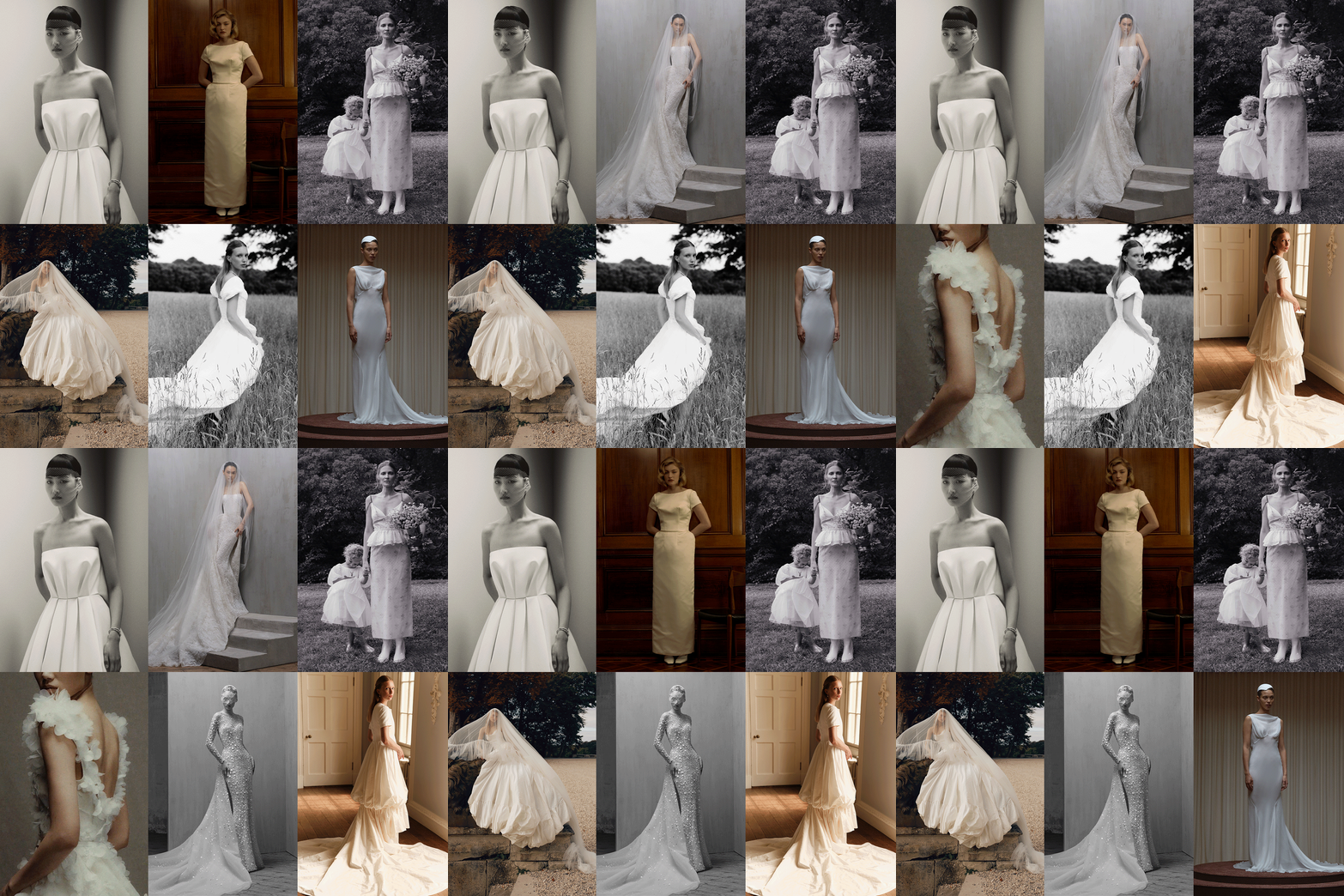
Among established and emerging designers, one theme stood out this season: freedom. Freedom of choice, of expression, and of mood. Brides are no longer confined to a single aesthetic—they can be sleek, maximal, romantic, bold, or all of the above. This idea was showcased through sculptural lace dresses that combined floral embroidery with structured gowns, sleek and simple slip dresses that were all about the intricate details, and liquid-like fabrics that draped naturally, much like water flowing from a river. Color palettes also moved beyond classic white into soft ivory and muted champagne tones. But that’s far from all. Keep reading to discover more about the most elegant bridal dress trends to know for fall 2026.

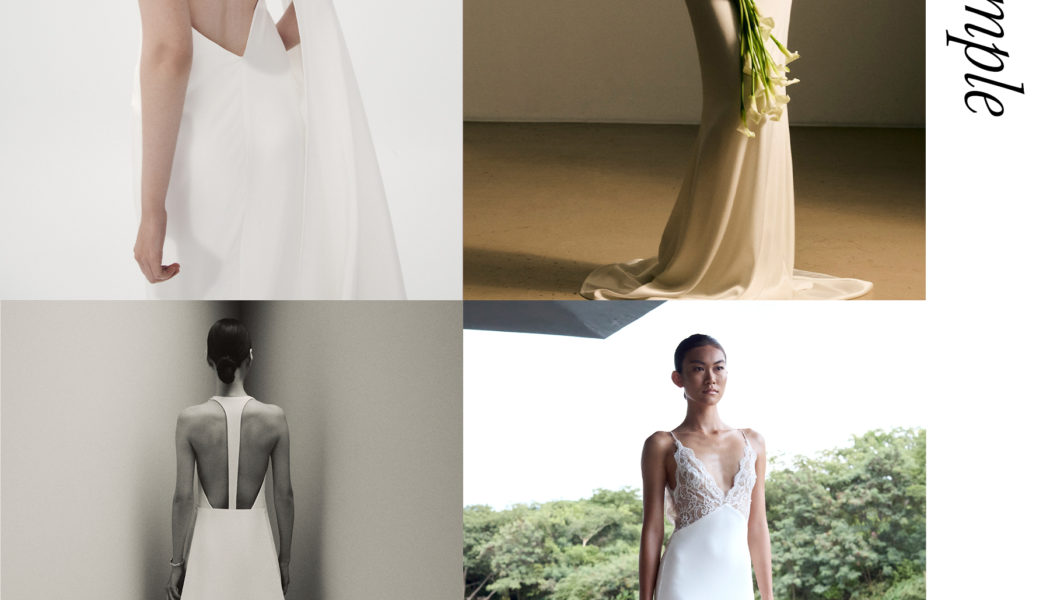
(Image credit: Elly Sofocli; Kaviar Gauche; Emilia Wickstead; Kyha)
There will always be a time and place for the grand ballgown; however, for the bride who dreams of something sleeker and more understated, the fall 2026 collections offer a wealth of minimalist designs that don’t compromise on impact. Australian-based label Kyha redefined simplicity, introducing gowns that seamlessly blend bridalwear and ready-to-wear—think slip dresses with delicate lace embellishments, softly draped cowl necklines, and open-back designs. Meanwhile, Emilia Wickstead, known for its refined and traditionally modest aesthetic, unveiled a striking form-fitting gown featuring an exposed back and a statement-making, angular train. Perhaps the most compelling aspect of these refined dresses is their versatility. These gowns can be worn for the rehearsal dinner or wedding reception and then again for a white-attire party, or they can be dyed black for another occasion.

Victoria Beckham
Lace-Trimmed Satin Gown

Marmar Halim
Ana Crêpe and Chiffon Gown

KYHA
Azolla Dress

(Image credit: Margot Bridal; Alexandra Grecco; Floure; Kyha)
Fabric and texture, both together and alone, told their own story for fall. Specifically, satin or silk—materials that naturally catch the light and move easily—paired with draping or pleating techniques, evoked the serene, flowing nature of water. We saw this at Floure, Alexandra Grecco, Kyha, and Margot Bridal, mostly in two silhouettes—strapless and spaghetti strap styles that fell effortlessly down the arms. Each evoked movement that felt almost alive—soft, rippling, and endlessly romantic. This dress trend is a quiet kind of luxury: less about embellishment, more about how the fabric itself shapes the moment.

DANIELLE FRANKEL
Sinclair Gown

Kyha
Iver Gown

Victoria Beckham
Draped Satin Gown

(Image credit: Kyha; Margot Bridal; Floure; Jenny Yoo)
Another standout trend for fall was the interplay between structure and softness—sculpted silhouettes paired with delicate lace or romantic florals. The result is a look that feels modern while evoking a sense of old-world romance. Many designers continued with visible corsetry and outer boning—which we’ve seen in past seasons—that cinched the waist before giving way to free-flowing skirts or A-line shapes. Some gowns were entirely enveloped in lace or floral appliqués, while others featured just a hint of embellishment—enough to suggest romance without overpowering the silhouette. But it didn’t end there. Accessories completed the sculptural, romantic, and distinctly vintage vibe: full lace veils, slim black ribbons tied neatly at the neck, and opera-length gloves elevated each look.

Danielle Frankel
Evie Dress

Wiederhoeft
Wasp Corset

Ana Radu
Floral-Appliqué Gown

(Image credit: Markarian; Kaviar Gauce; One Of; Alexandra Grecco)
One of the more surprising fall trends was outerwear. And we’re not talking about boleros, shrugs, or capes, which we saw last season. Fall 2026 brides will embrace full-on jackets, including tailored or cropped blazers and long overcoats—all chic and functional, especially for brides who are getting married in a place that is expected to have a chill in the air. Whether styling a textured blazer with a matching skirt for a courthouse look or layering a long coat over a gown for the cocktail hour or reception, these pieces add personality and individuality, all while making a statement. It’s important to note that these pieces are far from an afterthought—each jacket was designed to complement the gown or bottom it was paired with, enhancing its silhouette rather than competing with it.

Markarian
Alba Floral Jacquard Jacket

Magda Butrym
Floral-Appliqué Coat

New Arrivals Ilkyaz Ozel
Meringue Jacket

(Image credit: Kyha; Hera; Kaviar Gauche; Markarian)
The power of texture is immense. Even the quietest touch can turn a gown from beautiful to unforgettable. This season, texture wasn’t just an accent; it was a subtle statement. For example, Markarian embraced its modern romantic aesthetic with dresses featuring silks and lace, as well as “whisper-like tulle,” according to the brand’s press release. Hera Couture wrapped some of its body-hugging, strapless gowns in finely hand-ruched, soft tulle, sculpting the body with precision and a weightless elegance. Then at Kyha and Kaviar Gauche, each introduced light, airy feathers on dresses and tops to create a gentle, almost dreamlike motion.

By Malene Birger
Ledo Mini Dress

Danielle Frankel
Mila Gown

Brandon Maxwell
The Blair Dress

(Image credit: Kyha; Emilia Wickstead; Lihi Hod; Floure)
In bridal fashion, there’s been a clear move towards modesty, with gowns that cover more skin. This shift could be due to religious reasons or the setting, such as a baroque-style church, a serene temple, or simply the grounds of an old castle. These dresses are crafted to suit the occasion. At Bridal Fashion Week, many gowns showcased short or long sleeves, off-the-shoulder styles, and even attached capes that draped elegantly over strap or strapless designs. This approach to modesty isn’t about limiting but about highlighting the bride’s natural beauty and allowing her to shine without distractions.

Markarian
Clover Brocade Gown

Costarellos
Lace Gown

Emilia Wickstead
Aislinn Gown

(Image credit: Markarian; Alexandra Grecco; Ferrah; Viktor & Rolf)
The bubble hem dress trend may not be new for bridalwear, but for fall 2026, designers have taken the idea to the next level. Traditionally, a bubble hem is created by tucking or gathering the fabric at the edge of a skirt, creating a rounded, voluminous silhouette. This season, the technique was experimented with through tiered bubble hems and cascading layers. Viktor & Rolf introduced a strapless design featuring an oversize bubble that stopped just below the waist, paired with a floor-length skirt beneath it, creating the illusion of two separate pieces. At Ferrah, an off-the-shoulder silhouette featured layers of bubble hems, each in a different fabric, adding contrast. Meanwhile, Markarian and Alexandra Grecco used bubble hems more subtly, placing them at the back of the gown to add gentle volume without detracting from the dress’s simplicity.

Wed Studio
Jia Dress

Magda Butrym
Draped Dress

The Own Studio
Bubble Hem Gown

(Image credit: Emilia Wickstead; Margot Bridal; Kyha; Alexandra Grecco)
The veil is far from over, but what’s truly exciting is that brides no longer have to wear one if they don’t want to. There are countless alternative ways to adorn the head and partially obscure the face. At Bridal Fashion Week, we saw everything from sculpted calotte caps and delicate lace headbands to scarves draped elegantly over and around one’s hairdo. Mesh accessories were particularly prominent, some just concealing the eyes and others covering the entire face, creating a sense of drama and mystery. This trend perfectly captures the shift in bridal fashion: dressing for yourself on your own terms instead of adhering to traditional ideas of what you should wear.

Jennifer Behr
Voilette Headband

Alexandra Grecco
Beaded Bow Cloche

Dolce & Gabbana
Floral-Lace Silk Scarf
Explore More: