
Alienware’s kicking off its 30th anniversary with a full range of displays, from Penta Tandem QD-OLEDs to VA LCDs.
Alienware’s kicking off its 30th anniversary with a full range of displays, from Penta Tandem QD-OLEDs to VA LCDs.
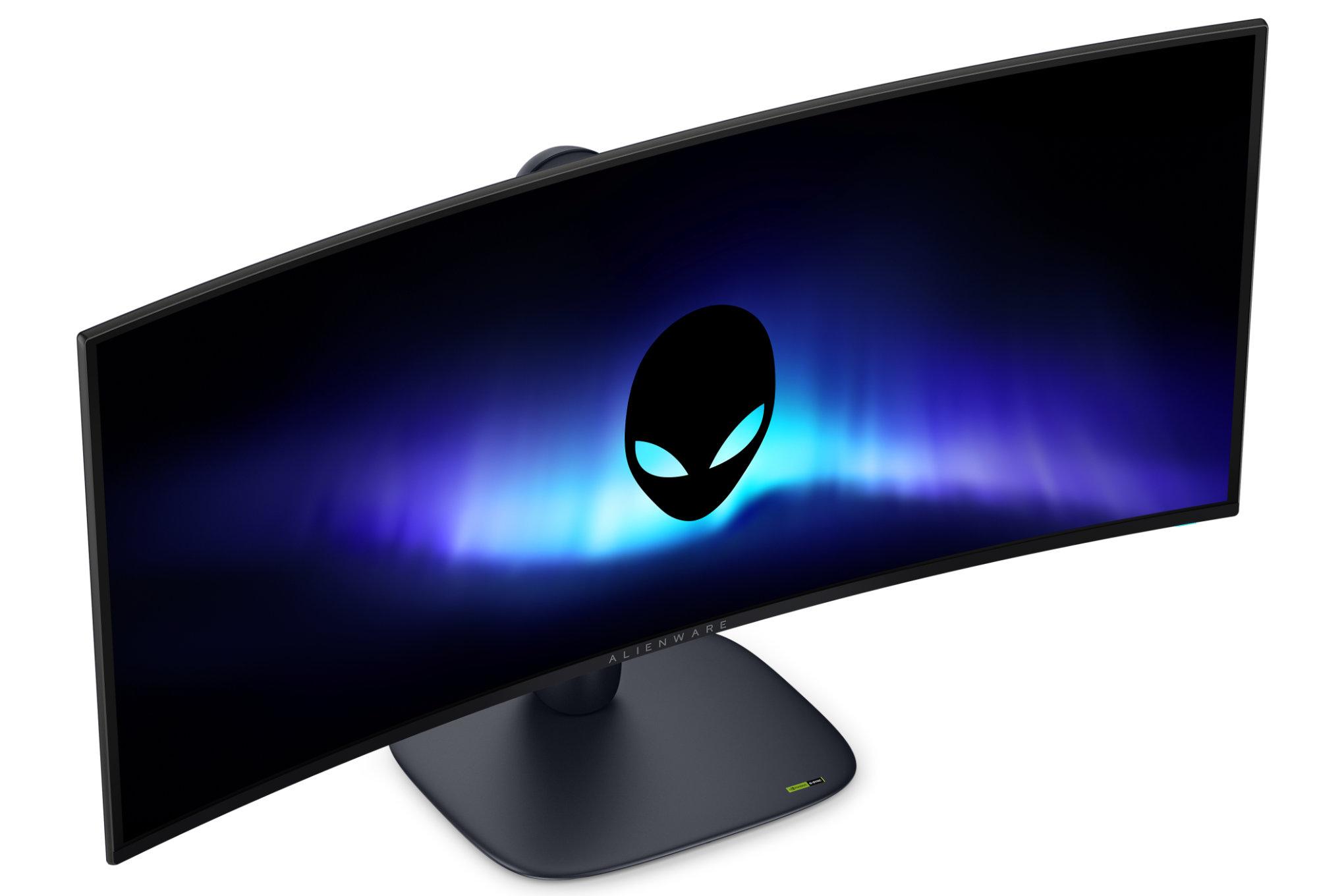

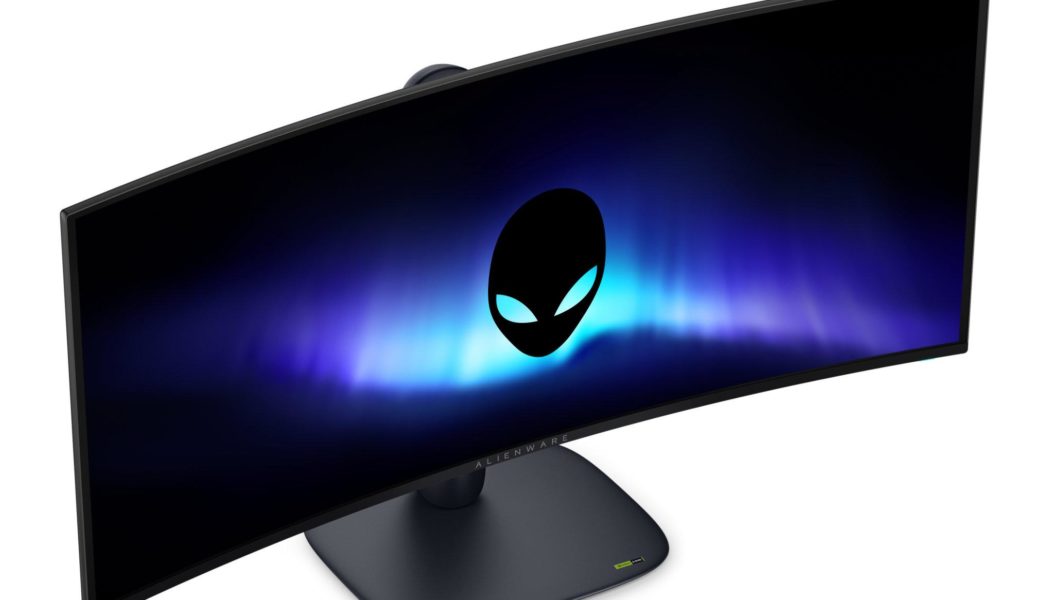
Alienware is taking to this year’s Computex 2026 in Taipei to announce some cool gaming monitors, most notably two exciting OLED options that are coming at different points this year. First off, the company is debuting the successor to its very first QD-OLED gaming monitor from 2022 with a refreshed design and high-end specs that’s coming in July (price hasn’t yet been shared).
The AW3426DW is a 34-inch curved 3,440 x 1,440 resolution with an 1800R curve, just like its predecessor. But the new model has the latest QD-OLED Penta Tandem screen tech that boosts the peak brightness to 1,300 nits from 1,000 nit in the previous version. Its refresh rate has been boosted from 240Hz to 280Hz.
Part of the five-layer Penta Tandem tech is an anti-reflective screen coating that supposedly cuts down glare and boosts deep blacks even in well-lit rooms. That’s great since black sometimes appears purple-ish on previous QD-OLED generations. Something that hasn’t changed model-to-model is pixel density; this one’s still at 110 pixels per inch, which is a bit low for this size (many 27-inch OLED monitors have a similar pixel density).
Alienware’s flagship monitor of the show is a 39-inch 5K curved ultrawide monitor coming this fall that uses LG Display’s fourth-generation Primary RGB Tandem screen tech. The AW3926QW is slightly curvier than the QD-OLED model mentioned above, measuring at 1500R, making it more immersive. It can show a peak brightness of 1,300 nits while displaying content at up to 5K at a 165Hz refresh rate, with a pixel density of 143 pixels per inch. It offers a dual mode to knock the resolution down to 1080p, bumping up the refresh rate to 330Hz with support for custom resolutions and aspect ratios.
The two OLED models have some traits in common with each other, despite using different screen technology. For one, both use RGB stripe subpixels to sharpen text and other details. Color-fringed text has been an issue for some people with previous generations of QD-OLED panels, but not as much with OLEDs. Both have VESA DisplayHDR True Black 500 certification, as well as Dolby Vision HDR support, and both support AMD FreeSync Premium Pro and Nvidia G-Sync. Also, they’re protected by Alienware’s great three-year warranty that covers manufacturer defects along with burn-in coverage, plus enhanced pixel shifting and refreshing algorithms to extend their lifespan.
Despite the similarities, the 5K monitor simply offers more features. It has a KVM switch to let you control multiple PCs through the monitor with a single keyboard and mouse, plus a USB-C video port with support for 90W of PD passthrough power. Beyond that, it has two HDMI 2.1 ports with fixed rate link (FRL) to let PCs display its full resolution and refresh rate, one of which supports eARC and ARC. It also boasts a single DisplayPort 2.1 port with fast UHBR20 bandwidth. The 34-inch model has two HDMI 2.1 FRL ports and a DisplayPort 1.4 port. No price has been announced for the 5K display, but these features won’t come cheap.
Finally, Alienware has two VA LCD gaming monitors coming in July for well under $500. The $399.99 34-inch ultrawide AW3426DWM and the $299.99 flat AW3226DM have respectable specs. Both go up to 240Hz refresh rate with 1-millisecond response time and display 1440p resolution. They feature similar design language to Alienware’s higher-end options, and they support Dolby Vision HDR.
It’s nice to have affordable options, though remember that Alienware’s entry-level 27-inch QD-OLED monitor is $399.99, and by nature of its screen tech, offers much better contrast and color accuracy than either of these upcoming models. It’s a stellar value for the price, as I discovered when I put my own money down on one.