

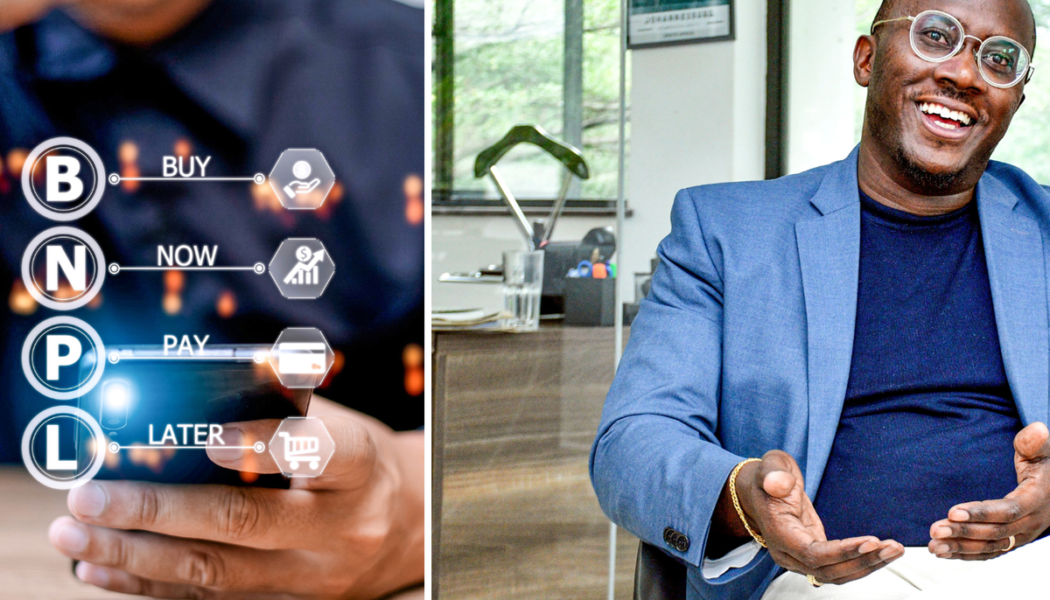

Having studied entrepreneurship at Strathmore Business School in Kenya and later at Babson College and Stanford University in the US, Eric Muli was bubbling with ideas.
One day, he went to a phone shop in Nairobi and asked if he could buy a device in instalments. The attendant told him that such an arrangement could only be done with a bank.
That was when it hit him.
“Of course, banks are not looking at my 23-year-old self to give a Sh15,000 loan to buy a phone,” the 34-year-old recalled in an interview with the BDLife.
So, a concept of allowing such purchases without the rigours of involving banks became a business idea.
“The concept started with us trying to allow people to access essential items. You know, a phone is essential,” he said.
That aha moment birthed what came to be known as Lipa Later, a buy-now-pay later service that enabled a person to pay a deposit, buy an asset, then settle the balance over time.
Mr Muli founded Lipa Later in 2017. To facilitate its take-off, he secured financing from venture capitalists in the US. “One thing that the US taught me is that anything is possible,” he said. “You can start something from nothing, go look for the resources…and get it done.”
He managed to make Lipa Later a giant firm.
“At some point, we had hired over 200 permanent staff. I think we had close to almost 1,000 agents that we were working with. We had issued about $100 million (Sh12.9 billion) worth of credit at our peak. We served close to one million customers. [Despite] the challenges that we had in the very beginning, it was widely accepted. We also had markets in Rwanda, Uganda, Nigeria as well. So, the business grew very well,” said Mr Muli, who was the CEO.
Lipa Later would enter deals with companies like Hotpoint, a home appliances company, assuring buyers of swift purchases.
The business model
Mr Muli admitted that the Lipa Later model was an iteration of the old hire purchase system: customers paid a deposit, took the item immediately, and settled the balance in instalments.
“The difference was that we did not own our stock. We didn’t have any stock. But the concept was essentially hire purchase,” he said.
He believes the firm pioneered the reimagined hire purchase model of owning phones and other assets in Kenya.
“We were the pioneers of this space,” he said. “Now I see around town that the concept of lipa later, lipa mdogo mdogo [is widespread].”
And whereas the old model was a slow, paper-based affair negotiated between a buyer and a shop, Lipa Later digitised the entire chain, paid retailers upfront, and collected from customers over time.
“We were also empowering the retailer,” said Mr Muli. “We were working with very small ones. For those small businesses, we would increase their revenue by like 30 percent on a monthly basis.”
Venture capitalists kept pumping in money, with Lipa Later getting more than 10 rounds of capital injection.
Then came Covid-19 that realigned the business world in ways not seen before. Mr Muli said they managed to raise more money from US investors and digitised their ecosystem.
In 2021, Lipa Later acquired SkyGarden, an e-commerce platform.
“We wanted to reach more customers,” Mr Muli explained on the acquisition rationale. “They had a good customer base, and we felt that if we acquired them, we would be able to sell online easier.”
SkyGarden, also previously backed by venture capitalists, had reached a point where it couldn’t raise more money.
Unexpected downfall
It was going well for Lipa Later until it wasn’t. Its fall was unexpected, but when it happened, it put them in the category of Kenyan start-ups that began with promise but crashed hard. That list has firms like Bonto, Antara Health, among others.
“We did our best. We built a very big company,” said Mr Muli.
By 2024, the income sources were drying up as it faced an uphill task securing more funds. In March 2025, Lipa Later was placed under administration, and Mr Muli has no say in what is happening with it.
What led to Lipa Later’s fall?
The entrepreneur said problems came from many corners. For one, the firm’s model required enormous amounts of capital as they had to pay retailers immediately while waiting for customers to pay back gradually.
As the Covid-19 cast a shadow on Kenya’s economy, repayment became an issue.
“You find that you are lending Sh1 million, but coming back as Sh100,000 instead of Sh3 million,” said Mr Muli. “That was the origin of a lot of the challenges that we experienced.”
Some “pay later” lending companies today employ technology set up in such a way that if you don’t pay for a phone, you can’t use it. Could Lipa Later have taken it up? Mr Muli was not sure.
“I don’t believe punishing borrowers is the solution to enhancing credit in a market. I don’t believe that is necessarily the best way to do it,” he said.
“It is useful; yes. We did not have some of those mechanisms that I think now have been commoditised. When we were at our peak, the phone companies were trying to figure it out. We didn’t have that luxury. So, I can see now it has helped people, but I don’t think it solves [the non-repayment issues] completely,” added Mr Muli.
But perhaps the biggest issue that befell Lipa Later was the financing model. For one, the money the investors had put in was repaid in US dollars, which meant immediate losses when the shilling depreciated.
“When you borrow money in dollars when the rate is Sh100, and you repay it at Sh170, that’s a 70 percent loss on your money,” said Mr Muli, who made it to the Business Daily’s “Top 40 under 40” list in 2015, which celebrates Kenya’s most outstanding men under the age of 40.
Moreover, Mr Muli believes the investors barely understood the Lipa Later business model.
“Their needs and ours were not aligned,” he noted. “They put pressure on the organisation to do things that were not necessarily the best thing for the business.”
Such misalignments, he said, have plagued various start-ups in Kenya.
“The challenges came where they couldn’t raise more money. The money dried out. You know the post-effects of Covid. Money dries out and the business model needs to change drastically,” said Mr Muli.
Firms like Copia, which also relied heavily on venture funding, did not last long post-Covid. It is also under administration.
Other mistakes
As for the collapse of Lipa Later, Mr Muli also pointed to his own inexperience. Starting a business of Lipa Later’s complexity at 23, he said, meant there were things he could not see at the time.
“Now, looking at things in hindsight, you see a lot of other mistakes, ways you could have done things better. Maybe you could have caught something earlier. Those are things you can only see looking backwards,” he said.
Asked what he observed about Kenyans’ borrowing habits through Lipa Later, he singled out a trend he found peculiar: people would pay the 10 percent deposit to buy an item, resell the same item at half the market price, then dodge Lipa Later, refusing to pay the amount owed.
“Kenyans are also very entrepreneurial,” he says, adding that the credit reference bureaus were also not as sophisticated as they are today.
However, there were positives.
“I would say that there are hundreds of thousands, if not millions, of Kenyans who could be very good borrowers and good additions to the financial ecosystem. It’s just that they don’t have the infrastructure to get onto the platforms and build up a credit system that can be useful to their lives,” he said.
When Lipa Later went into administration, it was placed under Joy Vipinchandra Bhatt of Moore JVB Consulting.
Not long after, at least three firms expressed interest in buying and refinancing the firm. They include Canada’s Engage Capital, which tabled a $24.5 million (Sh3.2 billion) offer, and London-based Advance Global Capital, which offered a $5 million (Sh647 million) loan facility.
So, how much did he lose with the fall of Lipa later?
“The company was big,” he answered. “At one point, we were close to a $100 million (Sh12.9 billion) business. Yes, it was worth about $100 million at some point. So, you can start calculating from there. It was a big company; a very big company. We definitely built something large.”
No shame
With Lipa Later going through the motions of administration, Mr Muli doesn’t want to feel ashamed of the fact that he failed there and has moved to another business.
“I think part of the challenge that exists in our market that stops entrepreneurship is crucifying entrepreneurs. People are afraid of starting businesses because they don’t want to fail. But in the West, you find that those people who have failed are even heroes because they learn a lot,” he said.
“And I don’t believe that because I have had some kind of challenges with my hard work and ambition, now I should stop providing for my family. In fact, I should even work harder,” he added.
He has since founded MRE Real Estate Limited, which describes itself as “a real estate investment and development company delivering retail and workspace solutions in Kenya’s fastest-growing areas”.
“Started in 2025, MRE is a fast-growing real estate company with developments across Kenya and a growing portfolio estimated at about Sh5 billion,” said a brief shared with this reporter.
When we queried Mr Muli to explain about the Sh5 billion, he said that some of the Lipa Later investors have also followed him to the new venture.
“What we do is we buy land, build on it, and manage. We build commercial real estate on land that we purchase and then we essentially manage it. So, we are building a big portfolio of real estate. What we do is essentially strip malls, shopping centres, that’s where we started. We also do shared spaces and at the same time we are looking at other lines of real estate that we possibly get into,” said Mr Muli, who now wears the hat of MRE’s managing director.
At the time of the interview, he said MRE had “just secured” funding for a project in Machakos.
“It is a big project that we want to be rolling out quite soon. That will be our first one that I think will be out of Nairobi. But, for the most part, we have been focused on Nairobi,” he said.
Real estate, he observed, is an easy sell even to local financiers.
“The banks understand hard assets. They understand traditional business. That’s their bread and butter,” he said.
As for the previous investors backing his new venture, he said: “People were even more excited to support such a venture because it’s more long-term.”
“A lot of the supporters and backers of my current venture are actually Lipa Later investors who have even invested more money into what we are doing,” he added.
Asked what businesses he is idolising in his real estate venture, he mentioned Kenya’s Acorn Holdings and a US firm called Perform Properties.
The problem with real estate, he noted, is the entry barrier.
“On the lower side, each of our projects is close to Sh400 or so million per project because we buy land, build, and manage. That’s where the challenge usually comes. But because I managed to learn a lot, building a business that size, I learnt how to structure finance, how to do partnerships and so on. That’s what led me to believe it’s possible to get these things done,” he said.
“I kind of sat down and I felt that I wanted to do something that has a lot more long-term impact; something that has longevity; something that you can kind of predict how things are going to go and you’re in control of,” added Mr Muli.
His other business
The entrepreneurial spirit abounds in him because Alpha Force Security, a firm he started in 2011, is still running. The company has a workforce “north of 200” as he put it and an independent management arm.
“In our estate, we didn’t have guards. And that’s actually how we started,” he said, adding that he has since quit being the CEO and that he only serves as the board chair whereas the day-to-day running is left to a dedicated team.
When asked about what sparked his entrepreneurial spirit, he went philosophical.
“Sometimes they say whether it is nature or nurture. I think mine is both. I’ve always been passionate about creating things; starting things from nothing and building them into something. That has been a passion of mine from a very early age,” he said. “I think there’s nothing more exciting than turning an idea into reality.”