
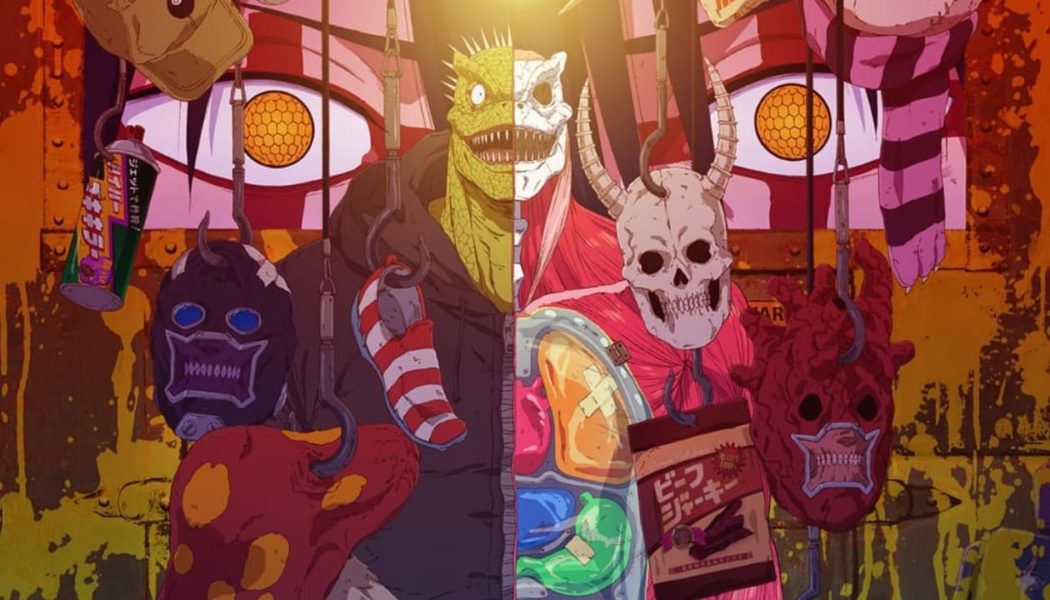
In the realm of contemporary dark fantasy fiction, Q Hayashida’s Dorohedoro exists as a truly unique presence. Since its initial anime debut back in January 2020, the series has garnered a cult following hooked on its eccentric premise, unpredictable narrative and an aesthetic that is unapologetically freaky.
If JoJo’s Bizarre Adventure is the anime that proudly embraces eccentricity and Chainsaw Man is a dark character study hidden under the guise of explosive action and comedic relief, Dorohedoro is all of the above — delivered with its very own stylized appeal. This is largely due to Q Hayashida’s distinct art style: a chaotic blend of industrial grit, absurdist humor and a visual language that feels like a cross between a ‘90s punk zine and a sketchbook of underground industrial art. This gritty vision is masterfully translated to the screen by MAPPA, the acclaimed studio behind Jujutsu Kaisen, Hell’s Paradise and Chainsaw Man.
To the uninitiated, Dorohedoro is fundamentally a story about identity. However, that identity is rarely found in the characters’ actual faces; instead, it is reflected through their masks. Beneath these bizarre and often terrifying visages lies one of the series’ greatest strengths: its eccentric cast. Whether it is a lizard-headed amnesiac named Caiman, a heart-wearing hitman like Shin, a hulking demon named Noi, or a low-level lackey like Fujita, the characters are designed to feel like real people navigating their own traumas within a harsh environment. They often possess surprisingly relatable, even charming personalities that sharply contrast with the carnage they cause.
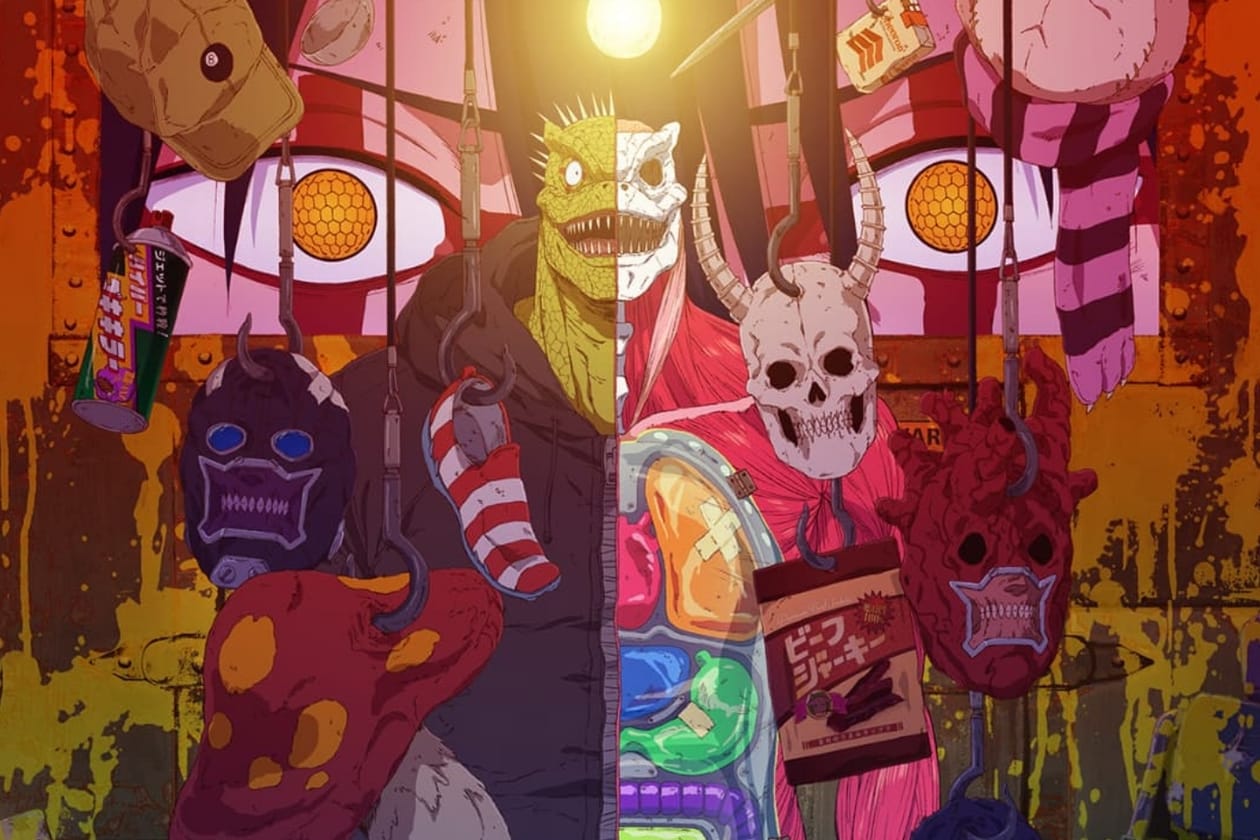
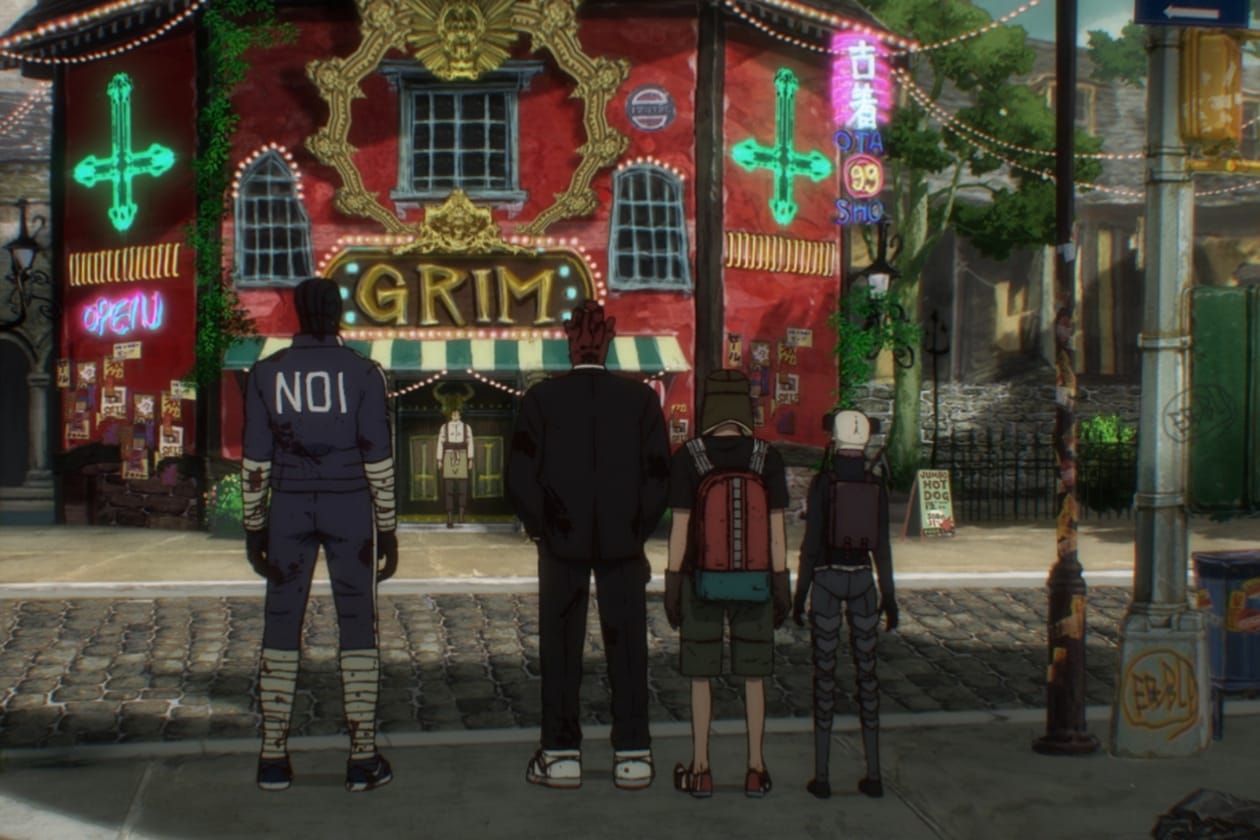
In the world of Dorohedoro, life is split between The Hole – a desolate, rainy urban sprawl inhabited by humans – and the Sorcerer’s World, a vibrant but dangerous alternate dimension. One of the most alluring features of this universe is the characters’ choice of facial coverings. In the Sorcerer’s World, a mask is far more than a stylistic choice or a mere accessory — it’s an anatomical necessity, a social badge and a spiritual fingerprint.
Often crafted by specialized demon mask-makers, these coverings serve a vital physiological function, acting as conduits and stabilizers for a sorcerer’s “smoke”—the soot-like substance that powers their magic. Without a mask, a magic user’s power is often volatile or diminished. Furthermore, the design of these masks is rarely arbitrary; they reflect the wearer’s inner psyche and their standing within the ruthless social hierarchy of their world. As we prepare to head back into The Hole with the premiere of Season 2 this week, let’s examine how these bizarre masks define the souls of the series’ most iconic players.
Shin: The Reversed Anatomical Heart
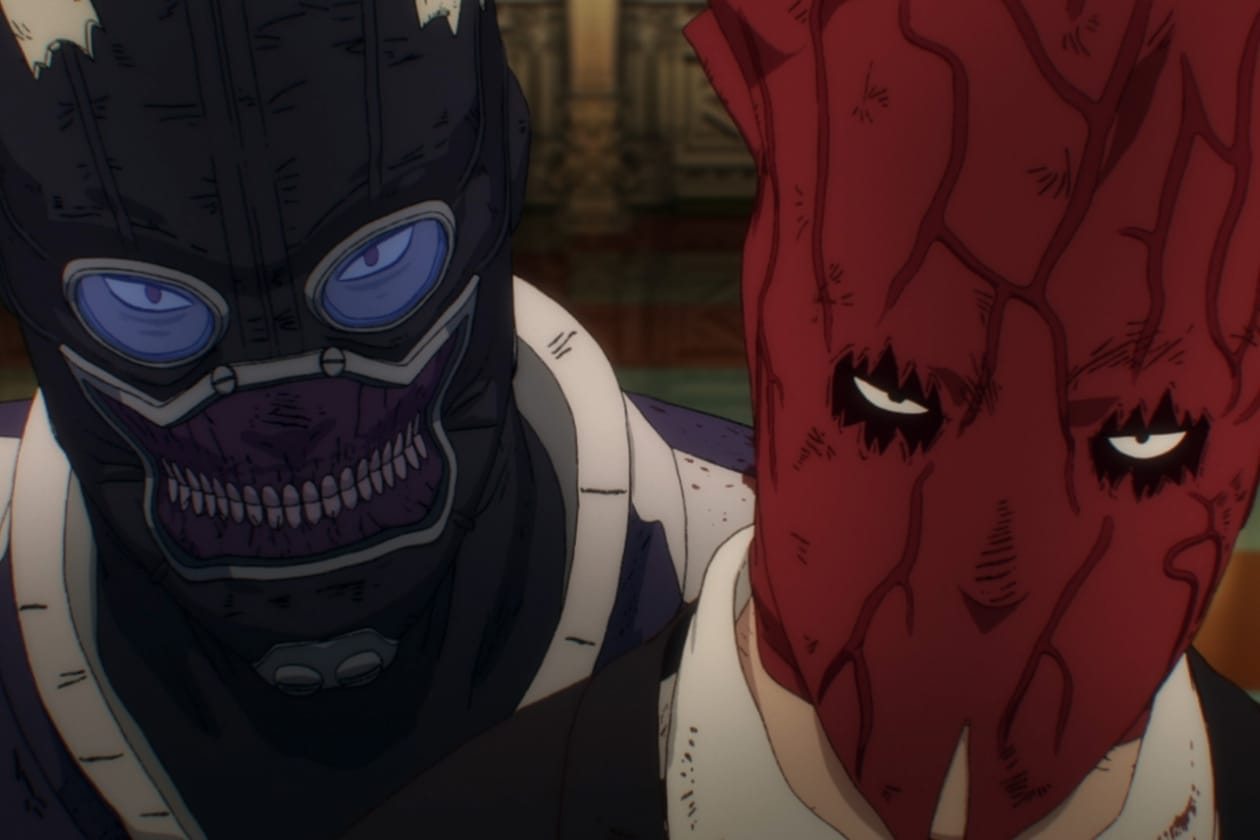
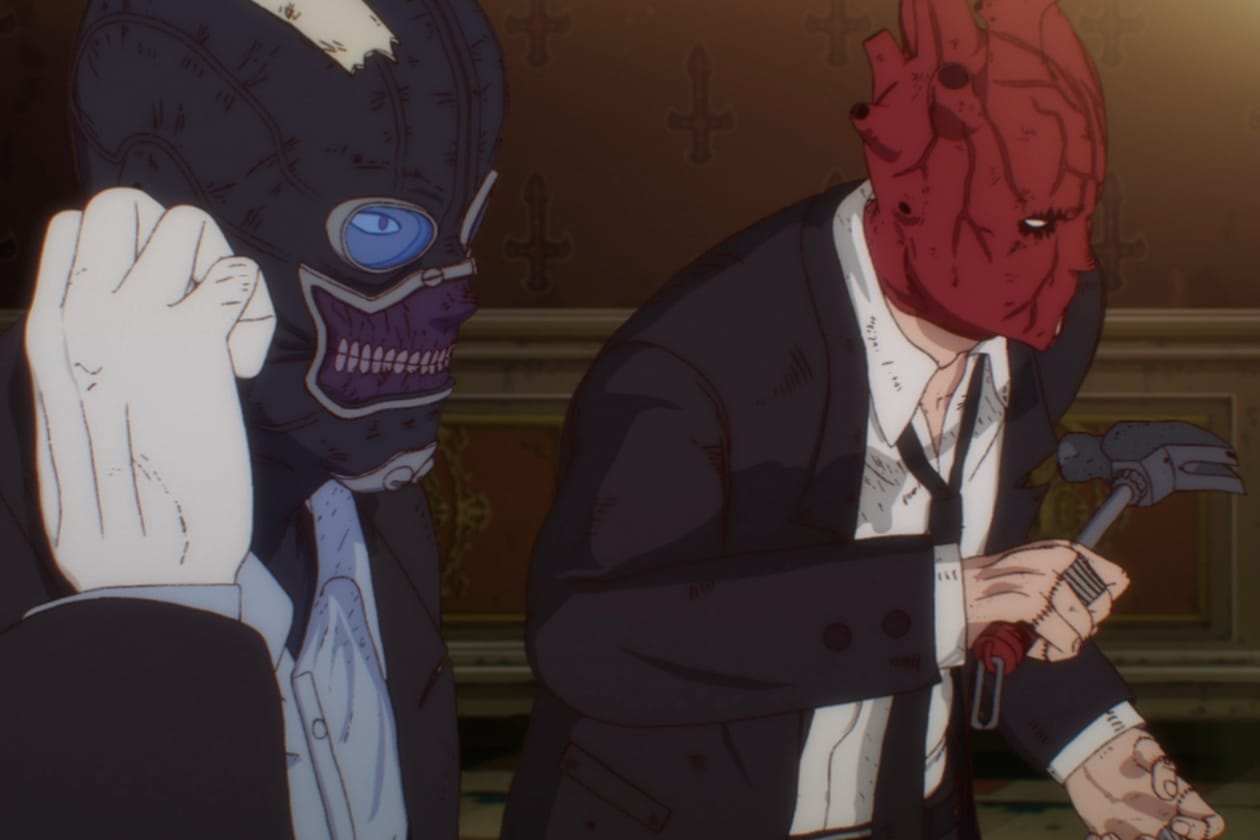
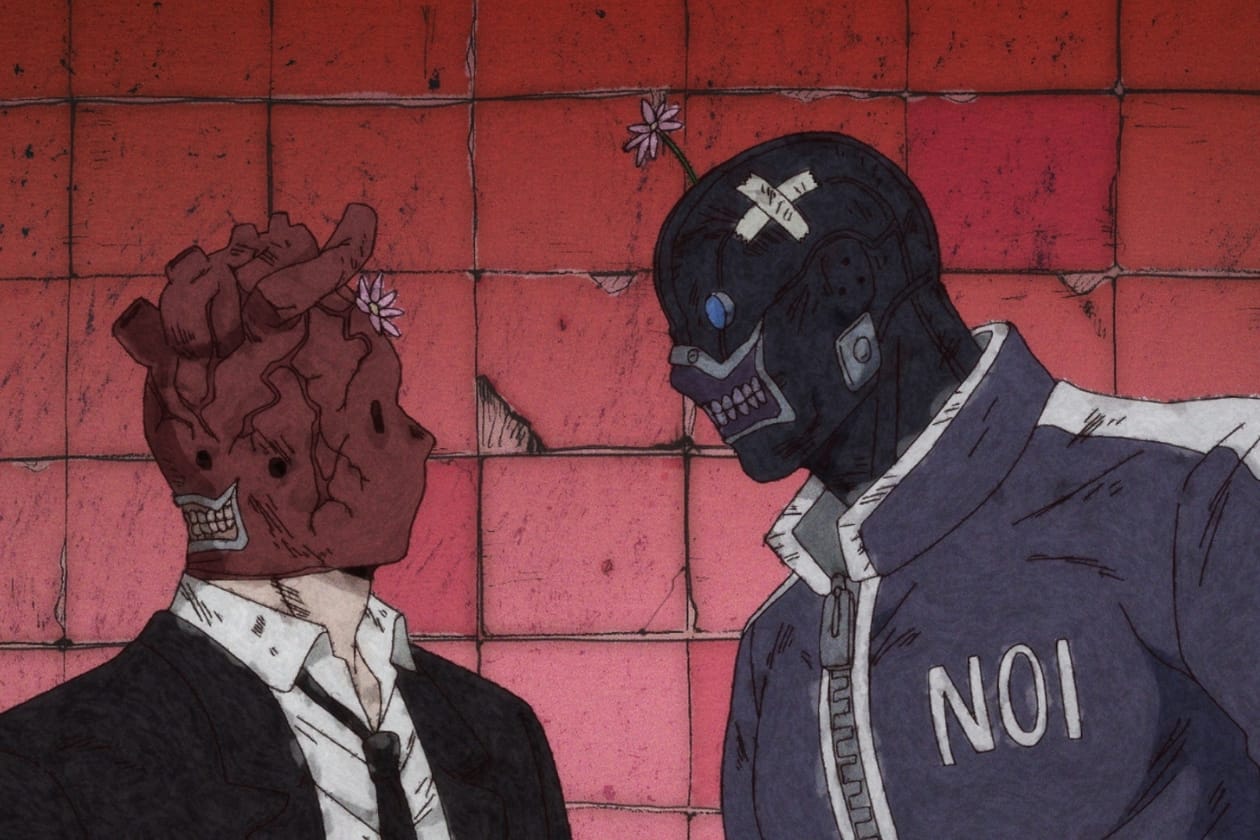
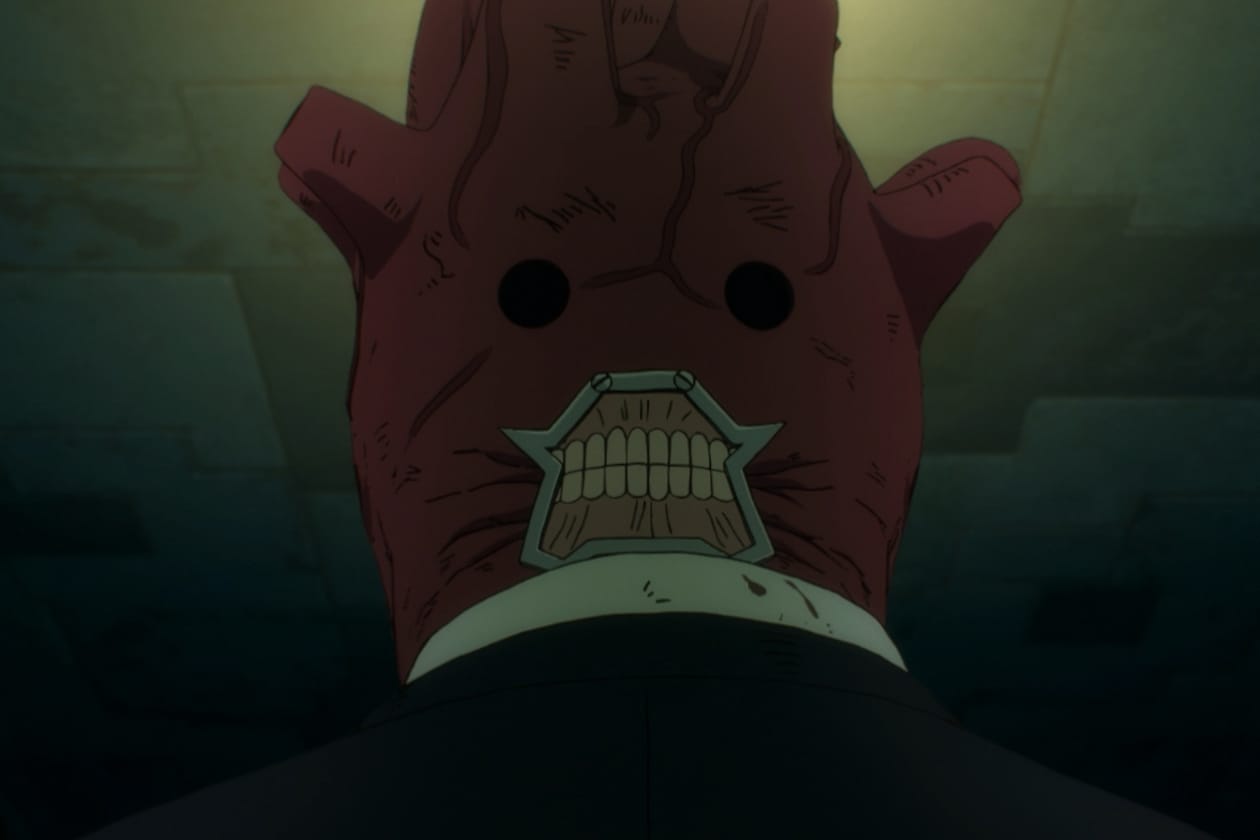
Shin, the elite “cleaner” for the powerful En Family, sports perhaps the most iconic mask in the series: a hyper-realistic, anatomically correct human heart. Most notably, he wears it backward, with the ventricles and arteries protruding from the rear. Shin’s mask is a visceral nod to his origins and his magical power — the terrifying ability to dissect living beings without killing them. The heart represents the raw, bloody core of life, perfectly reflecting his surgical precision.
However, the backward orientation is a deeply personal choice. It serves as a callback to his roots in The Hole, where his first makeshift mask was a simple paper bag with eyeholes. By turning the heart backward, Shin signals a subversion of nature; he is a man forged in violence who wears his internal trauma on the outside. The reversed design can also be interpreted as a subtle form of rebellion against his boss, En. Though he is a loyal member of the “family,” Shin remains an individual defined by his own past, not just his employer’s brand.
Noi: A Healing Soul Behind the Horrific Gimp Mask
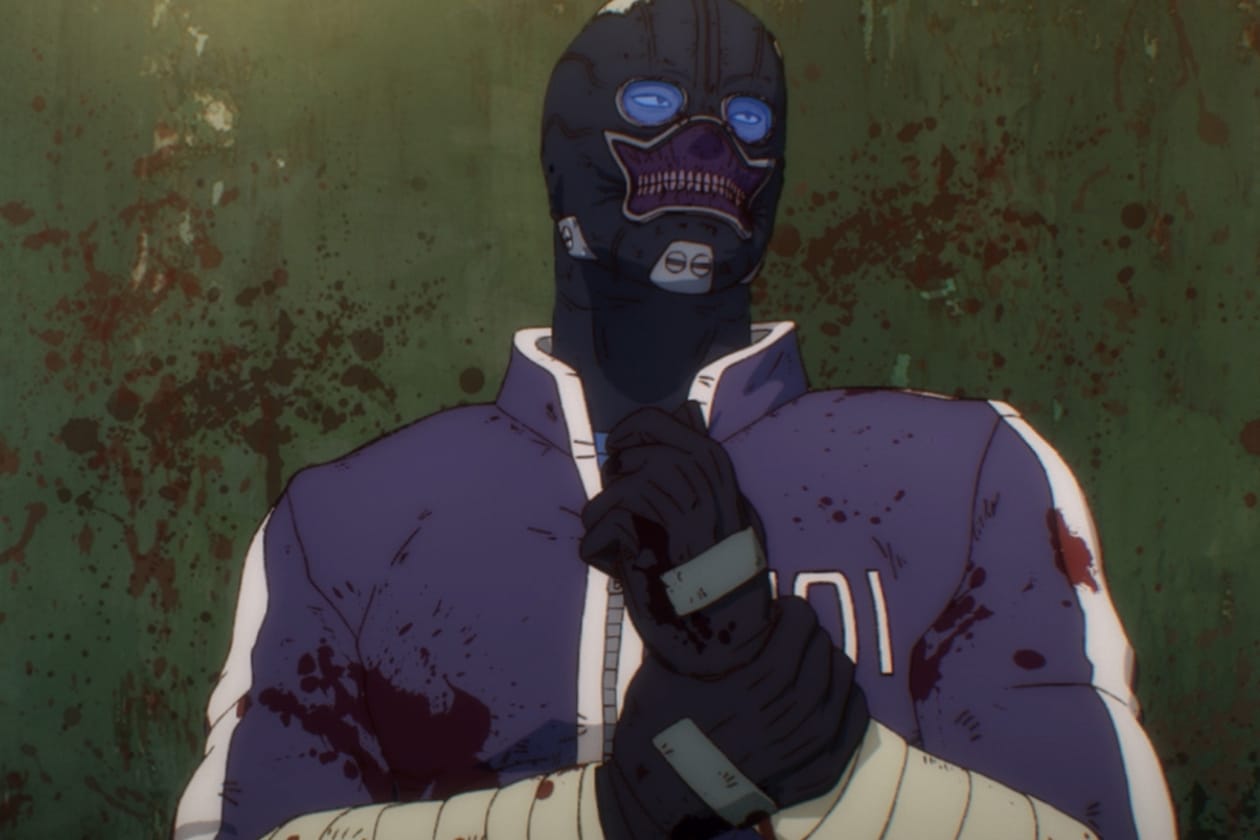
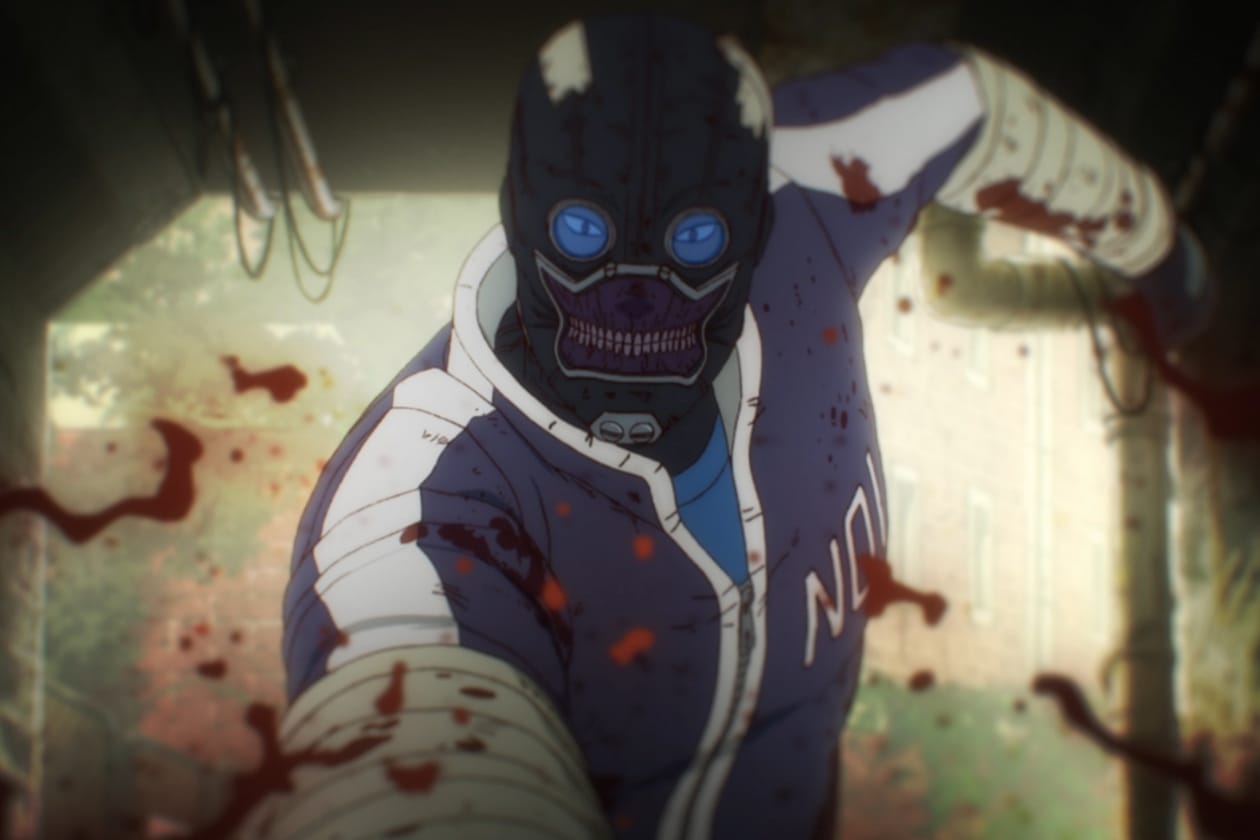
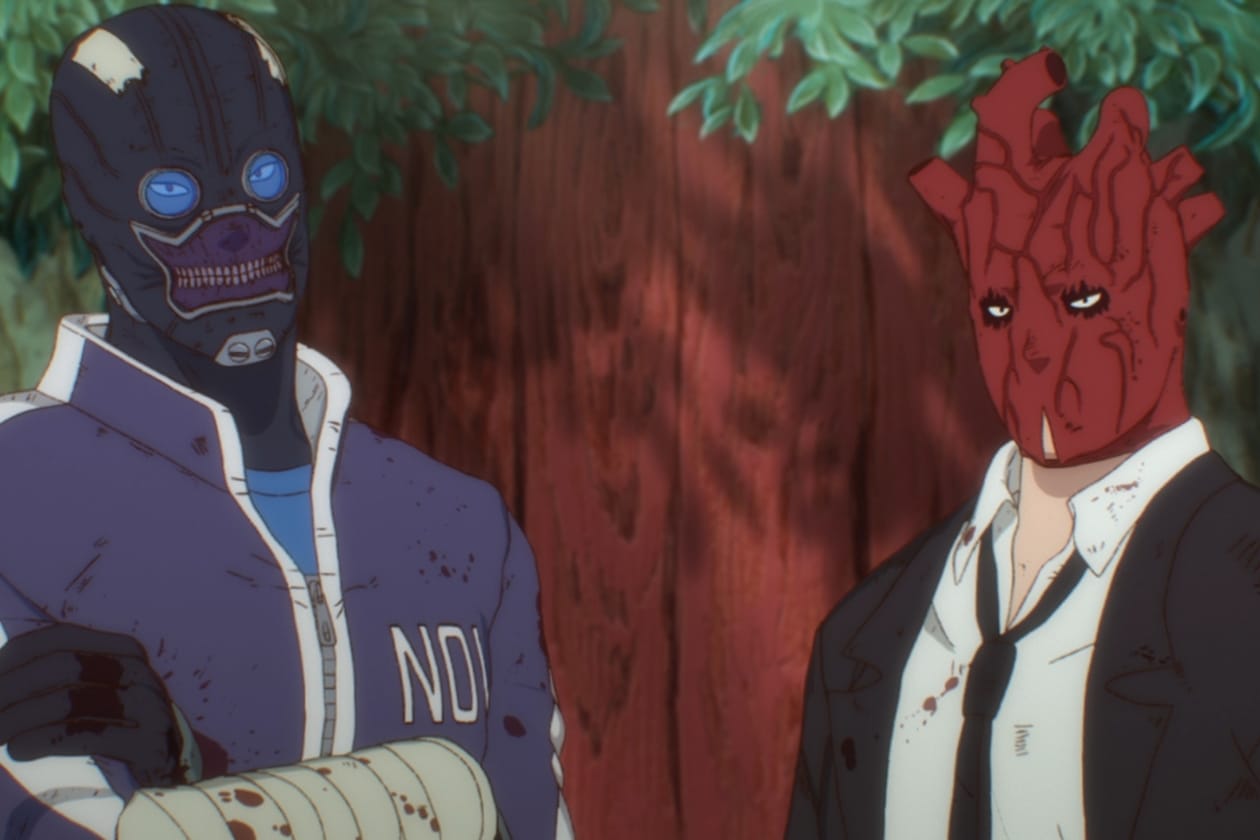
Noi, Shin’s partner and a powerhouse within the En Family. With a strong build and towering stature, her leathery gimp-style mask carries a jagged snark that adds to her threatening presence. The design also appears to borrow visual cues from Mexican lucha libre wrestling masks, but rendered in a dark blue and indigo-esque palette.
Symbolically, her classic horror mask seems to serve as a protective shell for her biggest flaw — her kindness, which is inherently at odds with the antagonistic nature of her organization. The gimp mask seems to allow her to operate in a world of killers as a monstrous-like figure, even though her true self is the source of restoration for her friends. This contrast highlights a core theme of the series: in a world this ugly, a terrifying mask is often the only thing that allows a kindhearted soul to survive.
Fujita: The Budget Mask of the Everyman
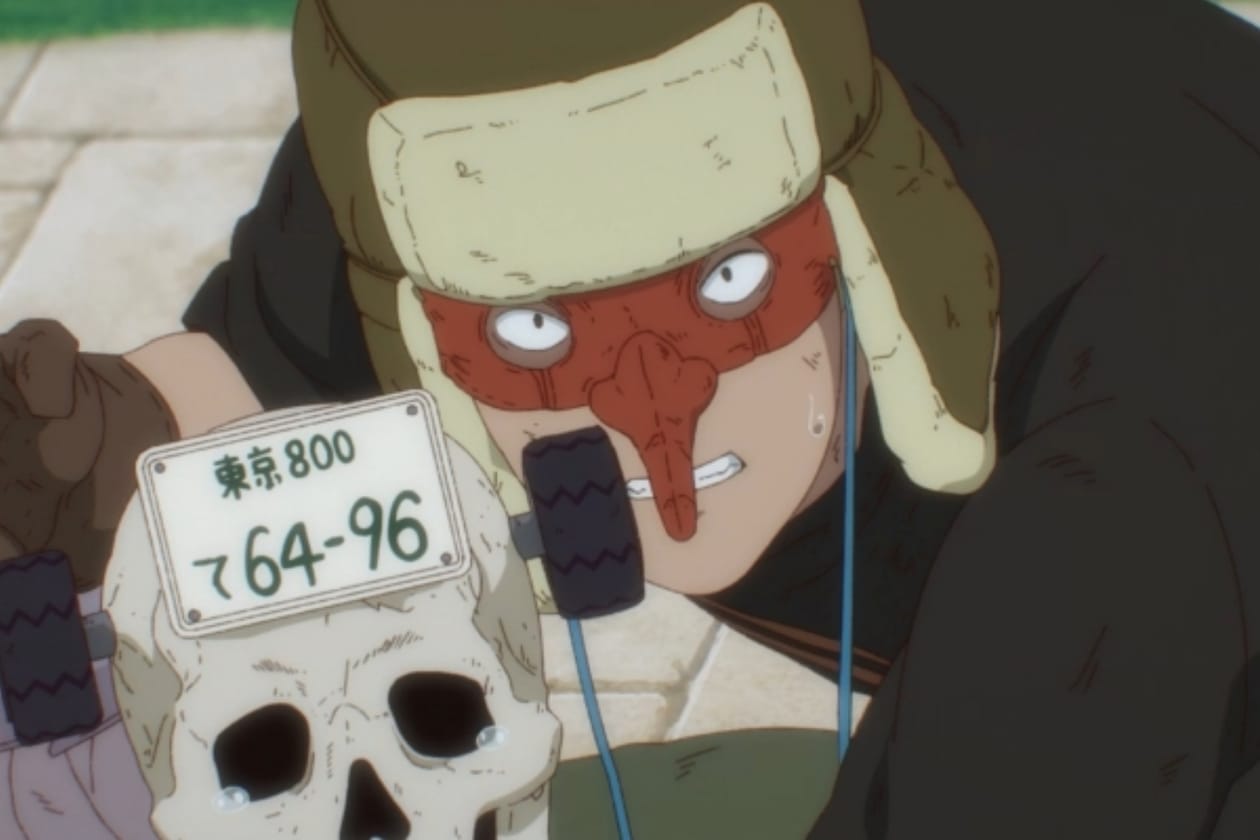
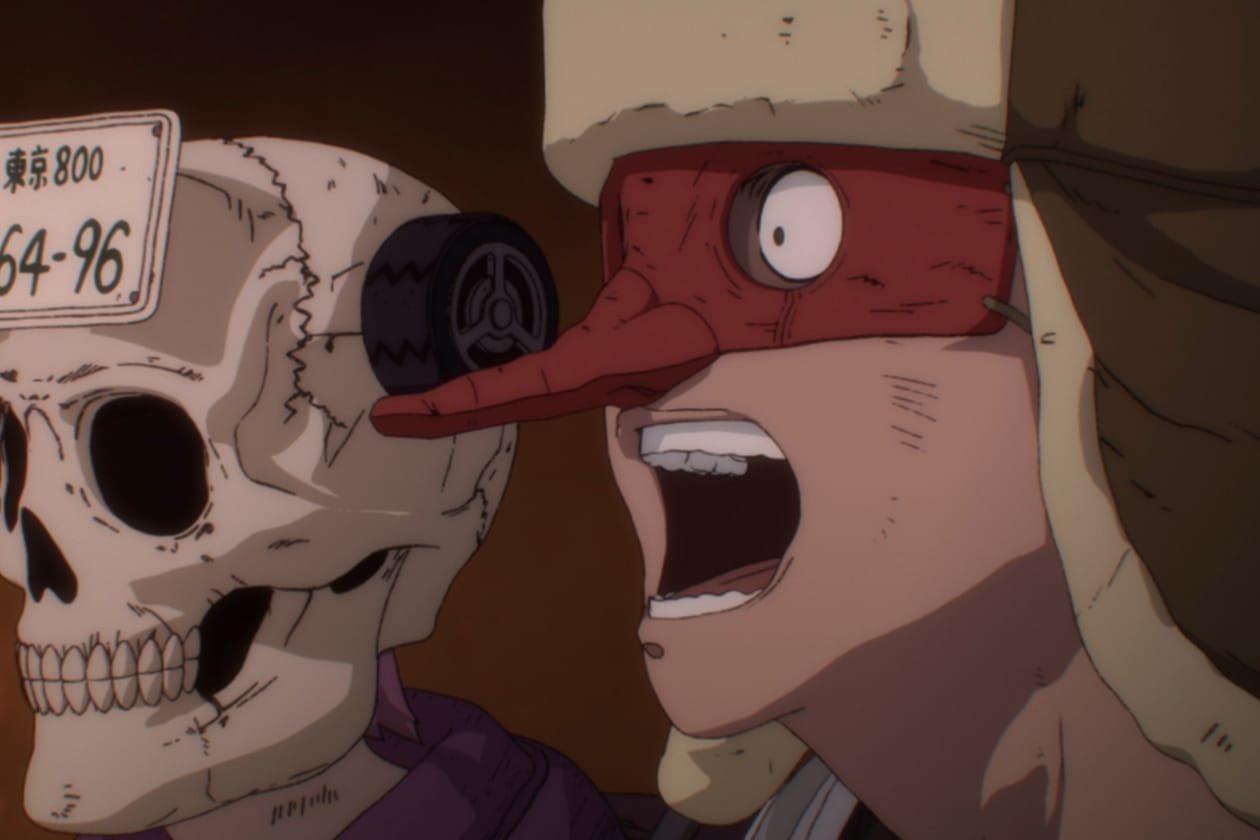
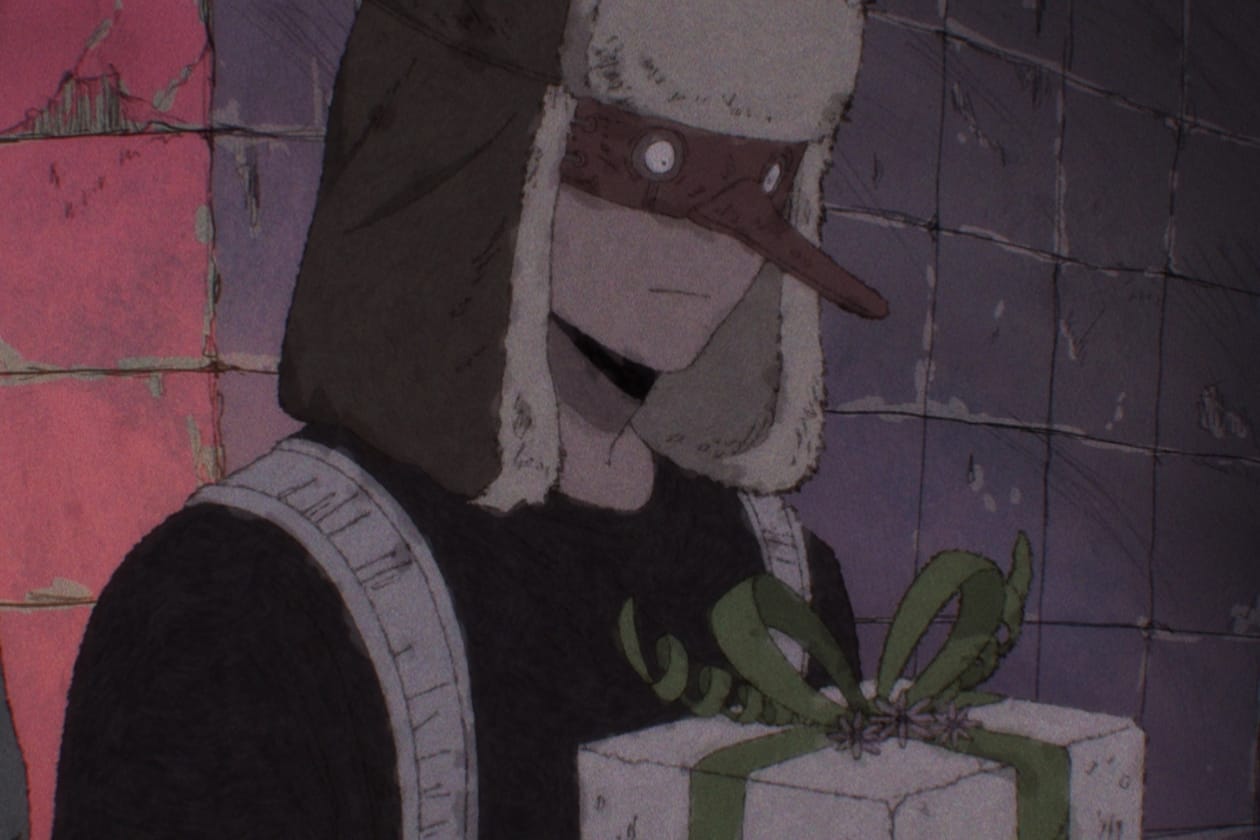
Fujita occupies a unique space as the “everyman” of the En Family. His mask is a simple, long-nosed design reminiscent of a traditional Japanese Tengu or a bird-like beaker visage, while also drawing aesthetic parallels to the signature mask worn by Slipknot’s Chris Fehn. While Fehn’s mask has seen various upgrades over the years, its defining features have always remained – a Pinocchio-esque form with heavy stitching and a zipper closure for the mouth.
Unlike the elaborate, custom-made demonic visages of his peers, Fujita’s mask is a store-bought, readymade. This choice highlights his status as a less powerful sorcerer struggling to find his place in a world that rewards raw strength. He originally chose the mask purely to appear more intimidating and scary, with the long, pointed nose giving off a clumsy silhouette that also symbolizes his role as a perpetual “scout” or “observer” – constantly sticking his nose into business far above his power level. Ultimately, it is the mask of a man hiding the grief of loss and the fear of inadequacy behind a comedic, budget-grade face.
The Paradox of Caiman: The Biological Mask
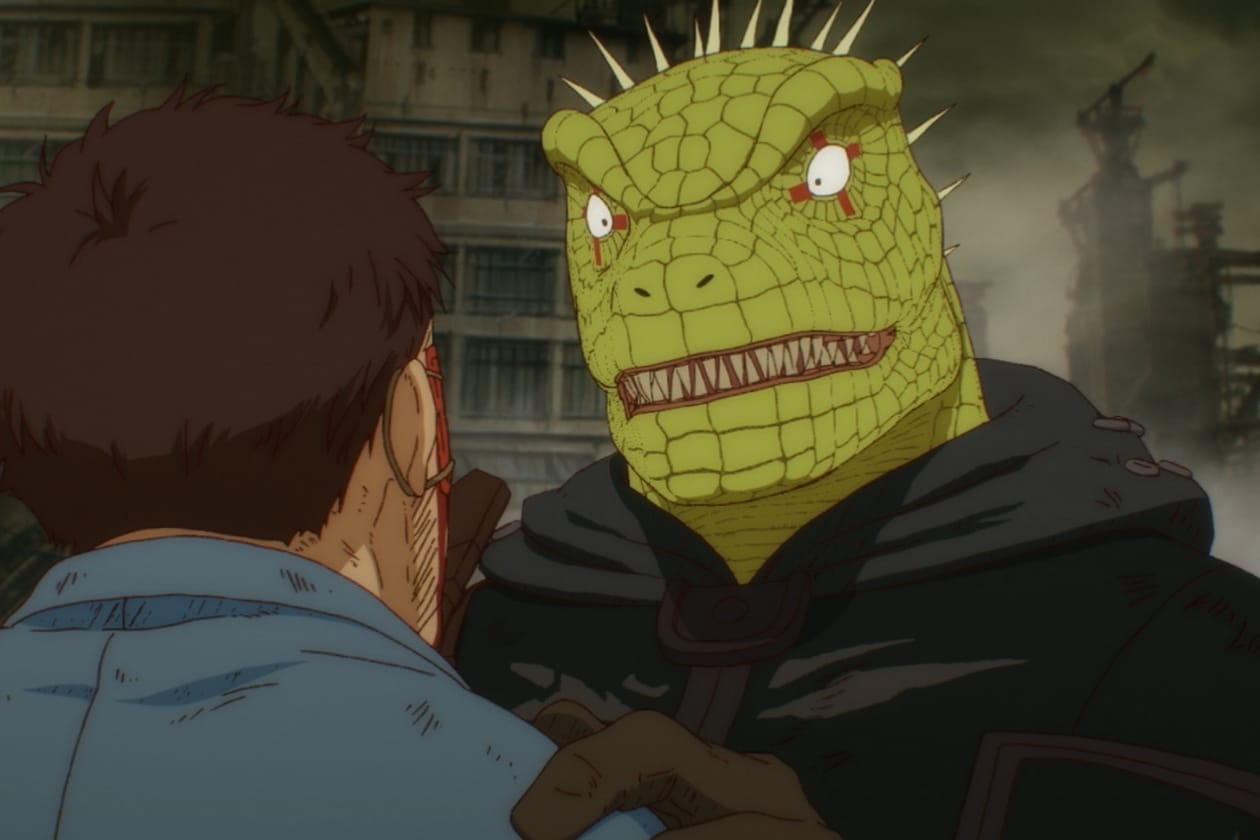
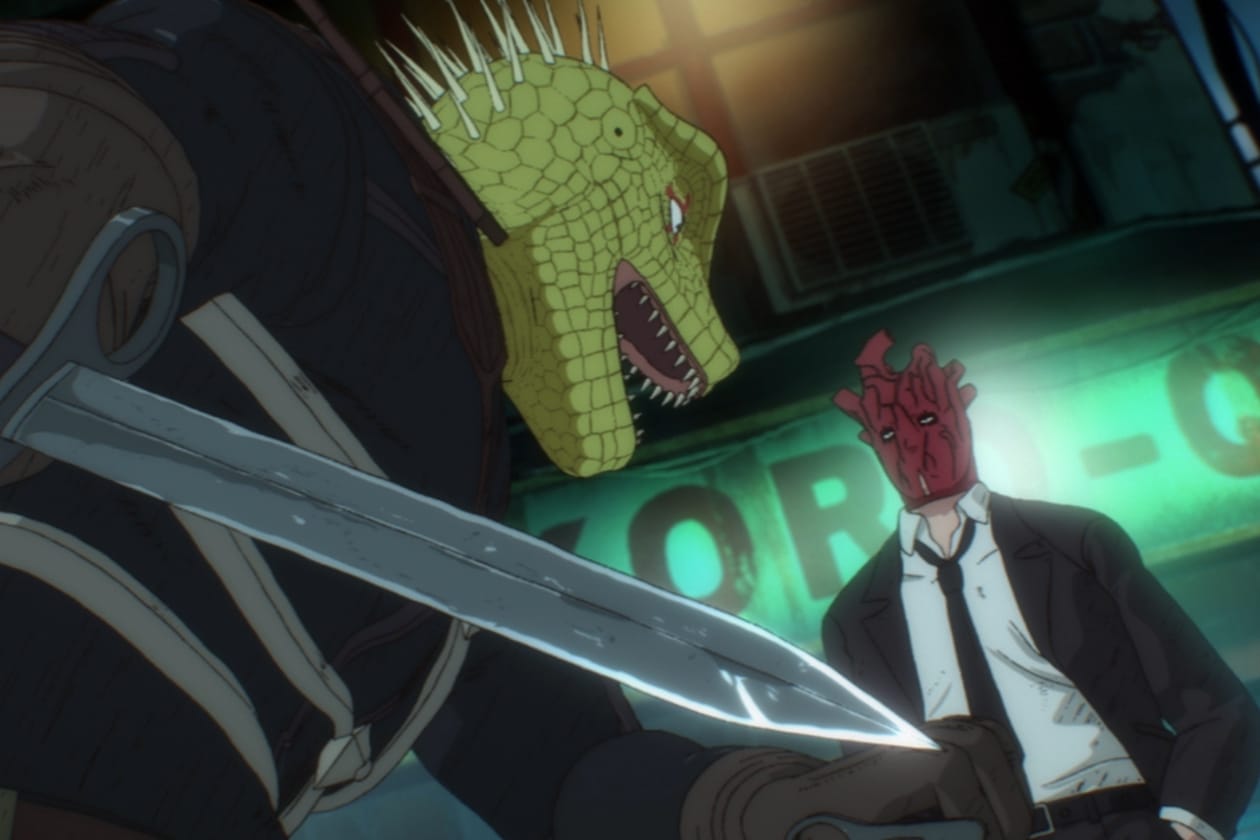
While the sorcerers choose their faces, main protagonist Caiman lives within one he cannot remove. Caiman is a human who was cursed by a sorcerer, leaving him with the head of a giant lizard and total amnesia. Though not a “mask” in the traditional leather-and-studs sense, Caiman’s reptilian head functions as a biological barrier. It is his primary defense – rendering him completely immune to magic – but also his greatest burden.
For Caiman, his lizard face is a “mask” that he must navigate the world through as he searches for the man inside his mouth (quite literally). He is a character defined by the absence of his true face, turning the series’ theme of “identity through design” on its head. While others put on masks to gain power, Caiman is trapped in a mask that stripped his identity away, leaving him with only a hunger for gyoza and the truth.
Through these masks, viewers can come to grasp that appearances are intentionally deceptive within Dorohedoro. Perhaps beneath the face of a grim reaper lie qualities that are charming and wholesome. Ultimately, it’s the mask that tells the real story of a character. As the long-awaited second season premieres this week, it’s time to head back to The Hole for more adventures.