
Since its early days as a streaming platform, Netflix series and movies have done more than entertain — they’ve gotten countless songs stuck in our heads, thanks to talented music supervisors like Nora Felder, whose credits include all five seasons of Netflix’s Stranger Things. Over the course of the show’s run, she helped make needle drops from ’80s artists into cultural phenomena on their own level — discovering that after the show’s blockbuster first season, “If I ever reached out about something with Stranger Things, people were very… attentive, I guess is the way to put it.”
She says it modestly, but in fact, people did start coming to her directly — she confirms that there were “really big artists, like humongous” who came forward to push for their songs to be included. “But the songs were selected to push the narrative,” she continues. “I was very respectful and said, ‘It’s wonderful that they want to be a part of this, and we’re happy to entertain it, but it has to work for the story.’ We stayed as true [to that] as we did in Season 1, no matter what offers came forward.”
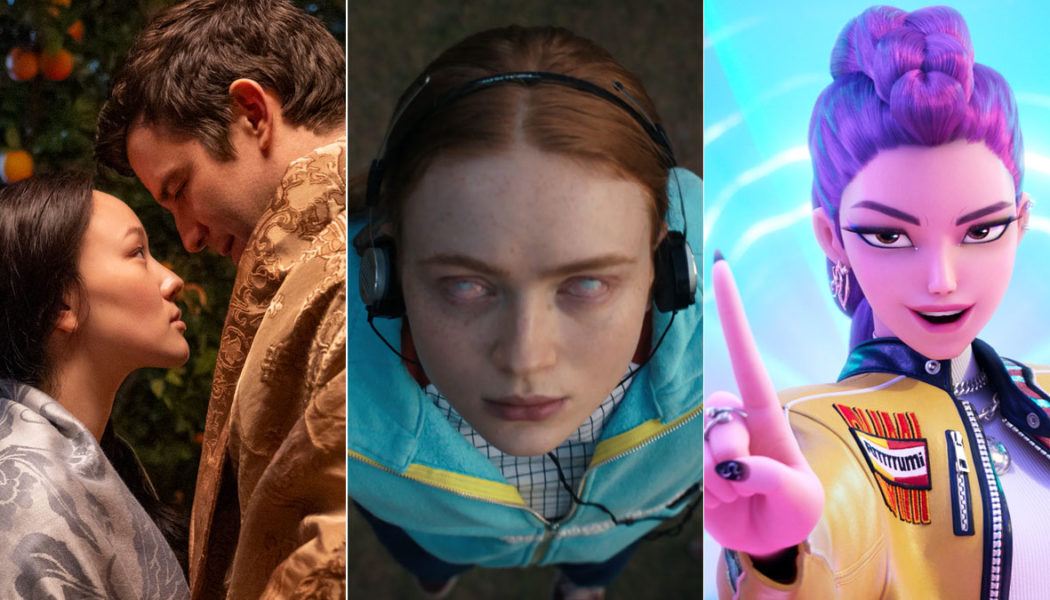
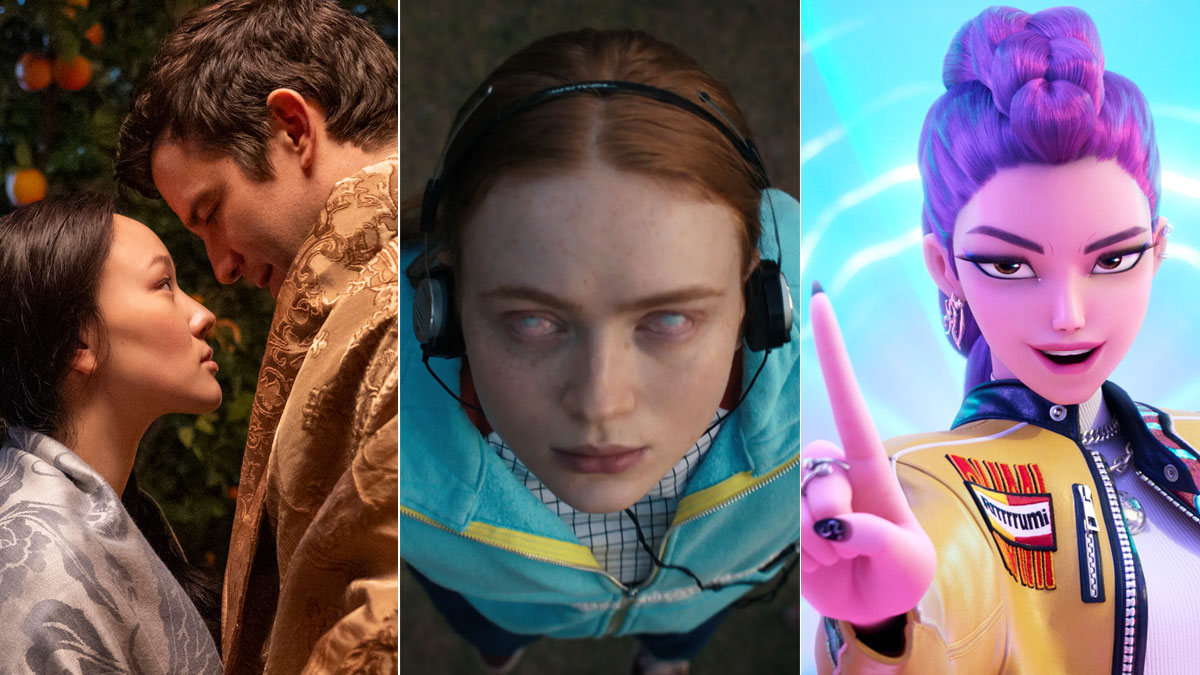
Stranger Things is just one of many Netflix projects with a symbiotic relationship to its music: There’s the pop culture domination of Oscar-winning KPop Demon Hunters, Wednesday becoming a TikTok craze thanks to Jenna Ortega’s wild dance moves, and Bridgerton giving a wide range of pop favorites a classical makeover.
Related Video
From the beginning, Bridgerton was helping the string covers of its featured songs climb the charts. When Season 1 of the show premiered in December 2020, according to Netflix and Spotify, The Vitamin String Quartet saw a 350% increase in its streams, with specific tracks receiving enormous boosts: Billie Eilish’s “Happier Than Ever” increased 11,000%, Sia’s “Cheap Thrills” increased 9,500%, and BTS’ “Dynamite” increased 3,300%.
The trend has since continued: Archer Mash’s cover of Pitbull’s “Give Me Everything,” featured in Season 3, topped the Global Spotify Viral Chart and the iTunes US & UK top Soundtrack Music Albums Chart, and was one of many other featured songs to go viral on TikTok. When Season 4 premiered, the official Spotify Bridgerton playlist saw a 271% jump in global streams on Spotify, and Vitamin String Quartet’s rendition of Teddy Swim’s “Lose Control” received a 2,290% increase in U.S. Spotify streams.
The list of artists featured in Bridgerton covers gets increasingly eclectic by the season, something music supervisor Justin Kamps says was a deliberate choice for Season 4. “The producers and our showrunner this year definitely wanted to try to reach back a little bit further and expand into some classic rock sounds,” he says.
This included not just an orchestral cover of Charli XCX’s “360” by Peter Gregson, but artists like Third Eye Blind, Usher, Coldplay, Sting, and The Cars — and it turned out that drawing from different eras served the shows’ generations-spanning audience. “I was following some of the reactions to the track list,” Kamps says, “and it was fun to see some people being like, ‘Who the heck are The Cars or Sting?’ and then some people being like, ‘Those are the only two bands I know.’”
Adds Kamps, “I do think there’s a stereotype of like, ‘Oh, the younger generation only listens to whatever crazy music these days.’ But if it’s presented to them, especially through a medium like film and TV in a really powerful and impactful, emotional way, they can really fall in love with those tracks. Teens can fall in love with ‘Fields of Gold’ by Sting as well as adults.”
It’s a lesson also taught by the success of Stranger Things needle drops: A great song is a great song, no matter when it was released. Kate Bush certainly reaped the benefits of this during Season 4 of the show: Like the character of Max (Sadie Sink), fans couldn’t get enough of her 1985 track “Running Up That Hill,” which cracked the Billboard Hot 100 for the first time in 38 years and hit 1 billion streams in 2022. Its repeated use in Season 5 also ensured a return to the charts: The week of December 15th, 2026, the song peaked at #2 on Billboard’s Alternative Digital Song Sales chart the week of December 15.
Bush wasn’t the only artist boosted by airtime in Hawkins, Indiana — the use of Prince in the series finale saw massive streaming increases, with “Purple Rain” seeing a 608% increase in overall streams and “When Doves Cry” receiving a 336% increase. It’s a victory for Felder considering that Prince is a notoriously difficult artist to license for movies and TV shows — there are “a lot of estates, a lot of representatives that all need to agree” before his music can be used on screen, she says. When she presented the idea to the Duffers, “I was honest as I always am, and I said, ‘I don’t even know if I can clear this. Prince just doesn’t really clear. Have me clear anything else.’”
Even the touring careers of these artists got a boost. Tiffany’s classic track “I Think We’re Alone Now” was featured in Season 5, and in the spring of 2026 she added additional dates to her 2026 All This Time Tour, thanks to the song’s newfound popularity.
While Felder says that she was able to secure “pretty much” every song the team wanted for Stranger Things from the beginning, there was one unnamed band she approached for Season 1 who turned her down. “The answer that came back from one of their reps, which I thought was amusing, was that ‘They’re trying to not only be associated with ’80s soundtracks. They’re trying to break out of that.’” She laughs. “I think they probably might have regretted that decision.”
The importance of the soundtrack is also felt in projects using original music, like KPop Demon Hunters. Talking to Consequence last December, co-director Chris Appelhans said that in creating their fictional evil-fighting girl group, their hope was that they would be accepted “not just as animated musical K-pop girls, but like, just Mira, Zoey, and Rumi. Like, you forget about all that, and it just becomes, ‘I love this artist and I love who they are.’”
It paid off — the official KPop Demon Hunters album topped the Billboard 200, the first soundtrack to do so since 2022, and “Golden” was #1 on the Hot 100 for eight straight weeks. The songs of both HUNTR/X and Saja Boys, combined, have been streamed over one billion times across Spotify and YouTube. Oh and yes, “Golden” was the first KPop song to win both an Grammy Award as well as the Oscar for Best Original Song.
Appelhans noted another impact the movie had on pop culture, specifically the word “Honmoon,” which was invented by the writers for narrative purposes, but has since gone on to define an entire sensation that music can give you. He credited a fan with the new definition of “Honmoon” — “the feeling that you have when you are collectively sharing a musical experience at a great concert or a great club,” adding that “Within a few weeks [of the movie’s premiere], there would be videos of people playing a remix of ‘Golden’ at a club, and the caption would be like, ‘The Honmoon is sealed.’”
While the KPop directors didn’t think they were making a musical at first, at least a traditional one, there’s no question that the music has made a huge impact on the movie’s popularity. “Literally, one of the founding ideas of the movie was, how can we dramatize just how powerful music can be — what a force for good vibes it can be,” Appelhans said.
At the end of the day, key to Netflix’s power as a music discovery engine is its ubiquity — as of January 2026, it remains the world’s most subscribed streaming service with over 325 million subscribers. As Felder says, “Everyone’s going to watch it, and if it’s great, they will tell other people about it. Netflix had the perfect platform to do that.”
Kamps agrees, noting that the platform’s global reach also has an impact. “They’re in so many different countries and they go through a lot of work to localize all these programs for different countries — and they all drop at the exact same time. Everyone can experience these brand new episodes and musical moments altogether right at midnight or whatever, if they want. There’s just real power in having that many eyes on your production — and then ears on these songs.”
It’s a trend that won’t stop trending. The Chemical Brothers’ 2015 track “Go” just became a chart topper in 2026, debuting at number five on Billboard’s Dance Digital Songs chart and blowing up on Spotify and TikTok. Why? Because the bad guy played by Taron Egerton in the new Netflix movie Apex used it to torment his prey (played by Charlize Theron). Even the bad guys have great taste in tunes on Netflix.