
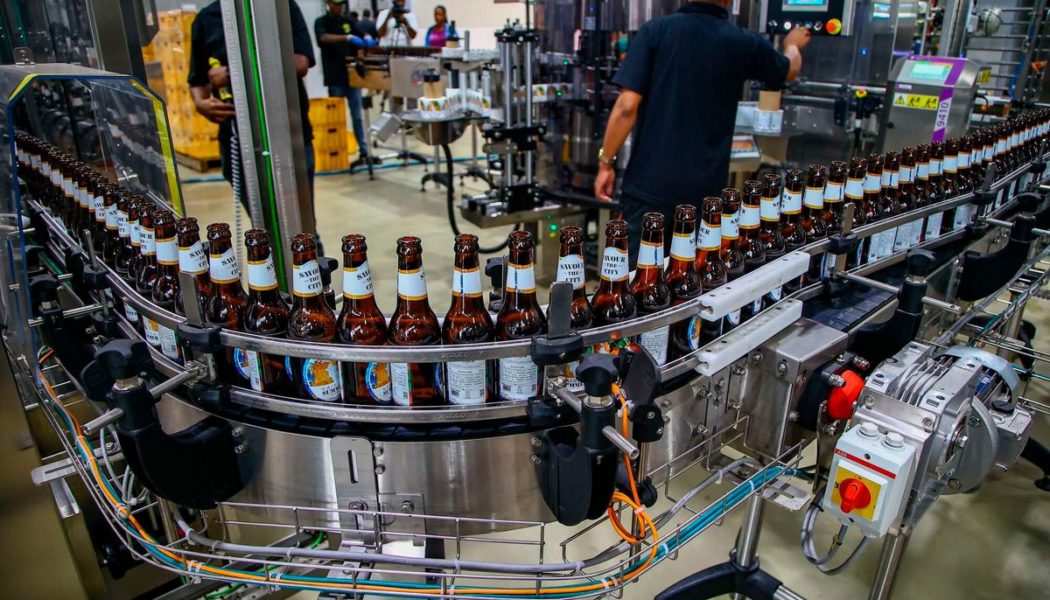
The Kenyan government is set for a major windfall in tax revenue from the sale of Diageo Plc’s 65 percent stake in East African Breweries Plc (EABL), underscoring the lucrative nature of mega corporate deals to the exchequer.
Diageo is selling its 65 percent stake in EABL to Asahi Group Holdings in a deal that will see the British multinational brewer pay an estimated Sh41.5 billion in capital gains tax (CGT) to the Kenya Revenue Authority (KRA), according to a source close to the transaction.
The KRA is set to receive 15 percent of the net gains that Diageo made on top of its initial investment of Sh30 billion in EABL over the past 26 years, from the Sh307 billion it will receive for the sale.
This leaves the British multinational, which owns such brands as Johnnie Walker and Don Julio, with a net gain of Sh277 billion.
Because this is a private transaction—rather than a trade on the Nairobi Securities Exchange (NSE), which is exempt from CGT—Diageo will pay the tax of Sh41.5 billion, or 15 percent of the Sh277 billion, less other expenses such as legal costs, added the source.
CGT is normally paid on the profit or gains made by investors when they sell, transfer, or dispose of an asset such as unquoted shares or property, including homes, land, and buildings. Sellers pay 15 percent of the net gain, a rate that was increased from five percent in January 2023.
In 2000, Diageo — which was formed in 1997 following the merger of Guinness Plc and Grand Metropolitan — acquired majority control of EABL, cementing its influence over the region’s largest brewer.
Earlier, Guinness East Africa, which was incorporated in Kenya in 1965, had been operating largely as a regional marketing and distribution arm for Guinness brands in East Africa, working closely with EABL through licensing, brewing and distribution arrangements before Diageo eventually acquired majority control of the brewer.
However, the British drinks giant has since resolved to exit EABL, together with other African markets, as part of its cost-cutting programme and asset disposal plan. Dubbed the “asset-light model,” it is aimed at reducing volatility in Africa and driving better returns.
Diageo, the London Stock Exchange-listed brewer, officially announced it would sell its entire stake in EABL, including its 53.68 percent shareholding in the Kenyan spirits business, UDVK, to Asahi Group Holdings on December 17, 2025.
The exit will also see the British firm and EABL sign a fresh agreement that allows the NSE-listed brewer to continue producing certain Diageo drinks such as Smirnoff, Captain Morgan, Smirnoff Ice, Orijin, and the iconic Guinness.
In the Sh307 billion deal, Asahi will take full control of Diageo Kenya Limited, the investment vehicle through which the British firm holds its stake in EABL.
This transaction is set to attract CGT, a major boon to the exchequer, which has been struggling to collect adequate taxes to meet its ever-growing spending needs.
The KRA has already collected a record Sh35 billion from financial and capital transactions in the first nine months of the current financial year ending June.
This means the conclusion of the Diageo deal in the current or next financial year, starting July, could more than triple the Treasury’s projected annual collections from the tax head for each fiscal period, which are forecast at Sh20.1 billion and Sh21.1 billion, respectively.
Following amendments to the Income Tax Act through the Finance Act 2015, only shares traded on the NSE were exempted from CGT.
Rather than going through the protracted process of buying the shares directly on the Nairobi bourse and escaping the tax liability, Diageo Plc and Asahi have opted for a private contractual arrangement.
Conclusion of the deal has been disrupted by an application filed by Bia Tosha Distributors, which sought to halt the sale because it could undermine its ongoing court case against EABL and related entities.
Although the High Court dismissed the application, the beer distributor has since filed a notice of appeal challenging the decision to reject its bid to stop the transaction.
Tax analysts close to the transaction estimate that the KRA could receive up to Sh40 billion in CGT, representing 15 percent of the gains Diageo Plc has made since acquiring a controlling stake in EABL in 2000.
In 2023, Diageo increased its stake in the region’s largest brewer after acquiring an additional 118.39 million shares, or a 14.97 percent stake, through a tender offer at the NSE, raising its shareholding from 50.03 percent to 65 percent.
Steve Okoth, Tax Advisory Director and Regional Head of Tax at BDO East Africa, said that a pure private market or off-market transfer of listed shares will attract CGT.
“CGT risk arises because KRA may argue the transaction was not a transfer of securities ‘traded on’ a licensed exchange, but a private contractual transfer,” said Mr Okoth.
Businesses may still opt to structure transactions outside the NSE despite the CGT exemption on listed shares because such arrangements often offer greater commercial and strategic flexibility.
Analysts reckon that in most mega corporate deals, buyers are not simply interested in accumulating shares from the open market but in acquiring immediate control of the target company through the holding entities that own strategic stakes.
In 2017, the KRA revealed that it received about Sh16 billion from the share transfer involving Safaricom’s parent company, Vodafone, and its African subsidiary, Vodacom.
Vodafone on August 7 transferred its 35 percent stake in Safaricom, held in the investment vehicle Vodafone Kenya Limited, to Vodacom in exchange for 233.5 million new shares in the Johannesburg-based firm.
The multinational booked a huge capital gain on the transaction, part of which it realised by selling 90 million of the new Vodacom shares for €962 million (Sh143 billion in current exchange rates) on the Johannesburg Stock Exchange.
“The shares transfer from Vodafone International Holdings BV to Vodacom Group Limited was done through direct transfer and was therefore subject to capital gains tax,” the KRA said in a statement to the Business Daily then.
“The parties involved in the transaction declared and paid taxes and duties to KRA totalling Sh15,967,782,690.”
Private transactions also allow parties to negotiate pricing, payment terms, governance rights, warranties and regulatory approvals discreetly and efficiently, something that would be difficult to achieve through ordinary market trading.
Large acquisitions executed through the NSE can also trigger market speculation, sharply move share prices and take months to complete.
Multinational firms, therefore, often prefer negotiated block transactions involving offshore holding companies, especially where African assets are held through subsidiaries incorporated in jurisdictions such as the Netherlands, Mauritius or the United Kingdom.
In the case of Diageo Plc and EABL, Asahi is acquiring Diageo’s subsidiaries — Diageo Kenya Limited and UDV Kenya Limited — rather than buying EABL shares directly from the NSE, giving it immediate access to the brewer’s controlling stake in a single negotiated transaction.