The standard gauge railway (SGR) passenger business has crossed the Sh1 billion quarterly revenue mark for the first time, helped by a rebound in traveller numbers and higher earnings per customer.
Fresh data from the Kenya National Bureau of Statistics (KNBS) shows passenger revenue rose 15.8 percent to Sh1.08 billion in the January–March 2026 period from Sh936.3 million a year earlier, marking the highest first-quarter earnings ever recorded by the passenger service.
The milestone came as freight operations powered the railway to a record quarter, with cargo revenue jumping 25.7 percent to Sh4.8 billion and total SGR income climbing to an all-time high of Sh5.89 billion.
Cargo traffic also crossed the two-million-tonne mark for the first time, underlining the growing role of freight operations in sustaining the Chinese-built railway amid years of debate over its commercial viability and debt burden.
Passenger rebound
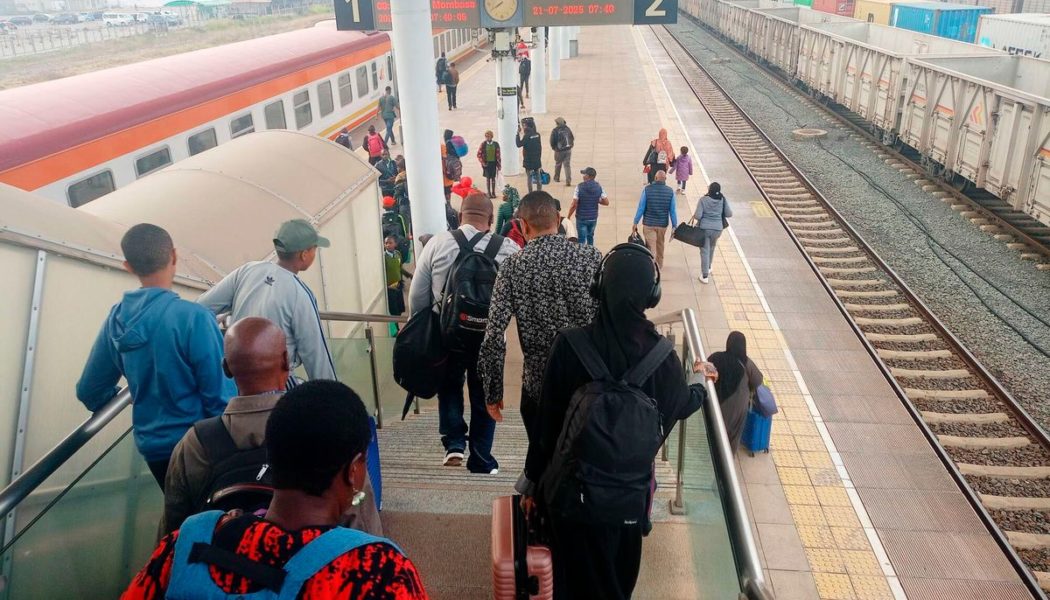
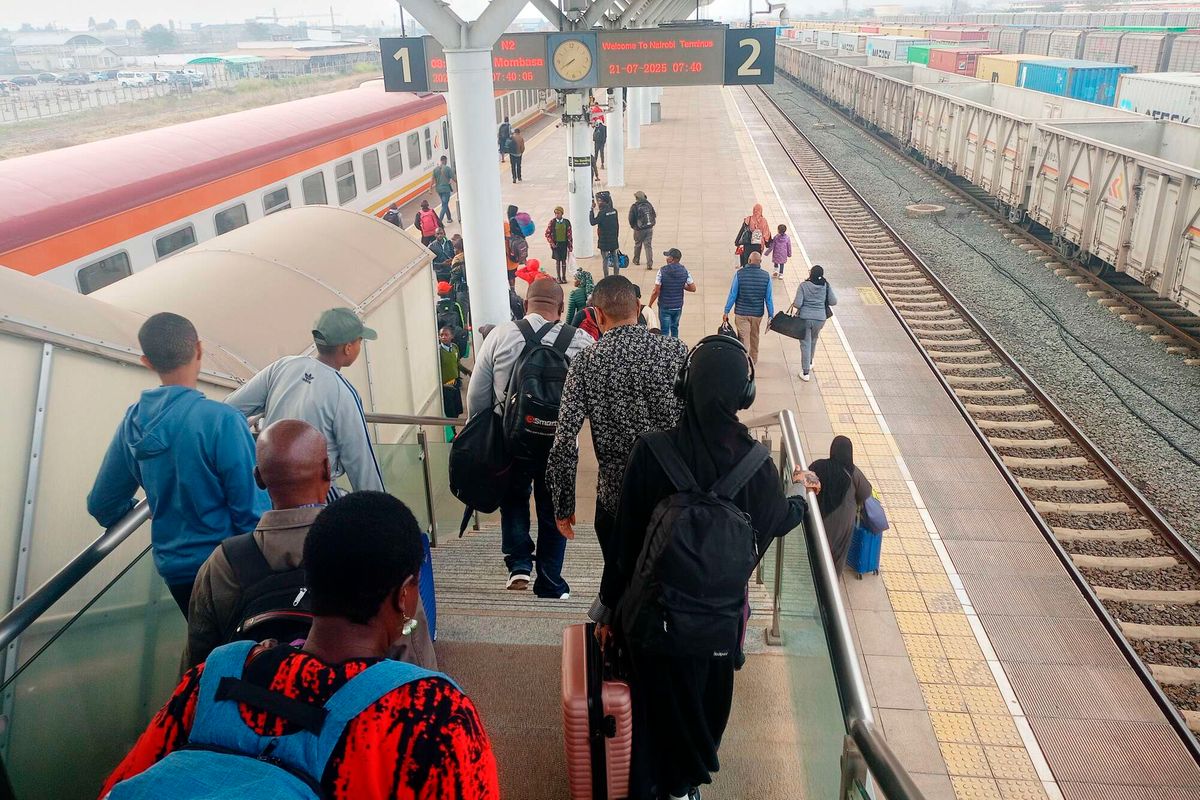
The data shows passenger traffic recovered after two difficult years, rising 12.3 percent to 594,964 travellers from 529,591 in the same period last year.
The rebound followed a period of disruption after Kenya Railways Corporation (KRC) raised passenger fares in January 2024 in response to rising operating costs, including higher fuel prices and maintenance expenses for rolling stock and railway infrastructure.
Under the revised pricing, first-class tickets on the Nairobi–Mombasa route increased to Sh4,500 from Sh3,000, while economy fares rose to Sh1,500 from Sh1,000.
The higher fares initially dampened demand, contributing to declines in passenger numbers in 2024 and 2025. Traffic later stabilised as travellers increasingly prioritised convenience, reliability and predictable travel times over road transport.
The latest figures suggest Kenya Railways is earning more from each traveller than in previous years, reflecting stronger pricing power and a shift towards higher-value travel services.
Average earnings per passenger rose to Sh1,822 in the first quarter of 2026 from Sh1,768 in 2025 and Sh1,104 in 2023.
Passenger revenue has more than doubled over the past five years, rising from Sh494.7 million in the first quarter of 2021 to Sh1.08 billion currently.
Premium push
The recovery has also been supported by the rollout of premium-class coaches introduced in October 2024 following pilot operations that began in July that year.
The premium service, which targets higher-income and corporate travellers, charges Sh12,000 for a one-way adult ticket and Sh6,000 for children aged between three and 11 years. A return ticket costs Sh20,000.
The premium coaches feature fully reclining and rotatable leather seats, expanded legroom, Wi-Fi connectivity, wireless charging points and large viewing windows. Passengers also receive complimentary meals and refreshments throughout the journey.
The introduction of the premium segment reflects Kenya Railways’ efforts to diversify passenger offerings and increase revenue per traveller as it seeks to strengthen the railway’s financial position.
The passenger recovery comes at a time when rising fuel costs, highway congestion and higher domestic airfares are making rail transport increasingly attractive on the Nairobi–Mombasa route.
Freight engine
Freight operations, however, remain the dominant pillar of the SGR business model.
Cargo operations generated Sh4.8 billion in the first quarter, accounting for more than 80 percent of the railway’s total revenue.
The sharp rise in freight earnings was driven by both higher cargo volumes and improved revenue per tonne hauled.
Cargo tonnage rose 12.7 percent to a record 2.05 million tonnes, while earnings per tonne increased to Sh2,340 from Sh2,098 a year earlier.
The increase points to higher volumes of imported goods moving through the Port of Mombasa, alongside continued enforcement of government directives requiring selected imports to be transported inland by rail.
The SGR remains central to Kenya’s long-term transport and logistics strategy, particularly in easing congestion along the Northern Corridor and improving cargo movement between the Port of Mombasa and the hinterland.
The government has also broken ground for the extension of the railway from Naivasha to the Malaba border, which is expected to connect Kenya’s network to Uganda’s planned SGR system.
Debt burden
Kenya borrowed $5.08 billion (Sh658 billion at current exchange rates) from China Exim Bank in 2014 and 2015 to finance the Mombasa–Naivasha railway line.
The loans were issued on a mix of concessional and commercial terms, with repayments beginning in January 2020 after a five-year grace period.
Debt-servicing obligations have continued to exert pressure on Kenya’s external financing position, with SGR revenues falling short of repayment requirements.
In 2025, Nairobi asked Beijing to review strict escrow account conditions tied to the SGR loans after the arrangement effectively blocked Kenya from accessing part of the railway’s operational revenues to service the debt.
The National Treasury said the terms, which reportedly require Kenya Railways to maintain a minimum balance of Sh25 billion in a special escrow account, had contributed to the accumulation of arrears on the SGR project, which stood at Sh413.4 billion by June 2025.
The arrears represent amounts owed by Kenya Railways to the Treasury, which services the loans under State on-lending arrangements.
“This arrangement has effectively locked out loan repayments, resulting in the steady accumulation of arrears despite continued SGR operations,” the Treasury said in its latest annual debt management report.
“In view of the above, it is recommended that escrow account terms should be renegotiated to allow for debt service alongside operation and maintenance costs.”