
The growing number of police blockades around Nairobi have raised concern among the business community amid heavy losses whenever the security agencies deploy the strategy to curb protests in the city’s Central Business District (CBD).
Police on Thursday mounted yet another blockade on Nairobi, shutting all major roads leading to the CBD and bringing business to a standstill.
Motorists attempting to access the CBD through Mombasa Road, Lang’ata Road, Waiyaki Way, Thika Road, Ngong Road, and Kiambu Road were turned away.
There were also barricades at the Bunyala Road, City Stadium, and Kenyatta National Hospital roundabouts.
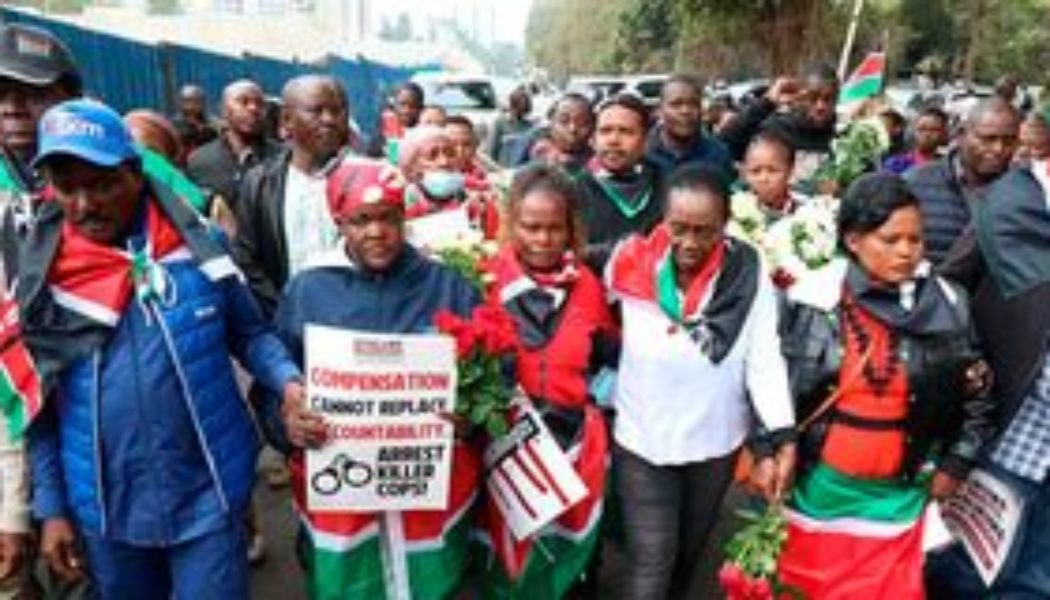
Thursday’s operation was mounted ahead of planned demonstrations marking the second anniversary of the deadly nationwide Gen Z protests against the Finance Bill, 2024, which was later scrapped.
It was the fourth such blockade in months, leaving businesses counting losses that run into billions of shillings. Shutting Nairobi for a day wipes out about Sh11.2 billion —signifying the impact of the now common blockades by the police.
On June 12, 2025, the CBD was shut down during protests triggered by the death of teacher and blogger Albert Ojwang in police custody.
Two weeks later, on June 25, security forces blockaded Nairobi ahead of the first anniversary of the bloody Gen Z protests.
Security agencies again shut down the city on July 7, 2025 to prevent processions by activists commemorating the country’s push for multi-party democracy, symbolising both the historic 1990 pro-democracy protests.
But as the blockade strategy takes root, businesses are bearing the brunt of the police actions.
Police blockades strangle access to entire commercial districts, resulting in massive economic fallout for businesses. The blockades lock out customers and disrupt supply chains and revenue streams for businesses.
Recurrent blockades also put businesses at risk because they can cause customers to seek alternative locations or online shopping options, thus hurting long-term foot traffic.
Nairobi’s gross county product (GCP) as of 2024 stood at approximately Sh4.11 trillion annually, which translates to about Sh11.2 billion per day. GCP is the geographic breakdown of a nation’s gross domestic product (GDP), measuring the total value of all goods and services produced within a specific county’s borders.
The Motorists Association of Kenya on Thursday condemned the blockades, saying they had disrupted critical travel.
“Nairobi serves as a critical terminal and transit hub for the entire country. By stopping travellers midway, the police have placed innocent Kenyans in grave danger and left them stranded without basic amenities,” the association said in a statement.
A section of United Opposition leaders led by Kalonzo Musyoka, Martha Karua, David Maraga, and Eugene Wamalwa joins families of the victims of Gen Z protests. They’re matching to lay wreath at Parliament in honour of those who died during the 2024 anti-Finance Bill. Bonface Bogita | Nation
Photo credit: Bonface Bogita | Nation Media Group
Beyond the city centre, access to other key commercial hubs was also affected on Thursday.
The Industrial Area, the heart of East Africa’s manufacturing, logistics, and supply chain operations, was difficult to access as police restricted movement along major routes.
The district hosts heavy and light manufacturing plants, bulk warehousing facilities, and major trade distribution centres serving Kenya and neighbouring countries.
Westlands, Nairobi’s secondary business district and home to the headquarters of local firms and multinational corporations, was also largely cut off.
The blockade forced the closure of thousands of businesses, including shops, supermarkets, hotels, schools, petrol stations, hawkers, and informal traders.
Farm produce traders operating at markets such as City Market and the Farmers Market also suspended operations.
Transport services across the city were heavily disrupted, as police barred matatus from entering the CBD, while private vehicles were turned away.
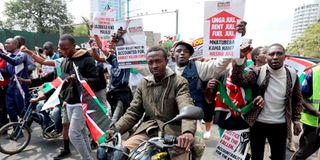
Protesters march along University Way towards the Central Police Station in Nairobi on June 25, 2026 during the second anniversary of the 2024 Gen Z anti-Finance Bill protests.
Photo credit: Bonface Bogita | Nation Media Group
Passengers using public service vehicles (PSVs) were dropped in Mlolongo, Kangemi, Roysambu, and Madaraka on the Nyayo Stadium-Lang’ata Road — in the outskirts of the city — and forced to walk long distances or seek alternative transport, such as motorbikes, which are significantly more expensive.
Heavy-duty trucks transporting cargo through Nairobi to western Kenya and Uganda via the Nakuru Highway also faced delays due to restricted movement along Mombasa Road.
Businesses in downtown Nairobi hired vigilante groups to guard premises against anticipated looting and vandalism, which had been witnessed previously.
Thursday’s disruption came despite earlier assurances from the Interior ministry that it would be a normal working day.
Many workers who attempted to access the CBD were turned away by police, raising concerns about the police’s double-speak.
The Nairobi County government took a hit from lost revenues, such as parking fees. As of September 2025, Nairobi County was collecting about Sh22.2 million daily in own-source revenue, highlighting the economic cost of repeated shutdowns. Owners of private parking premises also lost revenue on the day.
Thursday’s shutdown had wider regional implications given Nairobi’s role as East Africa’s commercial hub. Some conferences were cancelled, while foreign governments, including the United States, issued travel advisories to their citizens.
But even as retail outlets counted losses, trading on the Nairobi Securities Exchange defied the shutdown. The stock market gained Sh17 billion, to close the day at Sh3.68 trillion. Investors bought heavily into the shares of Safaricom, Co-operative Bank of Kenya, East African Breweries Plc (EABL), KCB Group, and other firms, driving up their share prices.