
The Auditor-General has flagged the purchase of Sh650million mobile phones for community health promoters (CHPs) without inclusion in the approved 2024/25 annual procurement plan of the Health ministry.
CHPs are trained community members who serve as a link between the community and formal health facilities. Often travelling on foot or by motorcycle, they conduct home visits, provide health education, support disease surveillance and facilitate referrals, particularly in underserved and hard-to-reach communities.
According to the Public Procurement and Asset Disposal Act, all government purchases must be included in an approved annual procurement plan before the procurement process can begin.
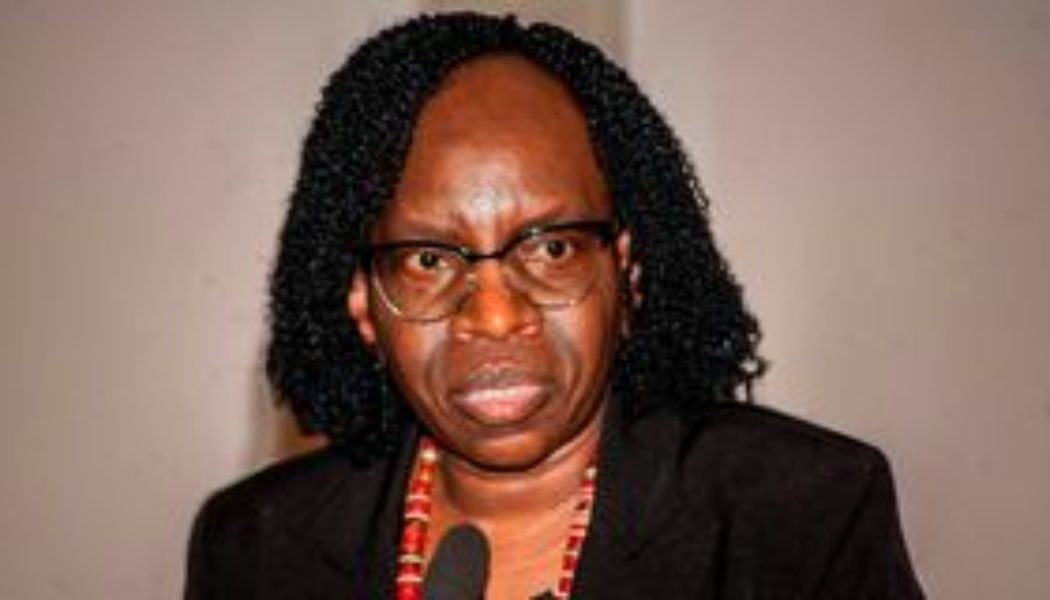
However, in the audit report for the financial year ending June 30, 2025, Auditor-General Nancy Gathungu found that this requirement had not been met, raising concerns over compliance with procurement law and accountability.
“During the year under review, the State Department procured community health promoters’ phones at a cost of Sh650 million, which were not included in the annual procurement plan,” said Ms Gathungu. “In the circumstances, value for money on expenditure incurred could not be confirmed.”
Nancy Gathungu, Auditor-General of the Republic of Kenya.
Photo credit: File | Nation Media Group
Annual procurement plans are intended to guide government purchasing by identifying the goods, works and services to be procured during a financial year, their estimated costs, and sources of funding. This helps to ensure that public spending is planned, budgeted for, and subject to oversight before contracts are awarded.
The phones form part of the government’s plan to digitise community healthcare by equipping 100,000 CHPs with smartphones linked to the Electronic Community Health Information System (eCHIS). The devices enable CHPs to register households, capture patient data, submit reports electronically, support disease surveillance and follow up with patients in their communities.
When the programme was launched in October 2023, the Ministry of Health stated that the devices were locally assembled Neon Ultra and Neon Smarta smartphones that had been developed in collaboration with Safaricom and customised for community health work.
However, in May of this year, MPs raised concerns about the quality of the smartphones after the Ministry of Health revealed it had incurred Sh876.9 million in outstanding bills for the devices.
Kenya has deployed over 107,800 CHPs across all 47 counties, with each promoter responsible for around 100 households. Shared across the workforce, the Sh396 million allocation equates to approximately Sh3,672 per CHP per year.
Since their formal rollout in October 2023, CHPs have reached 2.7 million households within four months, delivering services to an estimated 13.5 million Kenyans and screening over 1.1 million people for high blood pressure.
Apart from the irregular phone purchases, the Auditor-General raised concern on how the overall Sh24.76billion three-year contract for the CHP kits was awarded.
The Auditor-General found that the contract had been awarded to a foreign company that was not registered in Kenya, contrary to the Companies Act 2015. The audit also found no evidence that the Health Cabinet Secretary had informed the Cabinet and the National Treasury before awarding the contract, as is required for government contracts worth more than Sh5 billion.
“This was contrary to Section 134(3) of the Public Procurement and Asset Disposal Act 2015,” said Ms Gathungu.
The audit also found that the value of the contract for the first year, at Sh10.23 billion, exceeded the approved budget of Sh5 billion by Sh5.23 billion. Additionally, no budget or procurement plan had been prepared for the second year.
“This was contrary to Section 53(7) of the Public Procurement and Asset Disposal Act 2015.”