
Alibaba says its latest model can compete with Anthropic’s Claude Fable 5.
Alibaba says its latest model can compete with Anthropic’s Claude Fable 5.
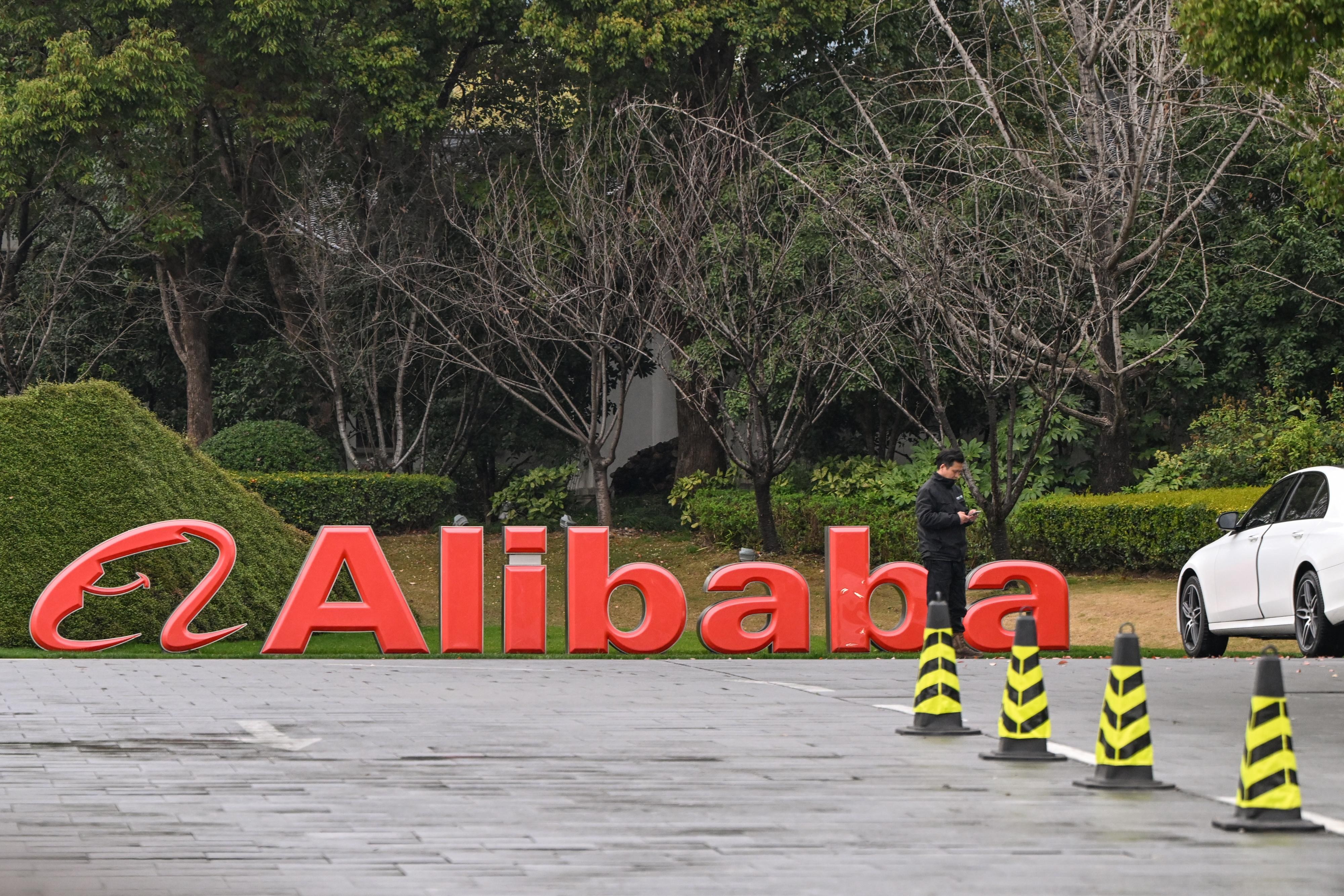

Chinese tech giant Alibaba released what it says is its largest and “most capable AI model to date,” claiming performance rivalling the best systems from US frontier labs Anthropic and OpenAI, as well as domestic rivals like Moonshot AI’s Kimi K3. Alibaba said it was making the model, Qwen3.8-Max, widely available to users in a blog post published on Monday. The release had been expected after the company previewed the model last month, when it claimed it was “second only to Fable 5,” Anthropic’s flagship.
The open release of another highly capable Chinese AI model adds to sky-high tensions along multiple fronts in Silicon Valley and Washington over how to safely manage AI systems and retain the US’ technological edge over China.
Results from Alibaba’s own testing shared on Monday suggests it’s as powerful as claimed, as does its ranking on crowdsourced model-comparison platform Arena.AI. Alibaba’s own testing shows the model’s performance to broadly match — and sometimes exceed — that of Fable 5 on benchmark tests. On the Arena text model leaderboard, Qwen3.8-Max trails only Fable 5 and three models in Anthropic’s Opus family. For frontend coding, it is beaten only by two Claude Opus models and Kimi K3, and for visual analysis, only Fable 5 trounces it.
Alibaba says Qwen3.8-Max has 2.4 trillion parameters, a numerical measure of the settings a model learns during training that it uses to process data, recognize patterns, and undertake various tasks. While parameter counts are widely used as a shorthand for model performance, a bigger number does not always mean better. Moonshot’s Kimi K3 model has 2.8 trillion parameters, but most top American labs keep figures private and neither OpenAI nor Anthropic disclose exact counts for their top systems.
The Chinese company said it will release the weights for Qwen3.8-Max next week. Weights are the adjustable numerical values of an AI that determine how it processes information. Open-weight systems, while more restrictive than traditional open-source software, give developers far more control than they have over proprietary products from companies like OpenAI and Anthropic. Qwen3.8-Max marks a return to open-weight releases for Alibaba after the company briefly pivoted towards proprietary releases for its more advanced models earlier this year.
Open-weight releases have become a growing point of differentiation for China’s AI industry, where they have become the norm. Moonshot released Kimi K3’s last week and many other top AI models are also open-weight. Beijing has championed the strategy as a means of growing China’s influence in global AI governance and encouraging widespread adoption of domestic tech champions.
Alibaba’s release intensifies competition with China, whose firms appear to be rapidly narrowing the gap with US companies and have increased the tempo of releases in recent weeks. Qwen3.8-Max closely follows the release of Kimi K3, viewed as another challenge to American AI dominance, and both ByteDance and MiniMax released capable new video generation models on Friday.
Openness has also proved to be a divisive issue. Amid reports of potential crackdown on open tools in the wake of the Chinese releases, the US industry has largely rallied around preserving access to open-weight models, both as a safety necessity and as means of preserving competition. That debate comes as closed-model providers, notably OpenAI and Anthropic, face increasing scrutiny after revealing a slew of cyberattacks unknowingly perpetrated by their own escaped AI agents. Incident reports from one victim suggest the restrictive safety rails intended to stop nefarious use of AI models also limits their use as defensive tools.