
Billy Onyango’s chiselled physique carries a story of sadness and hope. The 33-year-old believes he would either be dead or behind bars today had fitness not become his escape route.
His career was not born of ambition but necessity.
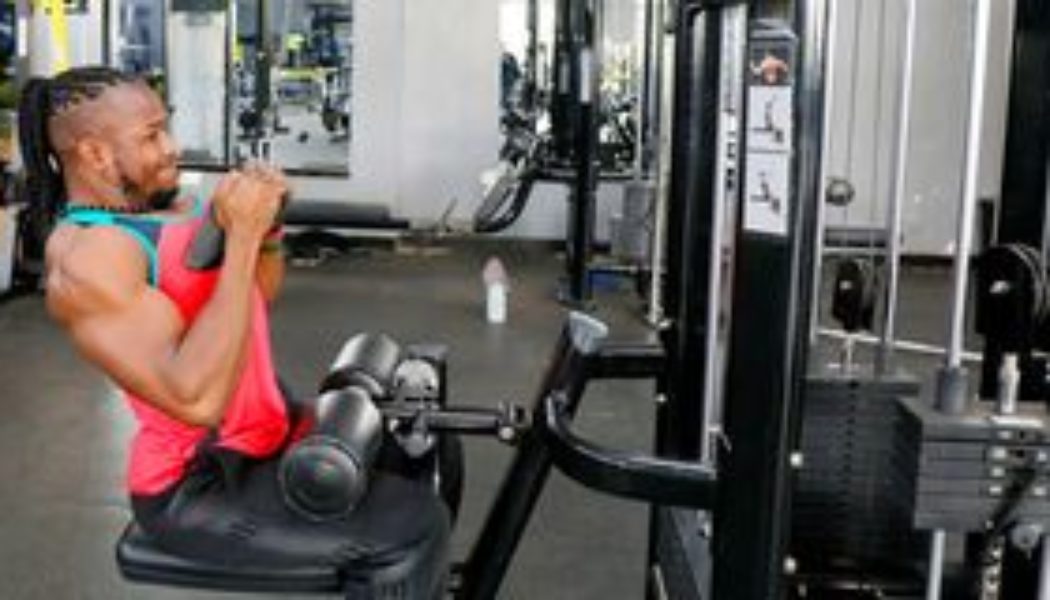
Billy Onyango does a close-grip lat pulldown at Alpha Fitness Gym in Thindigua, Kiambu County, on July 31, 2026.
Photo credit: Bonface Bogita | Nation Media Group
Raised in Nairobi’s Korogocho slums, where crime was a daily reality, Onyango learned early that strength was the only shield against danger. “The only reason I got into fitness was because of my upbringing,” he says. “Had I not grown up in Korogocho, I doubt I’d have studied Fitness Science.
“Living in the slums was terrifying. I was tired of constantly living in fear. I had nowhere else to go, so I had to learn how to protect myself because danger was everywhere in the slum.”
That decision marked the beginning of a journey that would transform Billy’s body and his life.
Surviving a knife attack
In his neighbourhood, knife attacks by criminal gangs were so common that they barely made headlines.
“It wasn’t unusual to hear that someone had been stabbed. It happened all the time. Even the police couldn’t do much.”
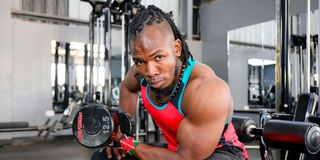
Billy Onyango with a dumbbell during a workout session at Alpha Fitness Gym in Thindigua, Kiambu County, on July 31, 2026.
Photo credit: Bonface Bogita | Nation Media Group
He remembers one incident, and it became the turning point that pushed him deeper into fitness.
One early morning, a neighbour he was close with, who worked at a construction site, left home before dawn for work but never made it.
“He was attacked by a gang. He tried to fight back, and I think that angered them. After overpowering him, they slit his throat, pulled out his windpipe, and left him there. It was horrific. I even remember police officers crying when they came to collect the body.”
Witnessing such brutality left Onyango shaken.
“From that day, I knew I had to become strong. I had to learn how to defend myself. I immersed myself in anything and everything related to fitness.”
It wasn’t long before he too got tested.
Just below his left shoulder is a scar from a knife wound he suffered a decade ago. It took 28 stitches to close.
“It was raining that evening, and I had stopped to take shelter. But the rain wouldn’t let up, and it was getting dark, and knowing how dangerous our neighbourhood could get after dark, I decided to run home.”
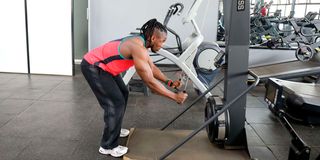
Billy Onyango performs a cable skier pull at Alpha Fitness Gym in Thindigua, Kiambu County, on July 31, 2026.
Photo credit: Bonface Bogita | Nation Media Group
As he approached a bridge, he was ambushed.
“Someone grabbed me from behind by the neck. Before I could react, another man came from the front and stabbed me,” he says, pointing to the scar.
“Because of the rain and the cold, I didn’t immediately feel the pain. I fought hard while applying my boxing skills. I tackled the man holding me from behind and threw him to the ground.”
The attacker quickly recovered and hurled himself off the bridge into the river before swimming away.
“The one with the knife took off immediately. When his accomplice fled, he realised I could fight back.”
By then, Onyango had started building his physique through boxing and strength training.
“If I hadn’t been that strong, I’m certain they would have seriously injured me, or even killed me. I became even more committed. I started lifting heavier weights in the gym and got into callisthenics, focusing on functional body movements.”
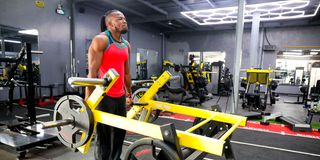
Billy Onyango performs a standing shrug using a plate-loaded shrug machine at Alpha Fitness Gym in Thindigua, Kiambu County, on July 31, 2026.
Photo credit: Bonface Bogita | Nation Media Group
As his skills and physique improved, someone suggested he had what it took to become a fitness trainer.
“That idea made perfect sense to me. When the opportunity came, I enrolled for a diploma in fitness science. I had seen too much bloodshed. My mother had been attacked twice. I had survived an attack myself. My neighbour was brutally murdered. Several of my classmates and childhood friends were shot dead after joining criminal gangs.”
He admits there were moments when revenge tempted him.
“I knew some of the gang members personally, and at one point I thought about retaliating. But I realised that would only drag me into the same life I was trying to escape. Choosing fitness, and eventually becoming a coach, saved me.”
Overall, Onyango says his physique commands him some level of respect among people, including potential clients, because he looks the part.
“I am not big with bulky muscles, nor am I skinny. I have a well-built block frame, and that has helped build me an image that attracts clients. When someone looks at me, he sees the discipline and hard work. Many men tell me they would love to have a body like mine. To just have such attractive muscles.”
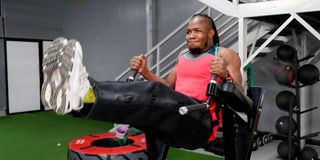
Billy Onyango performs a captain’s chair leg raise at Alpha Fitness Gym in Thindigua, Kiambu County, on July 31, 2026.
Photo credit: Bonface Bogita | Nation Media Group
Why he swears by weighted-HIIT
As a fitness coach, Onyango rarely recommends one-size-fits-all workout routines. But if there is one training method he believes delivers the greatest return for most people, it is weighted High-Intensity Interval Training (HIIT).
In his view, weighted HIIT mirrors the way the human body naturally moves through everyday life, making it one of the most practical and effective forms of exercise.
“Life doesn’t require us to perform just one movement at a time. When you sit on a toilet or lift something from the ground to the shelf, those are daily body functional movements. We push, pull, lift, carry, squat, and walk, often in quick succession. Exercises such as farmers carry, pulling or pushing a sledge with weights mimic body movements, and at the same time they work out the entire body because they are compound exercises that engage different muscle groups of the body,” he explains.
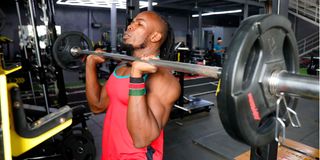
Billy Onyango holds a barbell in the front rack position at Alpha Fitness Gym in Thindigua, Kiambu County, on July 31, 2026.
Photo credit: Bonface Bogita | Nation Media Group
The weighted HIIT training method blends strength and cardiovascular exercise into a single workout by combining compound movements with added resistance while maintaining a two-to-one work-to-rest ratio. The result is an elevated heart rate that builds cardiovascular endurance while simultaneously increasing strength and developing lean muscle.
Weighted HIIT allows an individual to train multiple muscles and body parts in one session, making it an efficient option for beginners, busy professionals and seasoned gym-goers.
It is also the best form of exercise for older age clients.
“You wouldn’t tell a 70-year-old to lift weights or to go up several flights of stairs. Weighted HIIT prepares the body for exactly that,” he says.
According to Onyango, weighted HIIT for older adults builds strength, improves heart function, and protects bone density.
“With older people, I prioritise joint-friendly, functional movements and mostly use light dumbbells or resistance bands.”
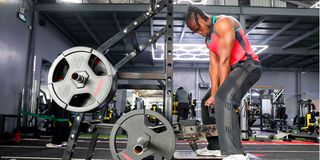
Billy Onyango performs a T-bar row at Alpha Fitness Gym in Thindigua, Kiambu County, on July 31, 2026.
Photo credit: Bonface Bogita | Nation Media Group
The effectiveness of Onyango’s weighted HIIT training philosophy is perhaps best illustrated by the transformation of a 23-year-old client who walked into his gym weighing 88 kilos and battling health complications that made losing weight almost impossible.
“When she first came to me, she was significantly overweight. She had accumulated so much fat everywhere, including around her neck. I had never seen that. She was also dealing with hormonal and menstrual complications that caused her to gain weight very rapidly. Her appearance had changed so much that many people assumed she was an older woman, and that affected her confidence too.”
When they committed to a structured weighted HIIT programme and lifestyle changes, the results came quickly.
“In our first session, I performed a body and fitness assessment on her, which is basically subjecting her to simple basic exercises to ascertain her fitness level, body mobility and flexibility before introducing a programme. After about three months, she had dropped from 88kg to 67kg. Even the excess fat around her neck had reduced drastically, giving her a much healthier appearance.”
While Onyango has helped many clients transform their bodies over the years, this woman’s journey remains one of the most rewarding.
“I’ve walked with many people on their fitness journeys, but her transformation touched me the most because I had seen how much her appearance had affected her emotionally. Being able to help her regain her confidence while also addressing the health issues that were causing her rapid weight gain was incredibly fulfilling.”
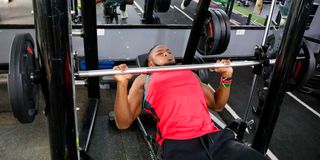
Billy Onyango performs an incline chest press at Alpha Fitness Gym in Thindigua, Kiambu County, on July 31, 2026.
Photo credit: Bonface Bogita | Nation Media Group
There is no bad food
When it comes to feeding your body, Onyango’s philosophy is that there is no such thing as a bad food.
“I’m not a nutritionist, but I know a thing or two about eating well,” Onyango says.
“In my view, we’ve overcomplicated food. That’s why you hear people constantly talking about dieting. Since when did eating well become dieting? Eating well is a matter of common sense. Eat enough protein, include a reasonable amount of carbohydrates and watch your portions.”
He is also critical of what he sees as the commercialisation of nutrition advice in the fitness industry.
“I see trainers charging clients a lot of money just to prepare meal plans. Diet has become another way of making money off people who are desperate to lose weight.”
Onyango believes nutrition advice should be practical, affordable and tailored to what people can realistically access.
“Your body doesn’t need expensive foods to stay healthy. Why insist that someone must eat salmon if they can’t afford it? There are plenty of nutritious and locally available alternatives such as eggs, omena, chicken breast or even njahi. The goal should be to help people make healthier choices using foods that are available and fit their budget, not prescribing meals that are out of reach.”