


The problem is that when you come from certain families, it becomes impossible to introduce yourself without people asking, “Oh, you’re so-and-so’s daughter?” The trouble, at least for Arjaa Shah, is that her name is an easy stick people use to beat her with.
She is part of the family behind the Kingsway Group of Companies, which owns Village Market Group, Tribe Hotel and Trademark Hotel. She currently serves as (acting) General Manager for Trademark Hotel and Village Market, and Deputy Corporate General Manager for Tribe Collection.
A graduate of Cornell University and Les Roches International School for Hotel Management, Arjaa does not deny her privilege; she just doesn’t want to be defined by it.
But she chose to prove herself.
She started at the bottom—first as a housekeeper in London cleaning 16 rooms a day, waiting tables in Italy, which she had to quit because she was just not as good at it, and a stint at the front desk and concierge in the US.
“I knew I had to start from the bottom because if I don’t understand the bottom, how will I ever be great at the top?” she says. “Everyone thought I was nuts. I got paid 300 euros (Sh44,300) as a waitress in Italy. That’s not even enough to get rent.”
She speaks about stepping into her father’s shoes and challenging stereotypes about daughters taking over the family business. “My father will never look at me any differently as a daughter,” she says. “But today he’s forced to look at me as a professional who’s running one of his businesses.”
Growing up, did you always know hospitality would become your life, or were there times when you wanted something entirely different?
I knew from the age of 13. My father had many issues in his life, but at the age of 13, we had to move to India for about six weeks, and we were staying in a hotel. Now, given the nature of what happened to my dad, I was basically left in this hotel as a child by myself, and the front desk was like, ‘Okay, let’s teach you how to check in someone.’
Or the chef would show me how to cook. That was my first education in hospitality. It was quite fun because they adopted me; and for six weeks with my parents not around, I couldn’t leave the hotel. Something clicked in me that everyone thinks hospitality is just service, but it can actually change your life.
Your father was away at an age I presume girls get much closer to their fathers. What was that like growing up in a hotel?
It was difficult. My father’s the oldest in our family, the patriarch. He became the patriarch at a very young age, 19, because his father got sick and passed away.
So he dropped out of university and had to look after the 25 people in our family. At that age, I never really understood it, because he was never around; it was his responsibility to make sure there was food on the table, which wasn’t always the case.
We weren’t born with this; we built it. Well, he built it [chuckles]. But as you grow older, you understand the importance of it, and the importance of family and community. It’s a joke when everyone says that children are not brought up by parents; they’re brought up by community. But in our life, that was true. I have seven moms, seven dads, and they all played a role in looking after me.
Family businesses often struggle with the question of merit versus bloodline. How do you ensure people see Arjaa the executive before they see Arjaa the family member?
That’s actually quite a tricky question. I am a director, and even to some of our staff who don’t engage with me on a day-to-day basis, they see me as a person who was placed instead of earned. I’ve worked internationally, and I made sure I worked professionally for a very long period of time, so if I ever wanted to come back, I came back with a standing of experience and not placement.
I work extremely hard, but you will never fully get over whether you got a job through blood or through credit. I worked twice as hard to prove myself that I am working based on credit, experience, and value that I’m giving, and if I no longer bring value to anything I do, family or otherwise, it’s just not worth being there.
It’s a testy subject, but do you think the proving yourself will ever end?
With age comes wisdom. When I was here at 26, I felt I had to prove myself a 100 times over. I know my worth and what I bring to the table, so I no longer try to prove myself.
If I work for a Tribe Hotel Group, or JW (Marriott), or Hyatt, or Hilton, I know my worth. My family gave me the leg up with the best education in Hotel Management; I got put in the right circles, and I don’t discount that that didn’t help me get to where I am. I count myself very grateful for everything my family has managed to give me, because even when we didn’t have a lot of money, my parents somehow figured it out to get me the education and exposure that I had.
But what I did after university, that was a lot of effort and grit. I used to work 100-hour weeks in the US. I started from the ground up; I’ve been a housekeeper in London, cleaning 16 rooms a day, a waitress in Italy, which I was horrible at and quit after six months. [chuckles].
The truth is I never cleaned my bed when I was growing up, and when you come from privilege, sometimes you just want to go into a position. I knew I had to start from the bottom because if I don’t understand the bottom, how will I ever be great at the top?
It’s easy to deny your privilege and coat it in grass-to-grace stories that discount the impact of luck and background. Why was it important for you to own that?
It would be wrong of me to say I came from the grassroots.
I didn’t, but my dad did. He went to a local school, but he got me into British schools to give me a leg up. I don’t see myself as Indian, but as Kenyan, and to pretend that I’ve gone through what most Kenyans have gone through would be wrong.
What expectations come with carrying a family name that has already been built?
Expectations. Lots of people want handouts, especially when they know who you are. Most people don’t know I am part of the Kingsway family, because I wanted to make a professional name for myself.
I own the fact that I am part of my family, but I shouldn’t be seen as a family member in this organisation, but as an employed professional who reports to an external CEO.
But I think there is a lot of expectation that because of who I am, or where I come from, people want a lot, and sometimes we’re unable to give it.
I’ll only do what I can within my own capacity. It’s a very tough question, isn’t it? I’m a very nice person, so I just kind of do everything I can, to be honest. I think we’re all born with different advantages in life, and I was given a lot, so I try and do as much as I can for people who weren’t given a lot.
Does your name weigh you down?
I can only empathise, because there are a lot of young people in Kenya today who want to make a difference and do something, but their names are tying them to a lot of expectations.
People expect me to be the visionary that my father is. I’m not even close. My father was a visionary. He knew that China and Korea would come in, so he brought them in first. I’m an executor. You give me something, I will make it work; I know how to make things work.
Have you always been this sure of yourself?
Our family has one motto: the only thing in life that will never change is you educating yourself. You don’t have to do a Master’s degree; that’s not how you educate yourself, but you have to be aware, you have to read, you have to grow.
Covid-19 was a time when everyone was firing everyone, and as an organisation, we didn’t, but we gave everyone small stipends to pay for food. But when you look inwards, you have to start realising you have value that you can give and you have value that you can’t give. It wasn’t about me doing it all, but knowing what I’m good at and then pulling other people’s resources to make it work. And that’s where I learned who I was.
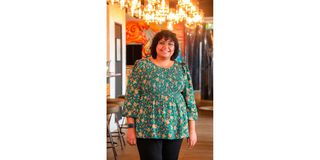
Tribe Hotels group Deputy Corporate General Manager Arjaa Shah during the interview at Harvest Hotel, Village Market on July 23, 2026.
Photo credit: Lucy Wanjiru | Nation Media Group
How do you negotiate for your worth financially in a family business?
I earn a family business salary. So in my family, you have to give a portion of your salary back to the business; therefore, I don’t earn market rates. I know that sounds stupid because it’s usually the other way around: you get market rates and then you get a stipend for being in the business. Money is not my end goal, but it is important because it helps you survive. I come to work. After all, I like being here because I have 800+ staff who make me smile in the morning. I have enough that I can pay my rent and buy myself food and drink once in a while. I’ve always thought money would come as long as I do a good job.
Did you have money conversations at the dinner table growing up?
Yes. From the age of 14, we were given an allowance, and the only way to come back and get next month’s allowance is to submit receipts. I’ve been doing that for a very long time.
How has that influenced the way you relate to money now?
I’m very conscious about how I spend cash. Say you earn Sh20,000. What most people do is say spend Sh10,000 on rent, Sh5,000 on food, Sh2,000 on children. What we do in our family is as a percentage.
If you earn Sh20,000, you have to give 10 percent of your time or your money to the community; that’s charity or funds. I do 5 percent in kind, and 5 percent of funds in a pot to make a difference. Then I allocate 10 percent of my salary to travel and 10 percent to shopping. Always 20 percent goes into savings.
It seems that it’s important for you to be seen first as a professional before any other metric. When you look back over your career, which investment in your professional career was a smart move?
The investment of not chasing the position. The university I went to, I got three job offers to be an assistant manager straight out of college. But I chose to be a housekeeper, a waitress, a reservations agent—living hand to mouth in London with no money. I could eat out maybe once a month because you don’t earn that much, but that to me was an investment in myself to be who I am today.
What career move would you say has brought you the biggest—be it monetary or professional—growth?
I worked in a hotel called Penn Gardens. I was a reservations agent and a meeting and event agent. I was earning revenue on the side, but I was never given an official role. I needed change. So I went within the group first, and I said, which jobs are out there? I got three offers. I got an assistant meeting and events manager at a five-star property. I got an assistant GM at a small property, 52 bedrooms. And I got an events assistant position with 560 bedrooms.
So I went to my GM, who was a good mentor. I wanted the assistant manager position at 23 years old.
He said no. And he’s like, “I have watched you in my organisation, and you have moved three times in a year because you just crave more. You will be so bored in a small property. I know the position looks good. Take the meeting and events assistant role, because that’s the role that’s going to challenge your mind.” He was right.
How are you demanding more from yourself now?
Nobody is perfect. If you think you’re at 100 percent, then you need to take a serious look at yourself. I’ve never thought I’ve done any better than 80 percent ever in my life. It’s a good mentality to have because you’re always pushing for more, always asking, ‘Where’s that 20 percent and how am I getting there?’ I want to be the best, and there’s no way I’m ever going to be the best because there are so many great people around me.
What’s a significant loss that has shaped who you are today?
My two grandmothers. They taught me the values that we have in our lives today. We are a vegetarian family; we don’t drink, but I drink and eat meat. I’m not a typical Indian girl, but to have two matriarchs who are so strong and who tell you, “Forget what your parents think. Go drink.
Go eat meat. We don’t hate you for it.” My grandma told me at the age of 16, you will never marry an Indian. To have people who are that open in your life allowed me to find this journey in being who I am today.
What conversation did you have with yourself to turn your back, metaphorically, on the family way and be your own person?
I value my family. If you saw me when I moved here 10 years ago, I was the perfect daughter. It wasn’t a conversation with myself; it was a conversation with all seven of my parents. I am always going to strive to be the perfect daughter for this family, the best version of myself for my business, but for me to do that, I have to be the best version of me.
And the best version of me drinks, eats meat, and wants to live on my own as a single person. It’s unheard of in Indian families for girls to live on their own, unmarried. But I do it. What I chose to do was hide it for a period of time because I wanted to be who they wanted me to be.
The first time I said it, my father was like, ‘No. It’s not our way.’ But they sent us around the world, and for them to think that they could give us so much exposure and we would be the same coming back was never going to be possible [chuckles].
What has that cost you?
Nothing. Do you know why? If you don’t want to be who you are because you’re scared of losing your friends and family, those friends and family were never yours to begin with. Because the people who love you the most will love you regardless of who you choose to be. The cost of authenticity is nothing, but your option to be authentic is based on fear. And it’s fear of loss. When you realise that you lose nothing that was of value, then you always choose to be yourself.
What has success made harder?
Every time you grow in your role, you get more responsibility. And then you get into leadership, and balance becomes hard. You have to balance your personal life, your family, your friends, and your work. I’m not good at balance. I give anything a 100 or zero, but there’s no such thing as balance, because balance means you give everything equal amounts of time. Impossible. You can have an integrated lifestyle, however. You don’t have to make cupcakes for your daughter at home, but you can promise her homemade cupcakes, and ask someone else to make them at home. I will never have balance, but I can have an integrated lifestyle.
Do you think you’ve made the most of your life?
Yeah. Everyone judges your life on pillars. You graduate from high school, then university, get a job, be a manager, get engaged, get married, have a child. Nobody talks about the ones who don’t want every pillar.
Everyone looks at me and says, “Arjaa, you spend so much time at work. What about a husband and a child?” It’s not that I don’t want those things, but the life I’m living right now fulfils me. Through my work, I travel, meet people, and I set and surpass boundaries. My priority today is not husband and child, and that doesn’t make me any less fulfilled.
Is that something that comes up a lot?
Oh, all the time. I’m 35, single, which is unheard of in the Indian community for people to be unmarried at this age. Usually, I ask people if they’re happy because they’re married [chuckles]. There is no linearity in life. One day, I’ll wake up, and I’ll be like, I have no husband and no child. And that day, I will go and find one. But until the day comes, it’s not necessary.
What’s a family business lesson that has remained true over the years?
You will never be over-educated, and you should always strive to educate yourself further. And education doesn’t mean learning finance more. It could be learning how to meditate, or how to do your inner child work or even a new skill like knitting.
What is one thing you would splurge on?
My car. I may work in a fancy hotel, but my favourite thing to do is camp. So next, we need to add in a shower extension and a little cooking unit at the back of my car. This will be easier than cooking on campfires. I already have a snorkel, a front bumper, and a back bumper; it’s already raised. Slowly by slowly, I keep adding to it. You should have time for anything important to you.
Advise your future self.
You often take life too seriously and don’t. Life is supposed to be enjoyed. Otherwise there’s no point in living.
Now that you are here and work in hospitality, what is the right percentage to tip?
Tipping has come from American culture, and American waiters earn nothing, so their entire livelihood comes from tipping. I’m not saying don’t tip. I’m saying, whatever you feel comfortable with, and whatever you can afford. We’re an aspirational brand. So we’ll see young Kenyans save up Sh5,000 to come eat with us. And then forget they need Sh500 more. But anywhere you go where people enjoy their jobs. Sh100, Sh200, Sh500, Sh5,000 anything makes the difference. But don’t do it outside of what you can afford.