


Electricity imports from Ethiopia and Uganda overtake local wind generation as the country increasingly relies on neighbouring nations to starve off blackouts and power rationing.
Kenya National Bureau of Statistics (KNBS) data show electricity imports reached 813.94 million kilowatt-hours (kWh), or units, between January and May, surpassing wind generation of 736.8 million kWh.
This emerged in a period when Kenya has witnessed increases demand for electricity amid a freeze on new power purchase deals.
Electricity imports rose 25.1 percent from a year earlier while wind output fell 4.8 percent, according to the official data.
North-neighbouring Ethiopia drove most of the increase, exporting 675.89 million kWh to Kenya, up 29.2 percent from the corresponding period last year and accounting for more than 83 percent of imported electricity. Uganda supplied another 137.02 million kWh.
The growing role of Ethiopian electricity highlights Kenya’s increasing reliance on regional power markets as rising demand narrows the cushion between domestic electricity production and consumption.
This comes despite Kenya producing a record 5,738.61 million kWh of electricity during the five months, a 6.2 percent increase from 5,401.33 million kWh last year. The increase was largely driven by geothermal generation, which climbed 18 percent to 2,778.74 million kWh, reinforcing its position as the backbone of Kenya’s electricity system.
Hydropower generation edged up to 1,458.26 million kWh from 1,429.49 million kWh, while thermal generation fell 11.5 percent to 559.84 million kWh as reliance on costly diesel-fired plants eased.
Wind generation, however, declined to 736.8 million kWh from 774.2 million kWh, making it the only major domestic electricity source to record lower output than a year earlier.
Unlike geothermal plants that generate electricity around the clock, wind farms depend on changing wind speeds, with output fluctuating throughout the day and sometimes falling sharply when wind conditions weaken.
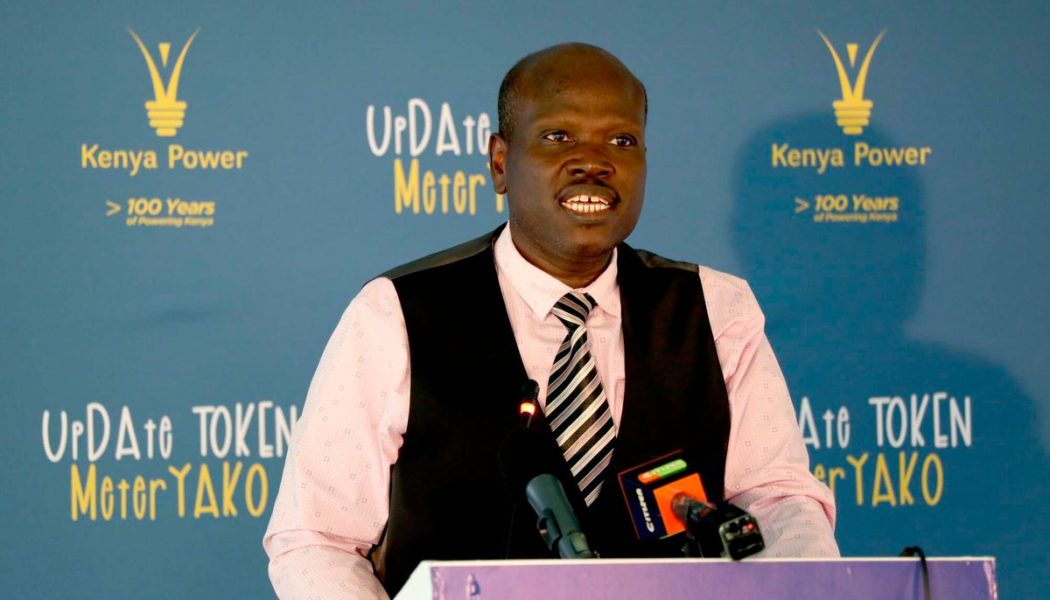
Kenya Power Managing Director Joseph Siror has warned that low wind generation has repeatedly forced the near-monopoly utility to ration electricity because other generating plants cannot fully meet peak demand between 6pm and 10pm.
“There are many instances when we have been forced to load-shed the country when the wind generation is low because all the other generation sources without wind cannot serve the peak demand,” Dr Siror said earlier this year.
Rationing forces businesses to seek alternative power sources or scale down operations, underscoring its adverse impact on the economy.
Kenya Power rations electricity to avoid a trip of the network or blackouts triggered by an imbalance in supply and demand.
The wind and solar plants currently lack battery storage to store electricity generated during their peak production, when wind speeds and solar radiation are highest, triggering rationing during high consumption hours between 6 pm and 10 pm.
The drops in wind and solar generation have put pressure on local geothermal and hydro plants as well as electricity imports from Uganda and Ethiopia, forcing Kenya Power to cut off some areas to shield the grid and avoid countrywide blackouts.
He said Kenya’s installed wind capacity totals 435 megawatts, but actual generation can occasionally fall close to zero because of the intermittent nature of wind.
The resulting deficits are most pronounced during evening peak demand, when electricity consumption rises, but weak wind generation leaves the grid short of supply.
Kenya’s commercial wind fleet comprises the 310-megawatt Lake Turkana Wind Power project in Marsabit County, the 100-megawatt Kipeto Wind Power Station in Kajiado County and the 25.5-megawatt Ngong Hills Wind Farm.
Even with record local generation, electricity sales by Kenya Power climbed faster, reaching 5,249.21 million kWh, or units, between January and May from 4,754.46 million kWh a year earlier.
The surplus between local generation and Kenya Power sales narrowed to 489.4 million kWh from 646.9 million kWh, indicating that electricity demand is growing faster than domestic supply.
That shrinking margin has increased the importance of imported electricity, particularly Ethiopian hydropower, in maintaining reliable supplies during peak demand and periods of weak renewable generation.
The growing dependence on imported electricity is emerging as a strategic challenge for policymakers seeking to sustain industrialization while maintaining affordable and reliable electricity supplies.
Recognising mounting pressure on the power sector, the National Treasury has announced plans to add 10,000 megawatts of generation capacity over the next seven years through geothermal, wind, solar, hydroelectric and nuclear energy projects.
The expansion is intended to support manufacturing, agro-processing, green industrialisation, e-mobility, data centres and artificial intelligence as electricity demand continues to accelerate.
“Reliable and affordable energy supply remains central to powering manufacturing, promoting agricultural value addition, and enabling digital transformation across all sectors of the economy,” the Treasury wrote in the 2026 Budget Policy Statement in February.
The government argues Kenya’s abundant geothermal, hydro, solar and wind resources provide a strong foundation for expanding domestic generation while reducing dependence on imported electricity over the longer term.
President William Ruto has also pledged to substantially expand electricity generation and transmission infrastructure before the end of the decade to support industrial growth and the country’s digital transformation.