

government

Has New York State gone astray in its pursuit of crypto fraud?
The Empire State made two appearances on the regulatory stage last week, and neither was entirely reassuring. On April 25, bill S8839 was proposed in the New York State (NYS) Senate that would criminalize “rug pulls” and other crypto frauds, while two days later, the state’s Assembly passed a ban on non-green Bitcoin (BTC) mining. The first event was met with some ire from industry representatives, while the second drew negative reviews, too. However, this may have been more of a reflex response given that the “ban” was temporary and principally aimed at energy providers. The fraud bill, sponsored by State Senator Kevin Thomas, looked to steer a middle course between protecting the public from scam artists while encouraging continued innovation in the crypto and blockchain sector. It...

Solving the ‘Sunrise Issue’ is the key to unlocking crypto mass adoption
We have all been there. You see something, hear something, or feel something, and want to share that feeling or observation with someone else. Do you pick up the phone? Send over a text? Record a voice note? Humans thrive in our shared experiences: a captivating concert, the winning goal of a sports match, waking up to watch the sunrise. There’s something fulfilling about having an experience and being able to share it with someone in real time. And due to technology, we can do that, even if another person, call them our counterpart, is halfway across the world. So why wouldn’t we expect the same level of seamless communication and collaboration across an industry built around that very idea — total interconnectivity and a global reach? Crypto was built to democratize access to...


Buenos Aires to accept crypto for tax payments, launch DLT-backed citizen profiles
The capital of Argentina and an agglomeration with more than 12 million citizens, Buenos Aires will make blockchain a vital part of its digitalization drive. Specifically, the city will accept public financial transactions in crypto. As city Mayor Horacio Rodríguez Larreta revealed in his Steve Jobs-styled presentation on April 25, the 12-step development plan titled “Buenos Aires +” envisions a significant increase in crypto and blockchain adoption. Con Buenos Aires + vamos a dar un paso más en el camino hacia un Estado facilitador que desburocratice y agilice los procesos. Un camino en el que el Estado sea el que se acerca a la gente, y no al revés. pic.twitter.com/yi6fUMmAUI — Horacio Rodríguez Larreta (@horaciorlarreta) April 26, 2022 The city authorities intend to launch a platf...


Cuban central bank makes it official: VASP licensing coming in May
In a move that could potentially foster the growth of Cuba’s nascent tech industry, the Banco Central de Cuba (BCC), the country’s central bank, will begin issuing licenses for Bitcoin (BTC) and other virtual asset services providers, or VASPs. According to the Official Gazette No. 43 published Tuesday, which includes a Central Bank of Cuba resolution, anyone wanting to provide virtual-asset-related services must acquire a license first from the central bank. It reads: “The Central Bank of Cuba, when considering the license request, evaluates the legality, opportunity and socioeconomic interest of the initiative, the characteristics of the project, the responsibility of the applicants and their experience in the activity.” Furthermore, the document states that those organizations that do n...

US Senate confirms Lael Brainard as Fed vice chair
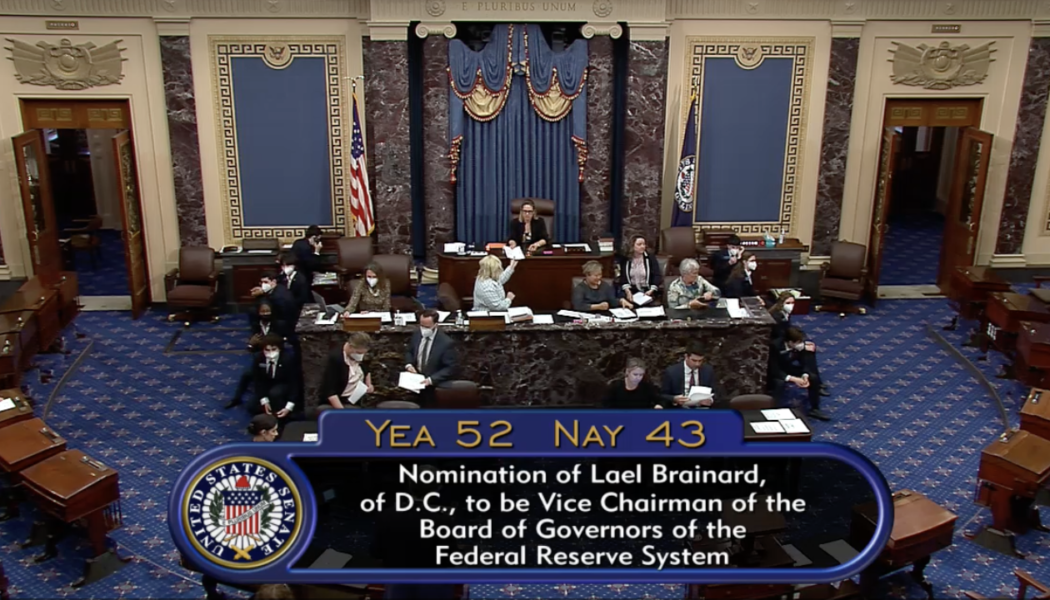
After weeks of delays due, in part, to partisan obstructionism, the United States Senate has confirmed the nomination of Lael Brainard, a member of the Federal Reserve’s board of governors, as the next vice chair of the central bank. In a 52–43 vote on the Senate floor on Tuesday, U.S. lawmakers confirmed Brainard a vice chair of the Federal Reserve for four years, potentially beyond her term as a governor ending in January 2026. Brainard was one of four nominees waiting for approval since Republican lawmakers in the Senate Banking Committee boycotted a February committee, which would have sent the prospective Fed vice chair’s nomination to the full Senate. In addition to Brainard, the Senate will likely soon vote on the nominations of prospective Fed chair Jerome Powell, who h...

The new HM Treasury regulations: The good, the bad and the ugly
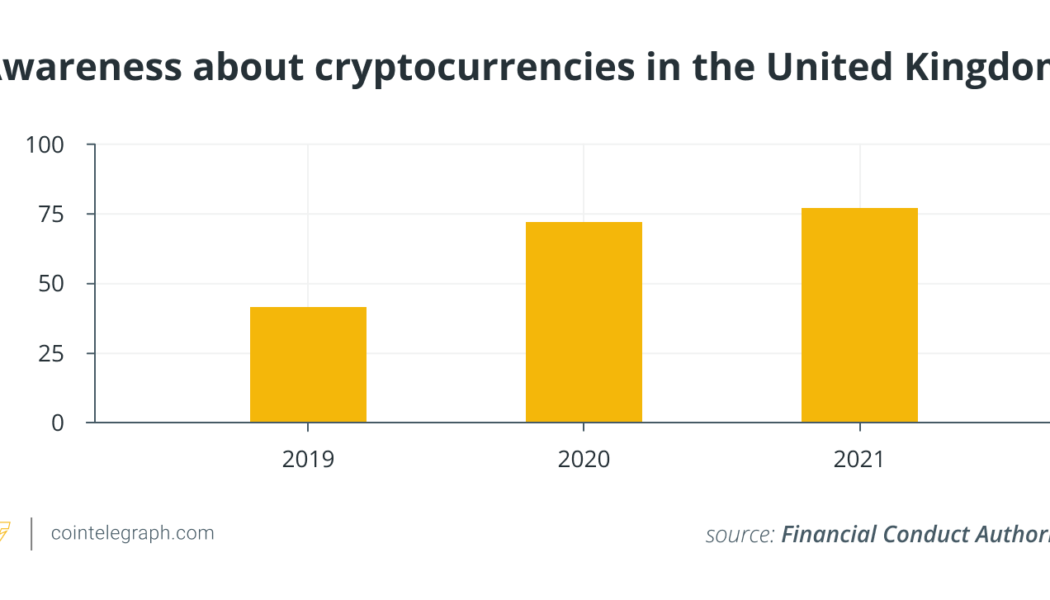
As the 2021-2022 United Kingdom tax year finished on April 5, 2022, Her Majesty’s Treasury announced they were paving the way for the U.K. to become a global crypto asset technology hub. This could mean that the previously not particularly crypto-friendly U.K. is changing its strategy and trying its hand at making crypto investments more attractive. But what are the potential scenarios at play? The Financial Conduct Authority (FCA), a financial regulatory body in the U.K., in its “Cryptoasset consumer research 2021” report, shows that approximately 2.3. million adult U.K. citizens held crypto in 2021, a 21% rise year-over-year. It seems natural that with rising interest and potential crypto mass adoption, HM Treasury would revisit its crypto regulations. This is especially true when ...


Binance pushes back against report exchange supplied customer data to Russian government
Major crypto exchange Binance challenged the accuracy of a report, which stated one of its regional heads agreed to supply Russia’s financial intelligence unit with customer data potentially related to donations for anti-corruption and anti-Putin activist Alexei Navalny. Reuters reported on Friday that Binance’s head of Eastern Europe and Russia Gleb Kostarev met with officials from Russia’s Rosfinmonitoring, a financial monitoring service linked to the country’s Federal Security Service, or FSB, in April 2021. Kostarev reportedly agreed to a request from the government body to turn over certain user data — including names and addresses — later telling an associate he didn’t have “much of a choice” in the matter. However, another unnamed crypto exc...

US lawmakers sound alarm to EPA over environment concerns of crypto mining
United States House of Representatives member Jared Huffman and 12 other lawmakers have requested the Environmental Protection Agency, or EPA, assess crypto mining firms potentially violating environmental statutes. In a letter addressed to EPA administrator Michael Regan on Wednesday, Huffman said he and other Democratic House members had “serious concerns” around crypto firms in the United States reportedly contributing to greenhouse gas emissions and not operating in accordance with either the Clean Air Act or the Clean Water Act. The lawmakers identified efforts to “re-open closed gas and coal facilities” as a means to produce energy for crypto mining operations as a particular area of concern, as well as “energy-inefficient” proof-of-work mining for Bitcoin (BTC), Ether (ETH), Monero ...

As labor struggle takes center stage, can DAOs democratize work?
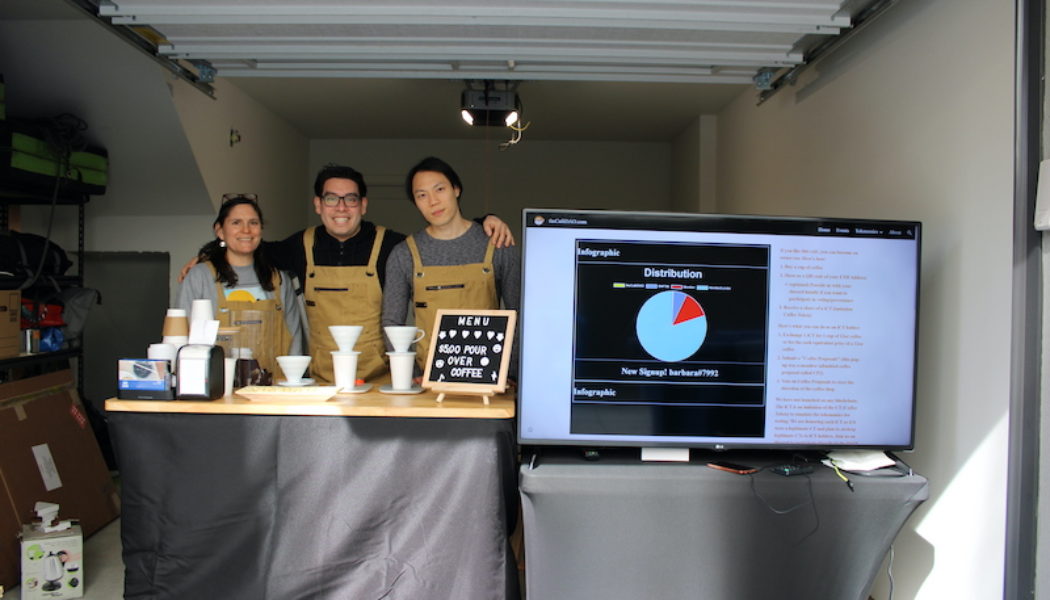
Web3 has given rise to a number of innovative business models. In particular, decentralized autonomous organizations (DAOs) have started gaining traction as Web3 as the creator economy comes to fruition. Natalie Salemink, CEO and founder of Prismatic — a tooling and treasury management platform for DAOs — told Cointelegraph that DAOs are internet-native organizations that utilize smart contracts to facilitate coordination and governance in pursuit of a common goal. When it comes to traditional businesses, though, one of the most interesting aspects a DAO structure can provide is leadership based on computer-generated code rather than individual authority. The idea of operating a business without any central governance has become especially intriguing to brick and mortar compani...


US Treasury Dept lists crypto mining firm in latest sanctions against Russia
The United States Treasury Department has added Russia-based crypto mining services provider BitRiver and several subsidiaries as firms facilitating the evasion of sanctions. In a Wednesday announcement, the Treasury Department’s Office of Foreign Assets Control, or OFAC, said it was taking action against BitRiver AG as well as 10 of its Russia-based subsidiaries, naming the companies as ‘Specially Designated Nationals’. Firms and individuals listed as such by OFAC have their assets blocked and “U.S. persons are generally prohibited from dealing with them.” According to the U.S. Treasury, the actions against BitRiver and its subsidiaries were based on them allegedly facilitating “sanctions evasion for Russian entities,” hinting crypto may have played a role in helping Russia’s govern...


Iran to stiffen penalties for illegal use of subsidized energy in crypto mining
The Iranian government will increase penalties for the use of subsidized energy in crypto mining. The move marks another step in the tightening of mining regulation in the country that had faced energy shortages in recent years. On April 16, the Tehran Times reported, citing the country’s Power Generation, Distribution, and Transmission company, that the government plans to drastically increase the fines rates for the mining operators who use subsidized electricity. The company’s representative Mohammad Khodadadi Bohlouli specified: “Any use of subsidized electricity, intended for households, industrial, agricultural and commercial subscribers, for mining cryptocurrency is prohibited.” According to Bohlouli, the fines for the use of subsidized energy in mining will rise by...

DAO regulation in Australia: Issues and solutions, Part 3
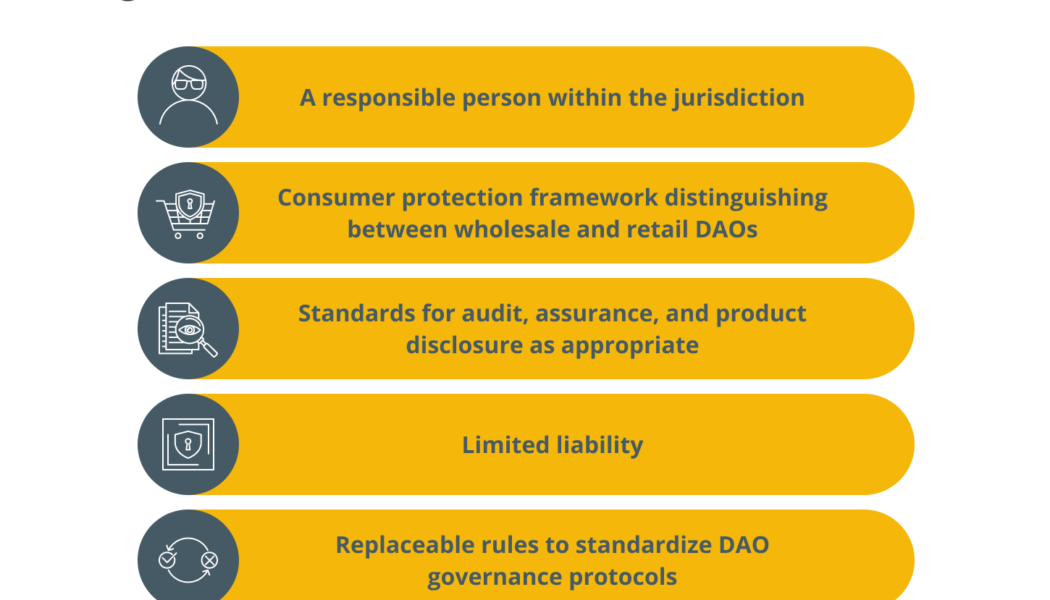
Lawmakers in Australia want to regulate decentralized autonomous organizations (DAOs). In this three-part series, Oleksii Konashevych discusses the risks of stifling the emerging phenomenon of DAOs and possible solutions. Crypto anarchy is unlikely to be the future that the majority of people support. Company regulation, in its essence, has a lot of positive aspects or at least, a good intention, albeit one often embodied in a red tape that stifles business. Nevertheless, nowadays, corporation rules and regulations are formalized to the extent that they could be put in the machine code. So, the role of the government is to establish mandatory standards for those DAOs that would like to operate in the Australian market. [embedded content] Non-digital There are cases when a written legal tex...
