

On the edge of Meru National Park, where the savannah meets the Borana grazing lands, a group of huts has become an unlikely setting for one of the most compelling cultural stories in northern Kenya.
The Malka Bisanadi Cultural Centre is not a resort in the conventional sense. It is a living village where visitors trade polished hotel corridors for grass-thatched huts and the hum of pastoral life.
“Most are drawn by the opportunity to immerse themselves in the Borana way of life by sleeping in traditional huts, sampling indigenous cuisine, learning about pastoral traditions, and buying locally made handicrafts, either before or after visiting the neighbouring wildlife parks,” says Hussein Gonjobe, the vice chair and co-founder.
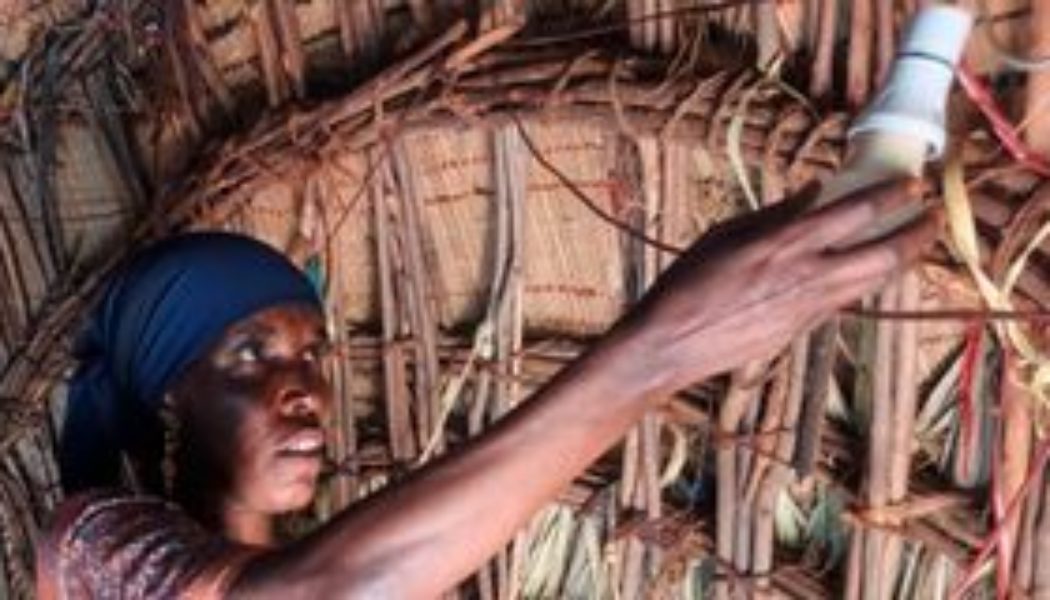
The honeymoon suite, Minn Arossa, is built according to centuries-old customs using intertwining sticks and grass and ropes made from acacia bark. “The huts, locally referred to as manyattas, are constructed by women,” explains Makai Mamo, the centre’s co-founder.
“For the Borana community, this authenticity has become a business,” she tells BDLife. She adds that the idea was to encourage visitors to stop, stay and engage with the community, rather than simply passing through on their way to the national park.
The centre can host up to 70 guests, with each bed costing Sh2,000 per night, including meals.
“It has become our source of income while helping us to preserve our culture,” says Mr Gonjobe.
The meals are prepared by community members using locally grown produce, much of which is supplied by horticultural farming that was introduced with the help of partners. This diversification has been vital in an arid region where livelihoods were once defined by livestock alone.
Income fluctuates, but at full capacity, the centre earns approximately Sh140,000.
Makai Mamo, co-founder of Malka Bisanadi Cultural Centre in Guba Dida Village, Kinna, Isiolo County, switches on a light bulb inside a traditional manyatta on July 23, 2026.
Photo credit: Sammy Waweru | Nation Media Group
“While the earnings may seem modest compared to those of mainstream hospitality businesses, they represent a significant transformation for a community whose traditional livelihood depended almost entirely on livestock,” explains Gonjobe.
The centre began in 2008 when a group of unemployed young people in Guba Dida Village contributed Sh50,000 towards building the first huts.
“After finishing school, many of us found ourselves out of work. Rather than migrating to towns in search of work, we looked around us and recognised a hidden opportunity,” Gonjobe recalls.
Their proximity to Meru National Park meant that tourists passed through, but few stopped. “We organised ourselves and built a cultural village where visitors could experience Borana traditions.”
Ms Mamo remembers the early days vividly. “Members contributed labour voluntarily, working for nearly a year without earning any income. The gamble paid off. By 2012, the centre had started to receive paying visitors.”
Word spread, and tourists began to spend nights in the village rather than rushing through. Traditional artefacts that had previously been gathering dust became valuable souvenirs.
Community participation remains central.
“Men handle maintenance, security and infrastructure development, while women continue to prepare meals and build huts. This model has strengthened social cohesion and preserved indigenous skills,” explains Ms Mamo.
Nevertheless, the journey has not been easy. “We faced many challenges in the beginning. Some people thought we were wasting our time. Others left because there was no money. But those who remained believed the idea would succeed,’ says Mr Gonjobe. Wildlife incursions remain a challenge, with buffalo destroying crops. However, the income has changed lives.
A giraffe sculpture at Malka Bisanadi Cultural Centre in Guba Dida Village, Kinna, Isiolo County, on July 23, 2026.
Photo credit: Sammy Waweru | Nation Media Group
“The income generated has enabled members to educate their children and meet household needs that were previously difficult to finance,” says Mr Gonjobe, a father of five.
Support from development partners later gave the project an important boost. Heifer International has trained members in enterprise development and organisational management, helping strengthen the community business. The organisation has also exposed members to new ideas on improving production and expanding market opportunities.
Mr Gonjobe and Ms Mamo believe partnership among members has driven the enterprise’s growth and offers a valuable lesson in entrepreneurship. They say a key lesson in entrepreneurship is giving a business time to grow, noting that building a successful enterprise requires patience, persistence and resilience, as success does not happen overnight.