
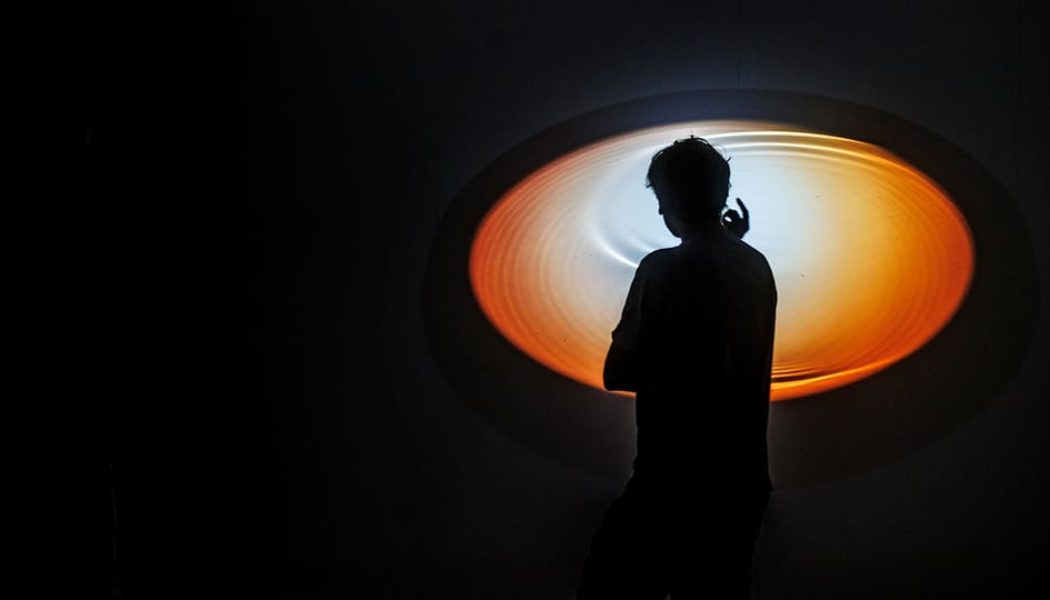
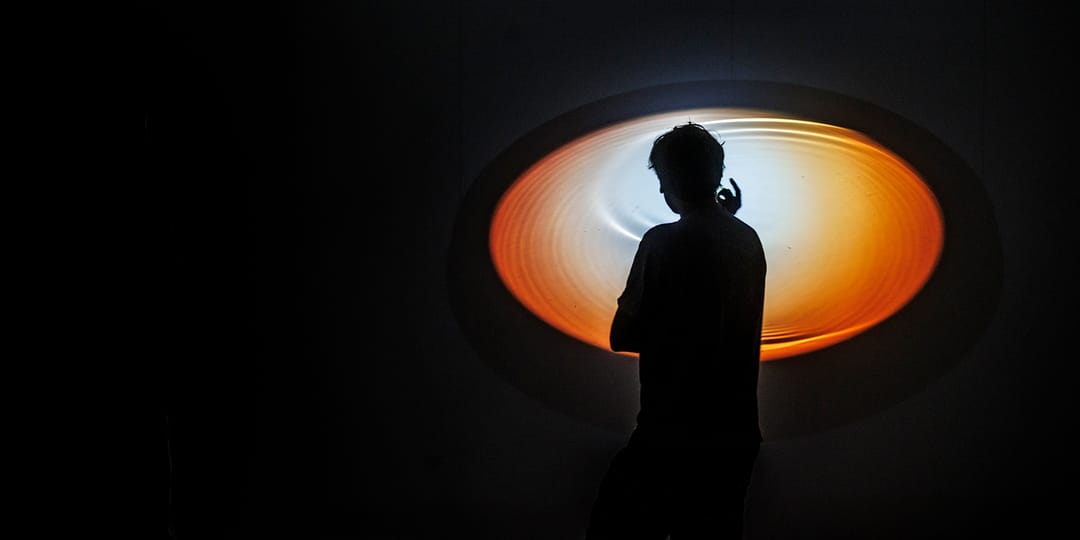
“A work can exist for one day and remain with someone for years, while another work can stand in place for a decade and remain almost invisible.”
Can you describe your artistic upbringing? I heard you studied graphic design, which led you to photography?
Looking back at your 11 year old self making music, was there a specific moment you realized sound wasn’t enough and that you needed to work with physical space?
It was a gradual expansion of the question. When I was 11 and making music, sound was completely fulfilling because it already felt spatial to me. Even inside a very basic sequencer program, you are arranging atmosphere, tension, release, rhythm, and emotion. You are building a world with one element, in that moment I never felt a lack, perhaps more like a challenge.
Later, when I became more involved with clubs and nightlife, I started understanding that what moved me was never only the sound itself. It was also the fog hanging in the room, the way light hit people’s faces at 5 in the morning, the density of bodies standing together, the architecture of anticipation, and the strange social agreement of all entering the same condition for a few hours. I began to notice that music was only one layer in a much larger composition.
That was probably the real shift. I became interested not only in what sound does emotionally, but in what it does spatially, socially, and physically. I was no longer only composing sound, but also becoming fascinated by the room that receives it and transforms it. At some point I understood that space itself could behave like an instrument, and that light, air, material, rhythm, and architecture could all become compositional tools. I never really felt that I moved away from music, instead sound and music became an element within a larger body of work.
How does having a transient studio moving between storage and testing sites affect the way you think about the permanence of your art?
It has made me less attached to permanence as a fixed object and more interested in presence as an active condition. Our studio is quite transient. Its shape as well as it’s location moves between storage, workshops, testing spaces, fabrication sites, exhibition contexts, and temporary technical environments. The work is very rarely born in one consistent space. It emerges through movement, through temporary setups, through recalibration, through a lot of negotiation with circumstance. In a strange way, the studio behaves a bit like the work itself. It is always in transition, always adjusting, always becoming.
What changes for me is that I no longer think of permanence first in terms of material duration. Of course material matters, and of course we build works that have physical demands and physical realities, but what matters more to me is whether something leaves a lasting trace in perception or in memory. A work can exist for one day and remain with someone for years, while another work can stand in place for a decade and remain almost invisible. So I think the moving studio has made me more sensitive to afterimage, to intensity and to the way temporary experiences can become deeply durable internally.
It also keeps the work honest. Because we are constantly moving between storage and testing, things cannot become too precious too early. The works have to survive friction. They have to survive transportation, failure, improvisation, weather, technical limitations, and all the boring practical conditions that are actually very revealing. I like that. It prevents the work from becoming too isolated from reality. It has to exist in the world, not just conceptually but logistically, and I think that gives it a certain toughness and humility.