

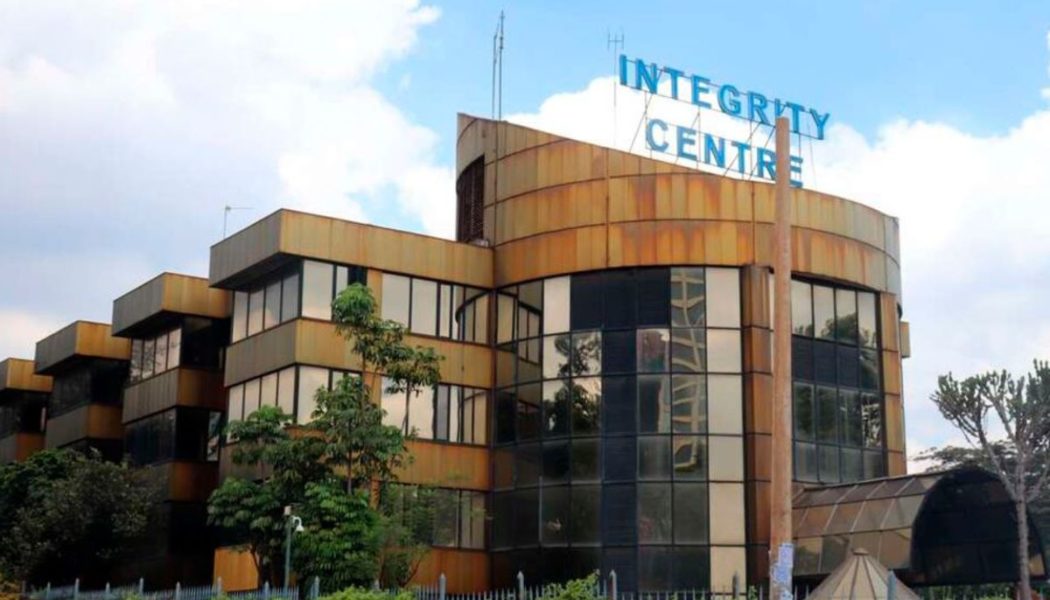
The United Nations (UN) has opened an audit of one of its programmes in Kenya after investigations revealed that some senior Treasury officials siphoned Sh1.55 billion for personal use.
The move comes after investigations by the Ethics and Anti-Corruption Commission (EACC) found officials took advantage of weak management systems to siphon funds meant for the Programme for Rural Outreach of Financial Innovations and Technologies (PROFIT), jointly funded by the Kenyan government and the International Fund for Agricultural Development (IFAD).
IFAD is a specialised agency of the UN that addresses poverty and hunger in rural areas of developing countries.
“While the Fund cannot comment on ongoing legal proceedings, we take this and all allegations of fraud seriously. Ensuring IFAD resources are used for their intended purposes is essential to our mission and enables every investment to deliver for small-scale farmers and rural communities,” the UN agency told the Business Daily.
“In accordance with IFAD’s zero-tolerance approach to fraud, corruption and other prohibited practices, we have referred this matter to the Fund’s Office of Audit and Oversight (AUO) and the Independent Office of Evaluation of IFAD (IOE) and are taking all necessary steps to safeguard the integrity of IFAD financing,” it added.
A report filed by the EACC in the High Court claimed there was plunder, including a Sh799.84 million cash withdrawal by an official who served as the accountant for the PROFIT programme. Court filings by the EACC indicate that part of the siphoned cash was used to purchase residential and commercial buildings in Nairobi, Machakos and Uasin Gishu counties.
The claims are based on documents filed by the EACC, and the accused have not filed their responses to the allegations.
IFAD now says that after being made aware of the court filings by the EACC, it has set in motion its own internal investigations on the matter, in order to safeguard the integrity of its funding programmes.
The UN agency, however, noted that the alleged theft of funds took place after the project was closed and its oversight ceased, in 2019.
The High Court has allowed the EACC to seize the assets and barred the Treasury officials and their associates from transferring, withdrawing or dealing with the assets and funds held in bank accounts pending the hearing and determination of a recovery suit filed by the anti-graft agency.
Those named in the court documents over the scandal include a former accountant of the PROFIT programme, Billy Otieno Obango, Gladys Julliet Chepkarat, John Maina Muriithi (Senior Accountant at the National Treasury), Nemwel Moturi Mutonya (Senior Accountant at the National Treasury), John Ngure Kabutha, Lilian Wanjiku Dishon (Senior Deputy Accountant General at the National Treasury).
Others listed in the court documents are George Kihara (Head of Accounting Unit at the National Treasury), Susan Warukira (Principal Accountant at the National Treasury), Sylvia Awino Obango, Philip Sigo Chepkarat, 020 Investments Limited (a firm whose directors the EACC claims in court documents to be Gladys Juliet Chepkarat’s children) and Jarods Agency Limited.
The commission claims that the funds were illegally drawn by Mr Obango and Ms Chepkarat and channelled to various entities, with part of the money allegedly used to acquire properties including residential buildings in Nairobi, Athi River and Eldoret.
Court documents show that in March and May 2023, residual funds amounting to Sh206 million were transferred from the PROFIT account to an account belonging to the Rural Kenya Financial Inclusion Facility (RK-FINFA) at Housing Finance Bank.
The EACC says a further Sh1.379 billion was released from the Treasury to the programme’s Co-operative Bank of Kenya account. Of this amount, Sh579.3 million was allegedly transferred to various entities, while Sh799.8 million was withdrawn in cash by Mr Obango.
The commission further claims that between November 2019 and June 2022, three signatories to the PROFIT account colluded to transfer Sh81.4 million to 020 Investments Limited, which investigators describe in court documents as a proxy company linked to Ms Chepkarat.
The anti-graft agency also alleges in its court documents that in October 2022, Mr Obango and Ms Chepkarat fraudulently opened a KCB Bank Kenya account in the name of PROFIT using false documents after the programme had already ended. The EACC added that Sh175.3 million was subsequently disbursed from the Treasury into the account.
Investigators say the fraud was facilitated through fake payment vouchers seeking funding for PROFIT activities, allegedly backed by requests originating from IFAD, despite the donor having ceased financing the programme at this point.
Total funding for PROFIT was $30.89 million (Sh4 billion), with $30.33 million (Sh3.93 billion) being sourced from IFAD and the government contributing $561,000 (Sh72.7 million).
The programme was launched on December 22, 2010, operating under the Treasury’s Directorate of Budget, Fiscal and Economic Affairs, and ended in December 2019.
On its site, IFAD says it has committed $581.9 million Sh75.4 billion) to 21 projects in Kenya, which have a total cost of $1.25 billion (Sh161.5 billion).
The UN agency has recently offered long-term, concessional funding to the government for its food security, climate change mitigation and subsidised fertiliser programmes.
In January 2026, the Treasury secured €78.9 million (Sh11.7 billion) from IFAD to fund fertiliser imports ahead of the March 2026 planting season.
In June 2025, IFAD and the government inked a $126.8 million (Sh16.4 billion) loan agreement for the Integrated Natural Resources Management Programme, which was designed to address challenges of environmental degradation and climate change in rural Kenya.
The loan was on blended finance terms, attracting an annual interest charge of 1.41 percent, a 1.39 percent service charge, a 25-year repayment period and a five-year grace period.