
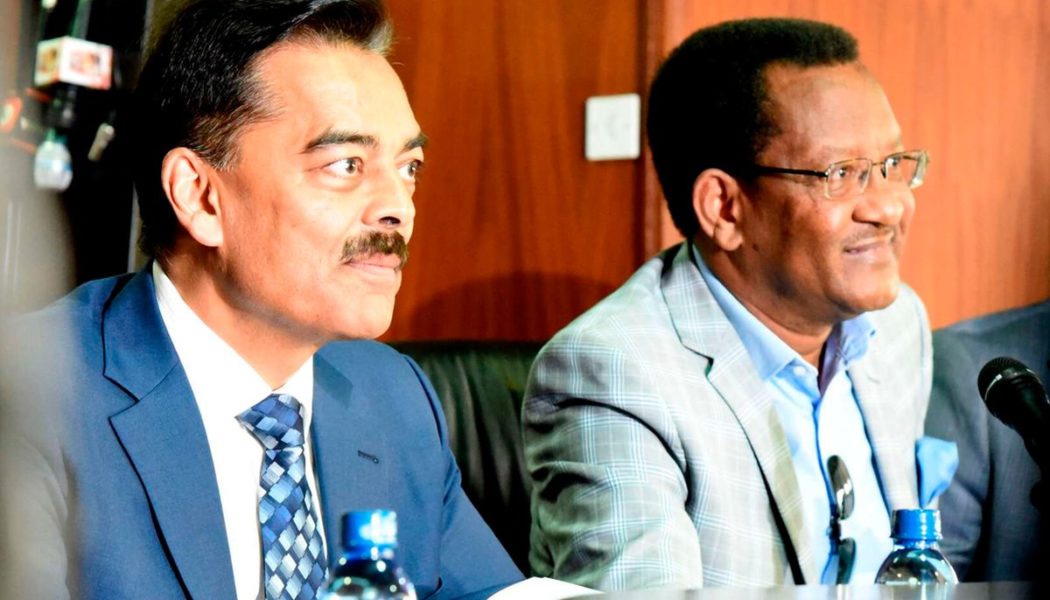
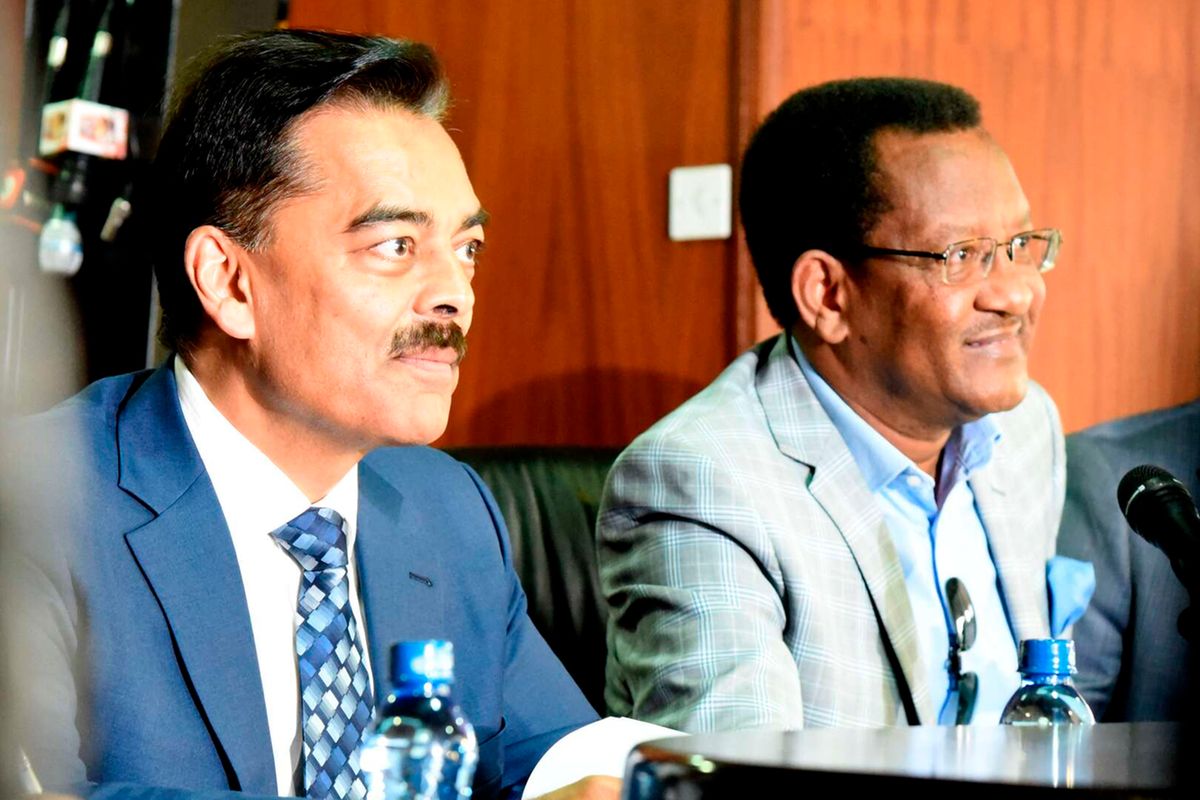
An investment vehicle associated with Bidco Africa Chairman Vimal Shah and former Central Bank of Kenya Governor Nahashon Nyagah is set to lose its stake in Tatu City, bringing to a near end a dramatic decades-long battle for control of the multibillion-shilling real estate project.
This follows the loss by Stephen Mbugua Mwagiru, one of their associates, in his bid to stop the disposal of shares held in two Mauritian-registered special purpose vehicles that ultimately linked them to Tatu City.
Mr Mwagiru had moved to the Privy Council—the equivalent of Kenya’s Supreme Court in Mauritius—seeking to stop the sale of shares he held in the Mauritian investment holding companies Cedar IV and Cedar V through Manhattan Coffee Investment Holdings.
The two Cedar companies, registered in the Indian Ocean tax haven, indirectly hold interests in Tatu City and related real estate investments in Kenya.
For nearly two decades, Tatu City’s foreign majority shareholders and Kenyan minority shareholders have been locked in protracted court battles, triggering delays in a row that moved to the London Court of International Arbitration.
Manhattan Coffee Investment got into trouble in Mauritius after it defied an order from the arbitration court to pay $15m (Sh1.94 billion) in damages to the foreign investors over the Tatu City development.
The London court ruled in February 2018 that Mr Shah, Mr Nyagah and Mr Mwagiru should pay for damages, interest and costs to SCF Holdings II after ruling they had defrauded the developer.
The minority investors did not challenge the settlement awarded by the London court within the permitted 28 days, but failed to pay, prompting the foreign partner to begin legal proceedings in Mauritius to enforce the ruling.
Manhattan Mr Shah, Mwagiru and Mr Nyagah’s holding company at the time of the suit is registered in the Indian Ocean tax haven.
Manhattan unsuccessfully fought against the liquidation, triggering the loss of shares it claimed in Tatu City, as the stock was the only asset associated with the investment firm.
The Privy Council dismissed the application, ruling that Mr Mwagiru lacked the legal standing to pursue the claim against the liquidation of Manhattan.
The Privy Council ruled that Mr Mwagiru lacked the legal standing required under Section 174 of the Insolvency Act 2009 to continue litigation on behalf of Manhattan Coffee after the company entered liquidation.
The court also found that a lower court had wrongly allowed him to pursue a derivative claim under Section 170 of the Companies Act 2001 because he was neither a creditor nor a shareholder of the company since the firm was under liquidation.
“For these reasons, the Board considers that the appellant had no standing to apply for an order under Section 174 of the IA 2009 for authority to continue the Plaint on behalf of and in the name of the Company. The Derivative Order was wrongly made at first instance, whether based on Section 170 of the CA 2001 or Section 174 of the IA 2009,” the five-judge bench said in its May 16, 2026 judgment.
It is yet another setback for Mr Mwagiru, who for nearly two decades has been embroiled in a bitter dispute with the foreign investor, Stephen Jennings, over control of the Sh240 billion Tatu City project.
Besides Mauritius, the battle has played out in courts across Kenya and London.
The Cedar entities are among the offshore holding companies through which ownership interests in the multibillion-shilling Tatu City development are held.
Mr Jennings is the chief executive of Rendeavour, whose subsidiary, SCF Holdings II, is the other shareholder in the Cedar companies.
The firm is the majority shareholder and developer of Tatu City, the Special Economic Zone situated off Thika Superhighway in Kiambu County.
Tatu City’s ownership structure comprises layers of offshore companies formed as special purpose vehicles for the project, according to court filings.
Cedar IV (Mauritius) Ltd owns 99.9 percent of Tatu City. The Mauritius company is in turn owned by two offshore entities—SCFE II (Cyprus) and Manhattan Coffee Investment Holdings (Mauritius).
Manhattan Coffee Investment Holdings was incorporated in Mauritius by local investors and is owned equally by two companies known as Redline Investments Corporation and Blacknight Holdings.
Former Tatu City director Josphat Kibogo Kinyua told the court that Mr Shah, Mr Nyagah and Mr Mwagiru were among the local investors in the multibillion-shilling project.
Manhattan Coffee Investment Holdings was wound up by the Mauritian courts in 2023 after failing to pay a nearly $15 million (Sh1.94 billion) arbitration award arising from claims that it had defrauded SCF Holdings II.
The London court found that Manhattan Coffee failed to pay a $20 million (Sh2.58 billion) deposit to the sellers of some of the land on which Tatu City is being built, despite repeatedly claiming that it had done so.
It ruled that the “false misrepresentation” affected SCF Holdings II’s investment strategy.
In his 127-page judgment, the arbitrator described part of Mr Shah’s testimony as “insufficiently consistent with the documentary evidence”.
In 2018, the London Court of International Arbitration awarded Mr Jennings $15 million (Sh1.94 billion) in damages against Manhattan Coffee Investment Holdings.
The court further ruled that the shareholders should pay interest and costs to SCF Holdings II after finding that they had defrauded the developer.
Mr Shah and Mr Nyagah did not challenge the arbitration award within the required 28 days and subsequently failed to settle the debt.
This prompted Mr Jennings to petition a Mauritian court to wind up Manhattan Coffee Investment Holdings and place its assets, including its shares in the Cedar companies, under liquidation.
Mr Mwagiru’s petition was driven by concerns that, after securing the $15 million arbitration award and forcing Manhattan Coffee into liquidation, SCF Holdings II could acquire the company’s Cedar shares from the liquidators.
In such a scenario, SCF Holdings II would be able to offset part of the purchase price against the debt it already owed, potentially increasing its control over the Tatu City investment structure at a discount.
The idea of building an idyllic mixed-use city on more than 5,000 acres was mooted in the late 2000s, fuelled by the Mwai Kibaki administration’s ambitious vision of transforming Kenya into a middle-income economy.
At the time, the newly completed Thika Superhighway had opened up the area to increased investment in residential, commercial and industrial developments, a prospect that attracted the investors behind Tatu City.
However, it did not take long before the project was engulfed in shareholder wrangles that delayed its rollout by several years and triggered a protracted legal battle spanning multiple jurisdictions.
As far back as 2010, Mr Mwagiru and his mother, Rosemary Wanja, filed a petition seeking to dissolve Tatu City Ltd, claiming that directors and other shareholders had excluded them from the affairs of the company.
However, the courts ruled that they could only be compensated for the one share each directly owned in Tatu City and sister company Kofinaf.
Justice Daniel Musinga directed that the value of the shares be determined by an independent valuer, saying that relations between the parties had irretrievably broken down and that disengagement was the only viable remedy.
“I will not, however, make a winding-up order since there is an alternative remedy available and that is the acquisition of their shares by the majority shareholders at a fair value,” ruled Justice Musinga.
Mr Mwagiru and Ms Wanja claimed that they owned 14.5 percent of Tatu City and 15.8 percent of Kofinaf, claims disputed by the majority shareholders.
While accepting that the petitioners had demonstrated ownership of some shares in Tatu City through offshore companies, the judge held that Kenyan courts lacked jurisdiction to determine shareholding disputes in those firms because the parties had agreed that such disputes would be resolved under English law.