

Business
Wazupnaija – Naija Entertainment blogs & Forums – Business


Smashing crypto adoption barrier? Solana aims to do its own ‘thing’
There was a lot of talk at SALT Conference 2021 about Solana Labs, the supersonic racer of layer-one blockchain networks. Not surprisingly, much of that conversation centered on speed — or, in network parlance, transactions per second (TPS). If blockchain technology is ever to achieve mass adoption — 1 billion users, say — then it has to get faster, said Sam Bankman-Fried, CEO of crypto exchange platform FTX, in a Monday morning panel session, adding, “You can’t have 1 billion people using a chain that has 10 transactions per second. It just doesn’t work.” To put things in context: Credit card giant Visa’s payments system processes about 24,000 TPS, while Ethereum, the first smartchain-enabled blockchain network upon which most DeFi and NFT applications still run, does about 30 TPS, though...
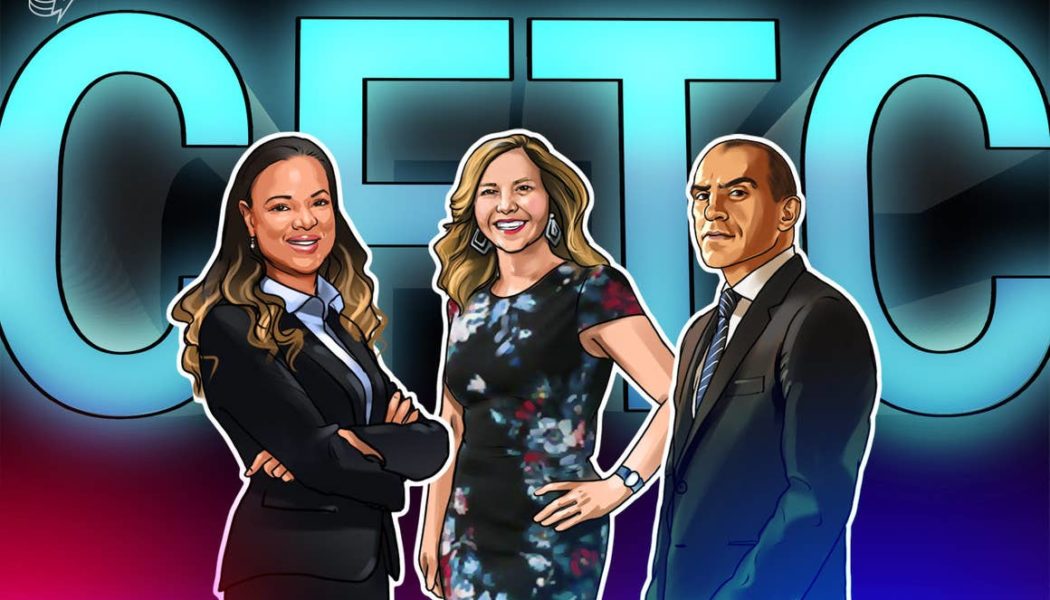

CFTC renewed: What Biden’s new agency picks hold for crypto regulation
On Sept. 14, United States President Joe Biden revealed his picks to fill two vacant seats at the United States Commodity Futures Trading Commission (CFTC). In addition, the president nominated Rostin Behnam, who has run the derivatives regulator as acting chairman since January, to assume the office on the permanent basis. The appointments are unlikely to face serious obstacles on their way to confirmation, as nominees will have to secure a simple majority vote in a Senate currently controlled by Democrats. What can the crypto industry expect of the CFTC if Behnam assumes permanent chairmanship and Kristin Johnson and Christy Goldsmith Romero join the agency as commissioners? Bringing the commission up to strength In 2015, the CFTC came forward and defined Bitcoin (BTC) and other digital ...


Bitcoin is great, but real crypto innovation has moved elsewhere
Something is brewing, and those with finely tuned noses can smell it. As traders have come to expect, Bitcoin (BTC) is doing “Bitcoin things” by bouncing around between the usual “key” support and resistance levels, and to be honest, it’s all starting to feel a bit boomerish. Bitcoin’s long-awaited “moon” depended on institutional investor buy-in, breaking the previous all-time high at $19,000, and a set of other firmly held beliefs. Well, all that happened, and the run to $64,900 exceeded many investors’ wildest dreams. But despite this, the entire BTC situation just feels predictable and boring if you are of the opinion that the top-ranked cryptocurrency will eventually top out around $100,000 in the current bull market. So, back to what else is brewing… Decentralized autonomous organiza...


Cardano price dips after smart contract launch, Walmart working with Litecoin is fake news, Coinbase raises $2B from junk-bond sale: Hodler’s Digest, Sept. 12-18
Coming every Saturday, Hodler’s Digest will help you track every single important news story that happened this week. The best (and worst) quotes, adoption and regulation highlights, leading coins, predictions and much more — a week on Cointelegraph in one link. Top Stories This Week Cardano launches smart contracts after successful hard fork After years of anticipation, Charles Hoskinson’s brainchild, Cardano, finally launched its smart contract functionality via the Alonzo hard fork on Monday. You’d think the result of this would be some bullish price action for ADA but, alas, its price dropped 10% following the rollout. While Cardano was keen to celebrate the milestone, it also emphasized in a blog post that it’s still in the “early days” of the project, adding that now is when “t...


American CryptoFed DAO seeks US SEC consent for stable utility tokens
American CryptoFed DAO, a Wyoming-based decentralized autonomous organization, has filed two forms with the United States Securities and Exchange Commission, or SEC, to launch two variants of inter-dependent stablecoins named Locke and Ducat. According to CryptoFed’s Form 10 submission, the tokens are awaiting their registration as utility tokens hosted on the in-house CryptoFed blockchain. However, SEC’s Form 10 is used to register securities for potential trading on U.S. exchanges and is thus not intended for so-called utility listings. The form submission entitles CryptoFed to automatically be recognized as a DAO in the U.S. after 60 days from the initial filing date, regardless of any outstanding SEC comments. CryptoFed’s filing suggests that Ducat is both an inflation- and defla...
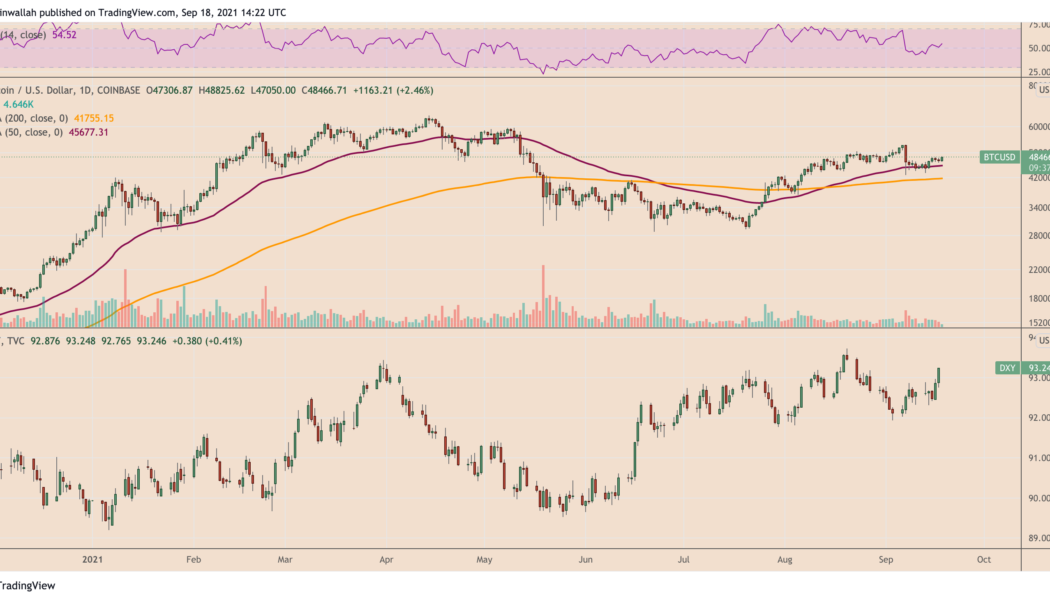

Bitcoin jumps toward $49K amid fears 5%-plus inflation is here to stay
Bitcoin (BTC) inched higher on Sept. 18 as the focus shifted to the Federal Open Market Committee’s (FOMC) policy meeting in the wake of lower inflation numbers last Tuesday. The BTC/USD exchange rate approached $49,000 on the Coinbase exchange, hitting $48,825 before turning lower on interim profit-taking sentiment. Nonetheless, the move uphill raised expectations that the pair would hit $50,000, a psychological resistance target, in the coming sessions. #bitcoin needs to get over $50,000 and just hold it. — David Gokhshtein (@davidgokhshtein) September 18, 2021 Inflation fears boost Bitcoin demand The Bitcoin markets received a boost from fears of persistently higher inflation, despite a softer consumer price index (CPI) report released on Sept. 13. Data showed that the U.S. CPI ro...


California named ‘most crypto ready’ US state
California has emerged as the most crypto-ready jurisdiction in the United States thanks to the proliferation of cryptocurrency ATMs and growing interest in digital assets among the state’s population, according to new industry research from review site Crypto Head. With a score of 5.72 out of 10, California edged out New Jersey (5.44), Texas (5.28), Florida (5.03) and New York (4.29) in the crypto-ready index. The state’s point total was also 2.54 points higher than the national average. The results were tabulated using metrics such as crypto-related Google searches, the presence of Bitcoin (BTC) and other cryptocurrency ATMs and the number of blockchain-related bills passed in each state. California ranked first in crypto-related Google searches per 100,000 and in the number of cry...
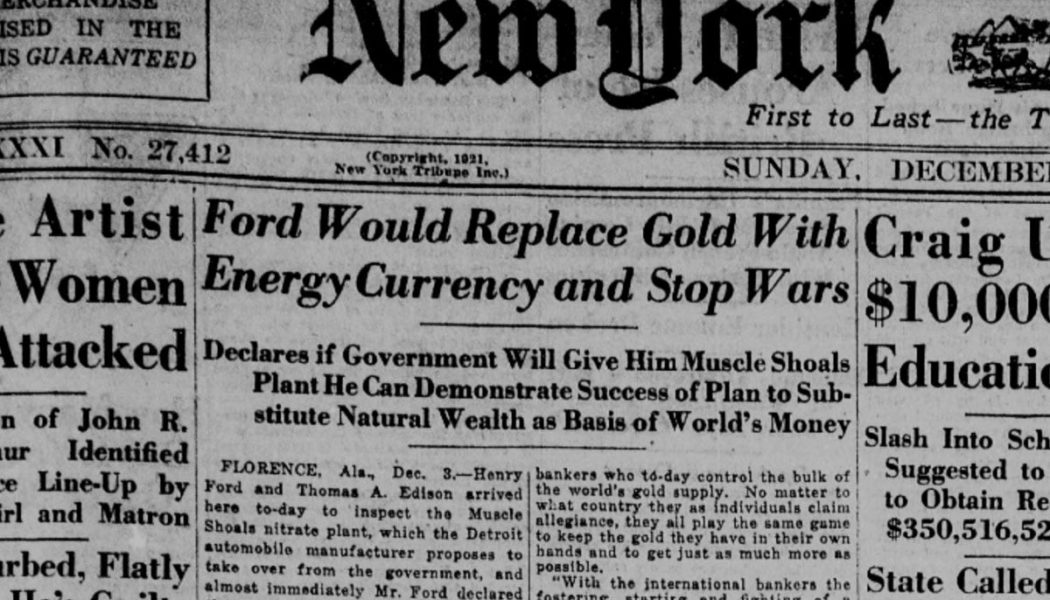

100 years ago, Henry Ford proposed ‘energy currency’ to replace gold
In 1921, American industrialist Henry Ford proposed the creation of an “energy currency” that could form the basis of a new monetary system — offering striking similarities to the peer-to-peer electronic cash system outlined in Satoshi Nakamoto’s 2008 Bitcoin (BTC) whitepaper. Front page of the New York Tribune dated Sunday, December 4, 1921. Source: Library of Congress Bitcoin as an energy currency On Dec. 4, 1921, the New York Tribune published an article outlining Ford’s vision of replacing gold with an energy currency that he believed could break the banking elites’ grip on global wealth and put an end to wars. He intended to do this by building “the world’s greatest power plant” and creating a new currency system based on “units of power.” Ford, who founded Ford Motor Company in...


Apple Held Its September Keynote Event and OpenSea Admitted to Insider Trading in This Week’s Business and Crypto Roundup
Many brands are starting to see a recovery despite the challenges initially brought on by the pandemic. Some businesses, especially ones that focused efforts on expanding e-commerce ventures, have even seen profits rise even higher than before. HYPEBEAST has rounded up the top business and crypto stories of the week so you can stay in the know about trends across industries. Business 1. Apple held its annual September Keynote event, unveiling several updated gadgets The annual event began at 10 a.m. PT and included new iterations of the iPhone, iPad and Watch. Watch the full recap below. 2. Epic Games filed an appeal against the ruling in its court case against Apple Last week, a judge rewarded Epic with a victory that ordered Apple to make changes to its app store. Sti...
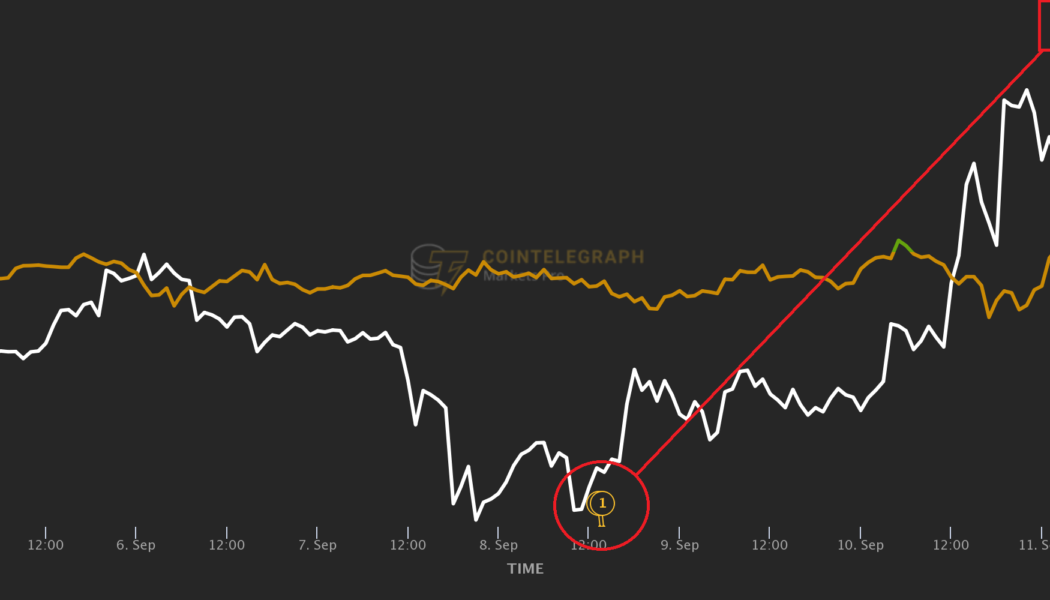

Here’s how traders knew LUNA and RAY were on the verge of a bullish breakout
Online information flows have a tremendous influence on the prices of crypto assets. Just this week, investors witnessed how even fake news can sometimes make the market value of a token explode, even if for just an hour. Fortunately, the effects of legitimate news tends to last longer, but the trick for investors is to figure out which stories to look at when making trading decisions. Extensive research suggests that there are three types of news announcements that consistently affect crypto prices: exchange listings, staking program launches and new partnerships. While there hasn’t been a legitimate partnership announcement that resulted in massive price movements lately, two crypto assets benefitted immensely from last week’s listing and staking news. Specifically, the listing of ...
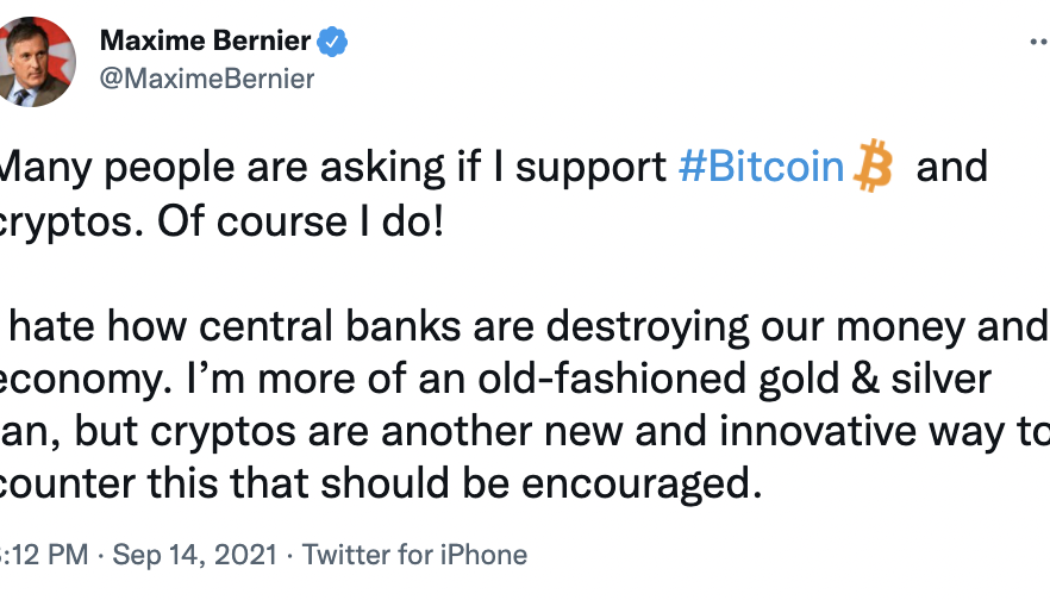

Canadian politician says he supports Bitcoin as federal election looms
Maxime Bernier, founder and leader of the People’s Party of Canada, has said he supports the adoption of cryptocurrencies in the country. In a Tuesday tweet, Bernier said cryptocurrencies are “another new and innovative way” to counter the actions by central banks, which he claimed are “destroying our money and economy.” The Canadian politician has criticized the Bank of Canada for “printing money” and called out Prime Minister Justin Trudeau for his economic policies. Bernier, a former cabinet minister known by some as Mad Max, has been outspoken in his criticism of vaccine mandates in Canada at a time when the number of COVID-19 cases in the country continues to rise. He has also advocated for ending lockdowns and mask mandates and against the rollout of a vaccine passport system. ...
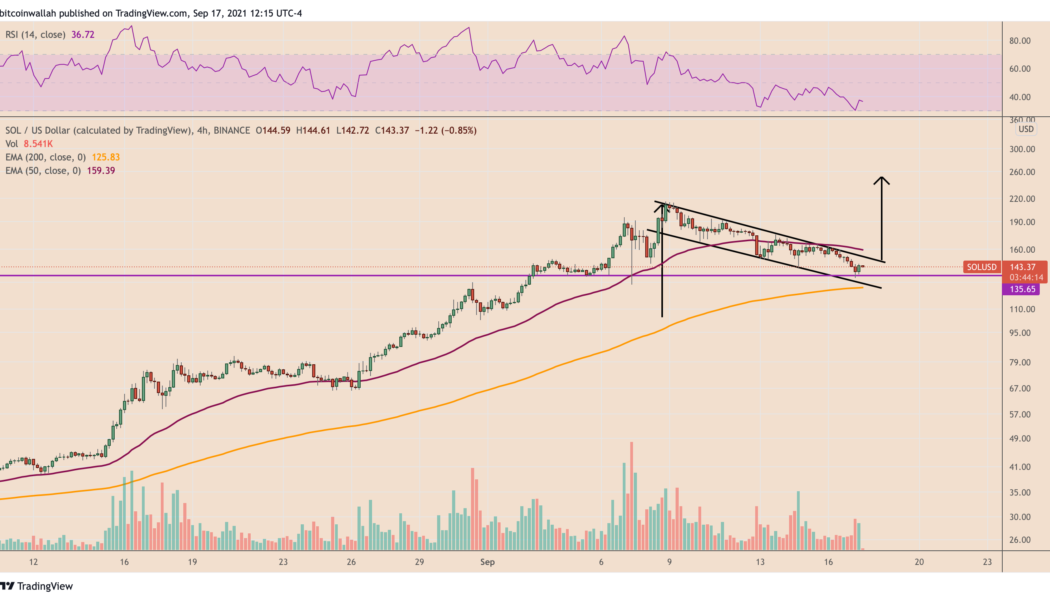

Solana chart ‘bull flag’ eyes $250 despite SOL price down 40% since last week
Solana (SOL) price extended its slide on Sept. 17 as a major network outage over the past week — pointing to heightened security risks — hit traders’ confidence. The SOL/USD exchange rate fell up to 13.27% to its intraday low of $133.53 in a corrective trend that began after it topped out near $221.38 on Sept 9. As a result, SOL’s price has crashed by almost 40% since its all-time high last week, despite more than tripling its value in the past 30 days. Outage hurts SOL price Solana backers tout its layer-1 blockchain solutions as a direct competitor to Ethereum. That is mainly due to its potential to ensure higher speed and lower transactions costs than the world’s leading smart contracts platform. However, on Sept. 14, Solana suffered a denial-of-service disruption, whe...
