
State of Art is a new HypeArt series inviting artists, curators, collectors and other leading voices to weigh in on the ideas, debates and cultural shifts shaping contemporary art. Through intimate questions and personal recommendations, the series offers a closer look at what is exciting the art world, what needs to change and where things may be heading next.
For the first spotlight, we spoke with Eli Scheinman, a curator and digital art strategist working across art, technology and collecting. Scheinman was the inaugural curator of Art Basel’s ZERO 10, the fair’s platform dedicated to art of the digital era, where he helps shape programming and brings together artists, galleries and interdisciplinary practices exploring how technology is changing the way art is created, experienced and collected.
Below, Scheinman reflects on Beeple’s kinetic sculptures, Sougwen Chung’s collaborative performances with robots and the art world’s continued reliance on tired digital formats. He also looks ahead to Trevor Paglen’s latest work in Venice, calls for more unexpected collisions across art and culture and explains why the current moment feels like “barbarians at the gates.”
Node
What’s the one show from the first half of this year that you can’t stop thinking about?
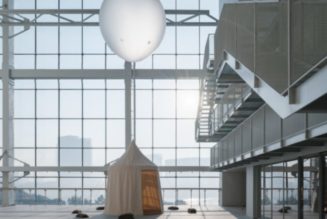
Beeple’s mid-career retrospective, Infinite Loop, at NODE in Palo Alto. For me, Beeple is one of the most incisive and important contemporary artists working today, and most people don’t realize it yet.
This was the first time his kinetic sculptures were exhibited together and the debut of a new work, “Machine Memory.” The show was chaotic, compelling and beautiful.
Did any artwork actually make you feel something real this year, or has everything felt a little flat? What was the work, and what was your first encounter with it like?
Sougwen Chung’s Recursions, shown at Art Basel Hong Kong in ZERO 10. It was one of my favorite individual works of the year. Her intimate performances, where she joins her robots in the coordinated gestural painting of a monumental ancient scroll, expose the critical tensions within human-machine collaboration. Very special.
What’s the one upcoming show you have marked on your calendar for the rest of the year, and why?
Strange Rules in Venice. I missed it during the opening but heard great reports. I need to see Trevor Paglen’s new work in person. I’m also a massive fan of co-curators Holly Herndon and Mat Dryhurst.
“Please, no more PDF catalogues. Find new ways to show work in digital environments”
If you had to give the 2026 art world a report card grade right now, what would it be and why?
B. I’m seeing small openings for emergent scenes and new ideas, but as usual, there’s still a lot of entrenched dogma throttling creativity in the art world that needs to be sanded away.
What’s one trend in the art scene you want to see disappear, and what’s one you want to see more of?
Fewer galleries presenting work in tired, predictable online formats. Please, no more PDF catalogues. Find new ways to show work in digital environments. It’s okay to have a point of view. I want to see more unexpected juxtapositions and collisions of work, ideas and experiences. Loïc Gouzer’s Fair Warning auction platform and New York events come to mind.
If you could sum up the art world right now in exactly three words, what would they be?
I need four: “Barbarians at the gates.”
If you could grab a drink or meal with any artist tonight, living or dead, who would it be, and what’s the first thing you would ask them?
My grandfather. He had the mind of an artist, even if he didn’t think of himself as one. He was a sociologist by training. I’d ask him what he thinks about creative work being externalized from the mind to models and machines.