

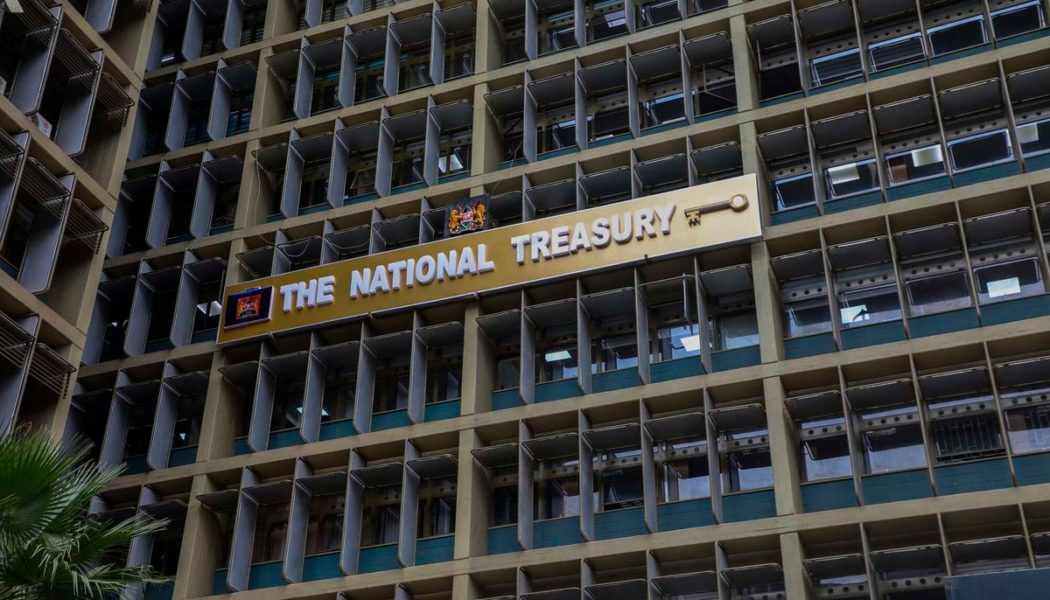
Kenya faces renewed debt-servicing pressure as the fallout from the Iran-Israel conflict threatens to keep borrowing costs elevated for longer, adding strain to a budget weighed down by rising interest payments.
A new forecast by an independent economic consultancy, Oxford Economics, warns that even if recent diplomatic efforts between the US and Iran lead to a lasting truce, the financial fallout from the conflict has already altered inflation and interest-rate expectations across Africa.
The consultancy says Kenya is among countries where expectations of lower interest rates have given way to forecasts of possible rate increases as policymakers grapple with the inflationary effects of higher fuel and food prices.
The report warns that higher borrowing costs will feed into debt-servicing expenses in countries already struggling to contain the growing burden of interest repayments.
“More concerningly, in other countries, including South Africa and Kenya, monetary policy has shifted direction: expectations of interest rate cuts have given way to forecasts of policy rate hikes,” analysts at Oxford Economics wrote in a report on Friday.
“This will feed into higher borrowing costs in two countries that are already struggling to arrest the rise in debt servicing costs.”
The warning comes as Kenya plans to borrow nearly Sh1.15 trillion in the financial year starting July to finance a deficit in the Sh4.82 trillion budget. The Treasury plans to raise Sh1.03 trillion from the domestic market and another Sh116.2 billion through external loans, exposing the country to both local and global borrowing conditions.
Treasury Cabinet Secretary John Mbadi has signalled concern over the potential fiscal fallout from the conflict.
“This war [in Iran] is very difficult to assess now. And if the war is going to continue, then we may be forced to re-assess our expenditure to align it to realities and revenue collections,” Mr Mbadi said earlier this month.
The Treasury is under pressure from a growing debt bill that has become one of the largest spending items in government expenditure.
“If you look at the budget, you’ll realise that the one line that has the highest increase is the CFS [Consolidated Fund Services],” Mr Mbadi said. “This is basically debt repayments and pension. These are numbers that you cannot change because if debts become payable, you will have to pay them.”
Interest payments are projected to consume Sh1.25 trillion in the fiscal year beginning July, up from Sh1.13 trillion in the year ending June 30. The new interest bill comprises Sh986.7 billion in domestic obligations and Sh267.5 billion in foreign debt repayments, compared with Sh883.76 billion and Sh242.76 billion, respectively, in the current fiscal year.
Oxford Economics says the conflict-driven surge in oil prices has complicated efforts to tame inflation, raising the likelihood that borrowing costs will remain higher than previously anticipated.
On June 9, the Central Bank of Kenya (CBK) retained its benchmark lending rate at 8.75 percent for a second consecutive meeting, citing uncertainty linked to the Iran conflict. Inflation rose to 6.7 percent in May, the highest level since January 2024, when it stood at 6.9 percent, edging closer to the upper limit of the government’s 2.5-7.5 percent target range.
“Having considered these developments, including the potentially transitory nature of the conflict, the committee concluded that the current monetary policy stance, with the Central Bank Rate unchanged at 8.75 percent, remains appropriate,” the CBK said.
Oxford Economics argues that the conflict has effectively reversed expectations of monetary easing in some African economies, including Kenya, as policymakers seek to prevent higher fuel costs from fuelling broader inflation pressures.
The consultancy also warns that external borrowing may become more expensive as the US Federal Reserve is expected to keep interest rates higher for longer.
“Furthermore, the US Fed is now also expected to keep its policy rate higher for longer, which will put upward pressure on external borrowing costs,” the report said.
The report adds that governments will also face pressure from weaker revenue growth and measures designed to shield households from rising fuel costs, making fiscal consolidation more difficult.