

Crypto news


B. Riley may purchase up to $100M stake in Bitcoin miner Iris Energy
Australia-based crypto mining firm Iris Energy has signed a deal with B. Riley giving the capital market company the option to purchase up to 25 million of its shares. According to a Friday filing with the United States Securities and Exchange Commission, Iris Energy inked an agreement with B. Riley Principal Capital II related to the “potential offer and sale” of up to 25 million of the Bitcoin (BTC) mining firm’s ordinary shares, worth $100 million. The filing states B. Riley has a 24-month timeframe to complete the purchase starting “as soon as practicable” after the effective date of the registration statement. Because Iris Energy qualifies as a “foreign private issuer” under U.S. securities laws, the firm said it intended to follow “most Nasdaq corporate governance listing standards” ...


Bitcoin was almost named Netcoin by Satoshi Nakamoto, hints domain data
Coming up with a good name is often one of the most challenging decisions one needs to make when launching a new service or business. Historical data of domain name purchases suggest that Satoshi Nakamoto, the creator of Bitcoin (BTC), had an alternate naming option in mind that did not make it to the whitepaper. Bitcoin.org, the website domain linked to the original Bitcoin, was created on Aug. 18, 2008, under AnonymousSpeech, a service in Japan that allowed users to buy domain names anonymously. Domain purchases under AnonymousSpeech around similar timelines revealed the creation of Netcoin.org on Aug. 17, 2008 — just a day prior to the creation of Bitcoin.org. Did you know? A day before the https://t.co/oDfOFzFVNi domain was first registered, someone purchased https://t.co/KLzoDxJjrz us...


NFTs bring in-game ownership to a new level, says Blokhaus founder
Nonfungible tokens (NFTs) have taken the gaming world by storm. Whether it’s through limited edition collectibles, avatar enhancement or play-to-earn incentivization, digital assets have given in-game ownership a new meaning. The ways in which NFTs are available to players are becoming increasingly tangible. In the case of Blockxer, the latest blockchain game from Blokhaus Inc., every component of the game has been NFT-ized and available for modification by users. Mark Soares, the founder of Blokhaus Inc., told Cointelegraph that when every aspect of the game is an NFT, users can create completely “bespoke” game experiences. Everywhere a user turns in this 8-bit, arcade-inspired game, there is an NFT — from the background and the characters to the weapons and more: “Imagine the ...

Tornado Cash saga left a void, says Chainalysis chief scientist: Finance Redefined
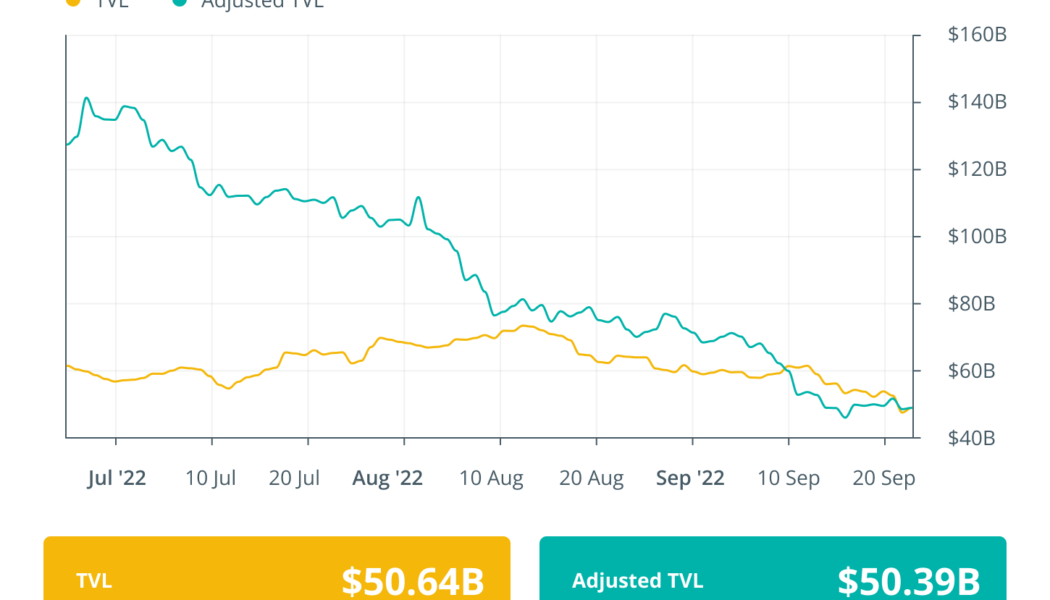
Welcome to Finance Redefined, your weekly dose of essential decentralized finance (DeFi) insights — a newsletter crafted to bring you significant developments over the last week. Chainalysis chief scientist shared his views on the Tornado Cash saga and said that the incident has left a void for illicit fund mixing services, but the real impact of the sanctions could be determined in the long run. The staking ecosystem of Ethereum post Merge could have a significant impact on the crypto economy, according to a new report. Institutional lending platform Mapple Finance launched a $300 million lending pool for Bitcoin mining farms. The Tribe DAO, a decentralized autonomous organization, voted in favor of repaying affected users of the $80 million exploit on DeFi platform Rari Capital’s liquidi...

Moscow Exchange drafting bill on digital financial assets and securities trading: Report
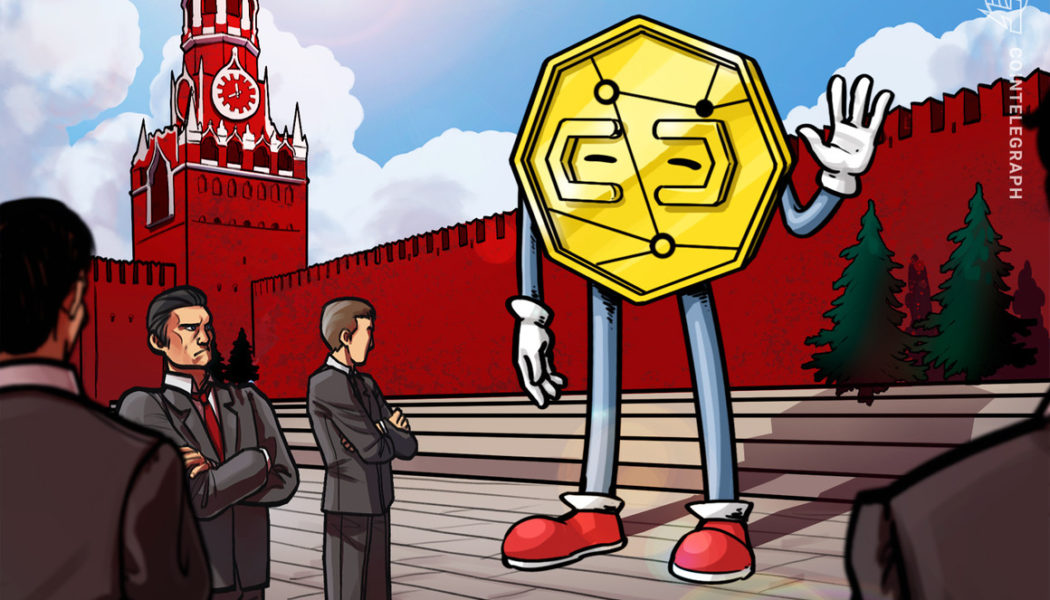
The Moscow Exchange (MOEX) is drafting a bill to allow trading in digital financial assets (DFAs) and securities based on them, according to a report in the Russian press. The stock exchange is writing the bill on the behalf of the Russian Central Bank, which does not have the power to introduce legislation, Vedomosti newspaper reported on Thursday. Speaking at a banking conference, MOEX supervisory board chair Sergei Shvetsov said the bill in preparation foresees trading in both DFAs and DFA certificates that would trade like securities. “The exchange and its subsidiaries will apply to the regulator and I hope that they will receive the status of exchange operators” to trade in DFAs, Shvetsov said. He added: “We want the market to make its own choice between blockchain accounti...


Crypto Biz: DID you see what Africa is doing with Web3?
If you’ve spent any time reading about blockchain and Web3, you know that this industry is filled with big buzzwords and half-baked concepts. But, concepts such as decentralized identity services, or DIDs, bring real meaning and utility to Web3. If you haven’t yet wrapped your mind around DID, it refers to a self-owned, independent identity that enables trusted data exchange. In other words, it puts digital identity management and administration directly in your hands instead of some third party’s. In this week’s Crypto Biz, we take a look at a Web3 partnership designed to bring DID-powered payment solutions to Africa. We also chronicle Maple Finance, the European Central Bank and Nasdaq. Payments platform Fuse integrates ChromePay to bring DID services to Africa Is Web3 even possibl...


Framework to ban members of Congress and SCOTUS from trading stocks includes crypto provision
Members of the United States House of Representatives and Senate as well as Supreme Court justices currently trading cryptocurrencies may have to stop HODLing while in office should a bill get enough votes. According to a framework released on Thursday, chair Zoe Lofgren of the Committee on House Administration — responsible for the day-to-day operations of the House — said she had a “meaningful and effective plan to combat financial conflicts of interest” in the U.S. Congress by restricting the financial activities of lawmakers and SCOTUS justices, as well as those of their spouses and children. The bill, if passed according to the framework, would suggest a change in policy following the 2012 passage of the Stop Trading on Congressional Knowledge Act, or STOCK Act, allowing members of Co...


Why is the crypto market down today?
Crypto prices keep falling, but why? This year’s market crash has turned most winning portfolios into net losers, and new investors are probably losing hope in Bitcoin (BTC). Investors know that cryptocurrencies exhibit higher than average volatility, but this year’s drawdown has been extreme. After hitting a stratospheric all-time high at $69,400, Bitcoin price crumbled over the next 11 months to an unexpected yearly low at $17,600. That’s a nearly 75% drawdown in value. Ether (ETH), the largest altcoin by market capitalization, also saw an 82% correction as its price tumbled from $4,800 to $900 in seven months. Years of historical data show that drawdowns in the 55%–85% range are the norm after parabolic bull market rallies, but the factors weighing on crypto prices today differ from tho...

Crypto gaming sucks — But devs can fix it
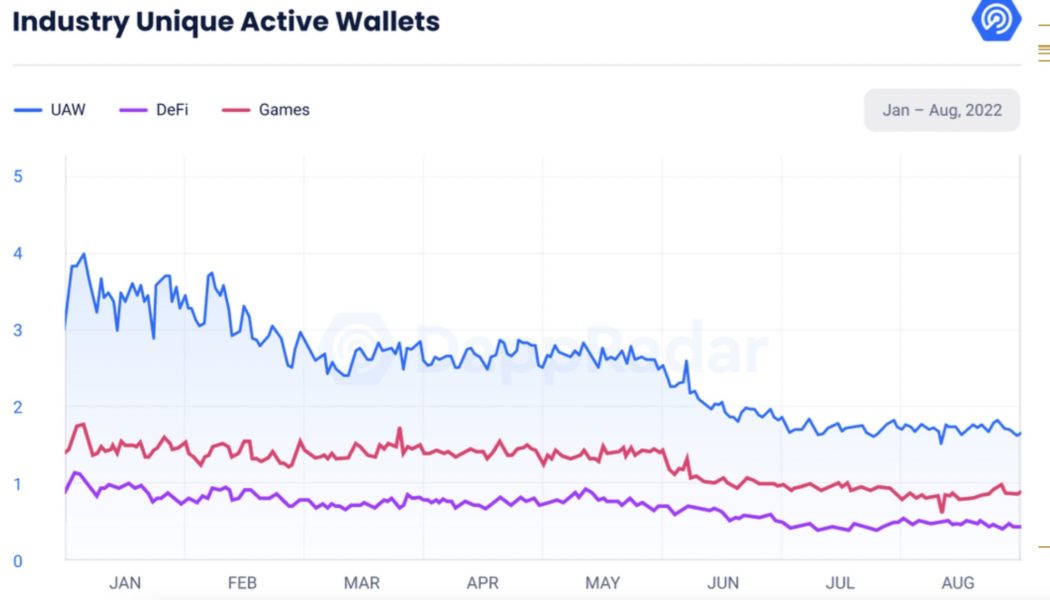
What we have today in terms of Web3 gaming is not working. Play-to-earn has not worked and neither will play-to-earn or any X-to/and-earn. On top of that, traditional gamers view nonfungible tokens (NFTs) with suspicion. They dunk on expensive apes and are skeptical of large game publishers applying the lipstick of NFTs for further monetization. Nobody knows what a successful Web3 game will look like yet. To get there, we need more developers to experiment with more models. We need infrastructure that will lower the barriers to Web3 game development and make it easy for developers to experiment. That’s why it’s imperative to invest in developing the underlying infrastructure rather than getting carried away by the speculative hype. The Web3 gaming infrastructure can be broken into two phas...


Pantera Capital’s CEO suggests blockchain growth will continue despite economic turmoil
The economic landscape may seem dire at the moment, but it’s unlikely to affect blockchain development, according to Pantera Capital CEO Dan Morehead. In an interview for Real Vision on Thursday, the venture capitalist said that he believes blockchain technology will perform based on its own fundamentals, regardless of the conditions indicated by traditional risk metrics: “Like any disruptive thing, like Apple or Amazon stock, there are short periods of time where it’s correlated with the S&P 500 or whatever risk metric you want to use. But over the last 20 years, it’s done its own thing. And that’s what I think will happen with blockchain over the next ten years or whatever, it’s going to do its own thing based on its own fundamentals.” ...

Web3 technologies could be a game changer for the travel industry
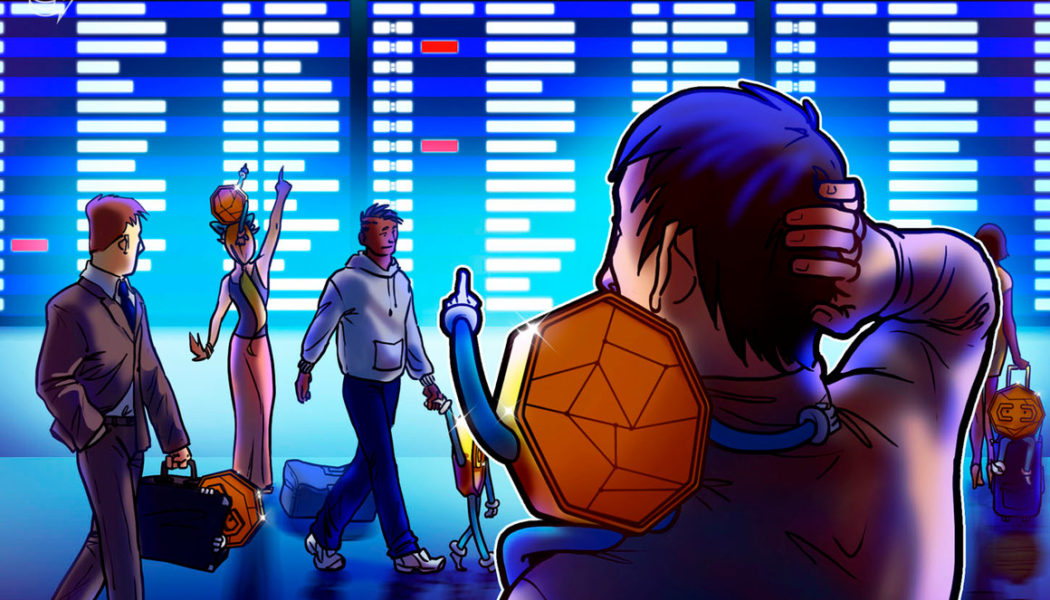
Many companies and industries are incorporating Web3 technologies into their business structures, and the travel industry is no exception. On Wednesday, Flybondi, an Argentinian airline, announced a strategic alliance with TravelX, a blockchain technology company responsible for tokenizing flight tickets. The partnership intends to enable travelers to purchase airline tickets as nonfungible tokens through Binance Pay, using USD Coin (USDC) as payment for transactions. Speaking with Cointelegraph, the co-founder of TravelX, Facundo Diaz, shared that he was fully convinced that Web3 technologies could allow the travel industry to expand, not only in market size but also in terms of use cases and benefits for travelers: “In 1990, there were 1.2B of airline passengers, and the industry’s marke...
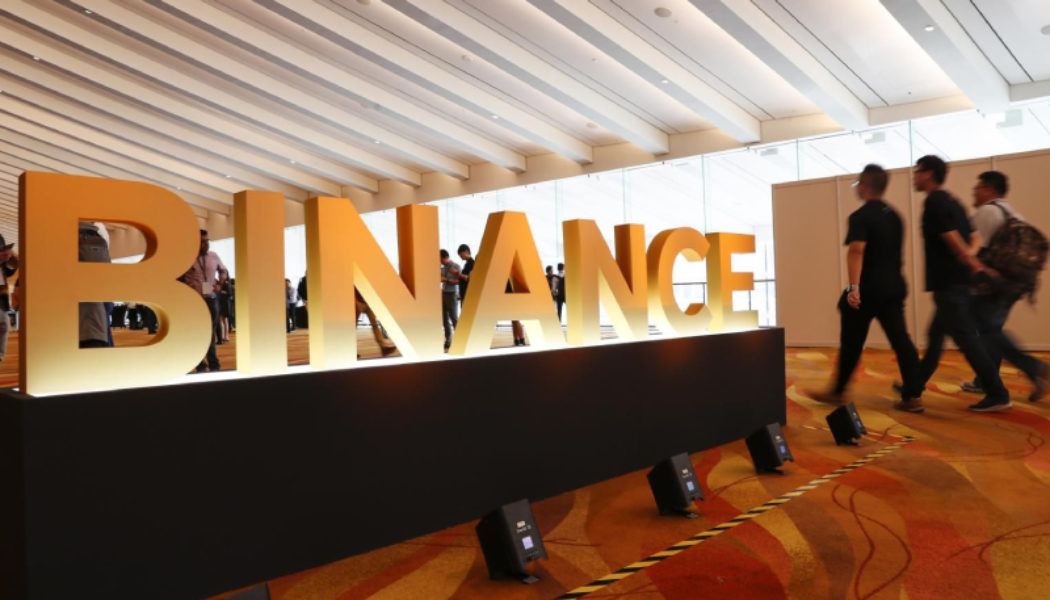

Binance Creates Global Crypto Advisory Board with Representatives from Nigeria & SA
We use cookies on our website to give you the most relevant experience by remembering your preferences and repeat visits. By clicking “Accept All”, you consent to the use of ALL the cookies. However, you may visit “Cookie Settings” to provide a controlled consent.
