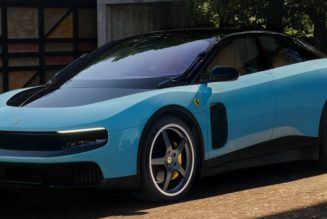

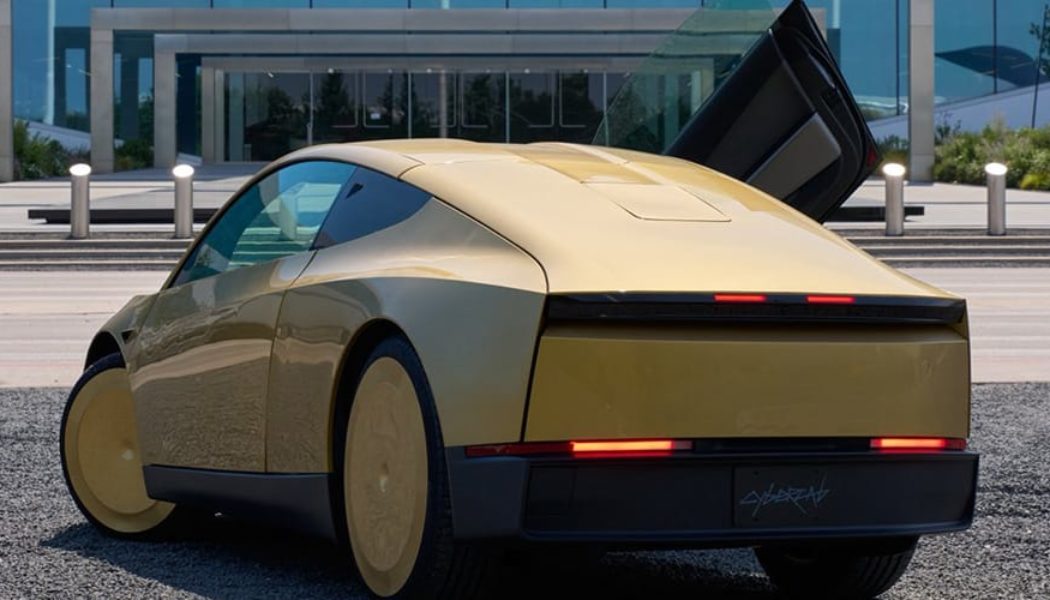
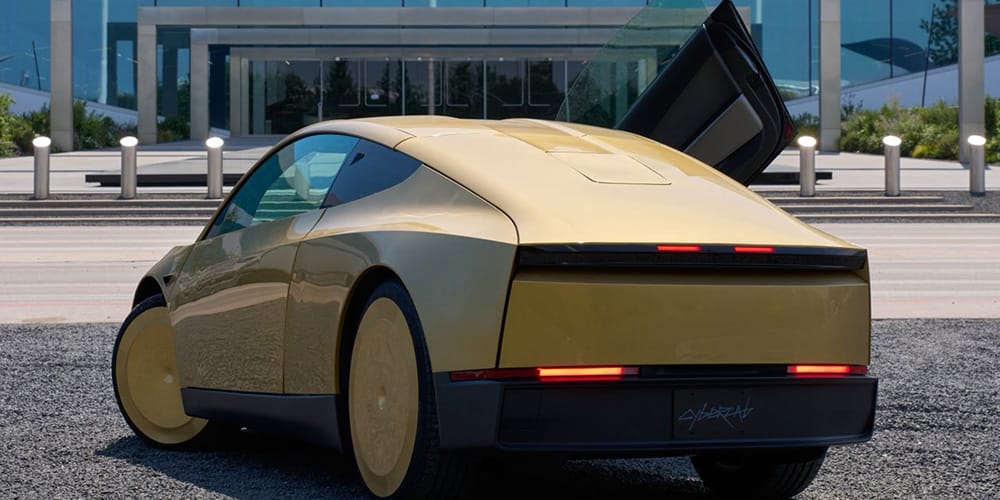
Tesla revealed a gold-painted Cybercab prototype at Giga Texas featuring a Starlink V5 dish integrated into the rear roof.
The integrated dish delivers speeds exceeding 375 Mbps, enabling 4K streaming, productivity tasks, and gaming for passengers.
Tesla officially revealed the first physical Cybercab equipped with built-in Starlink internet. The company transitioned from digital renderings teased last month to real-world hardware when its dedicated robotaxi account posted images of a gold-painted prototype parked outside Gigafactory Texas. The vehicle features a low-profile satellite dish mounted flush within the rear roof panel. The seamless aesthetic integration maintains the car’s minimalist exterior while fundamentally shifting how autonomous fleets secure data access on the move.
The physical arrival of this technology signals a deeper operational synergy between Elon Musk’s automotive and aerospace ventures. Hardware specifications point to the newly launched Starlink V5 dish. The receiver is capable of download rates exceeding 375 Mbps. High-speed data opens the door for premium in-car digital experiences. Passengers can stream 4K video, handle productivity tasks or game seamlessly while the vehicle navigates to their destination.
First Cybercab with @Starlink integration pic.twitter.com/8TI6LYSFjl
— Tesla Robotaxi (@robotaxi) August 10, 2026
Questions immediately surfaced regarding the necessity of a satellite connection for a self-driving car. The Cybercab relies entirely on Tesla’s onboard AI4 computer to navigate streets without human input. An active internet connection is never required for safe driving operations. Tesla Vice President of AI Software Ashok Elluswamy clarified that the satellite link serves secondary functions. The robust connection provides a critical backbone for fleet management, remote customer service and real-time navigation updates.
Current robotaxi testing focuses heavily on dense urban markets like Austin and Miami where traditional cellular coverage remains strong. Adding a satellite terminal to a $30,000 vehicle introduces extra cost and weight to the production line. However, the hardware ensures total connectivity in rural dead zones where 5G or LTE signals drop out completely.
The hardware deployment signals a much broader strategy across the entire automotive lineup. Musk recently stated that all future Tesla models will eventually feature Starlink terminals. The move frames satellite internet not just as a luxury add-on but as an essential infrastructure component for a truly global autonomous network.