

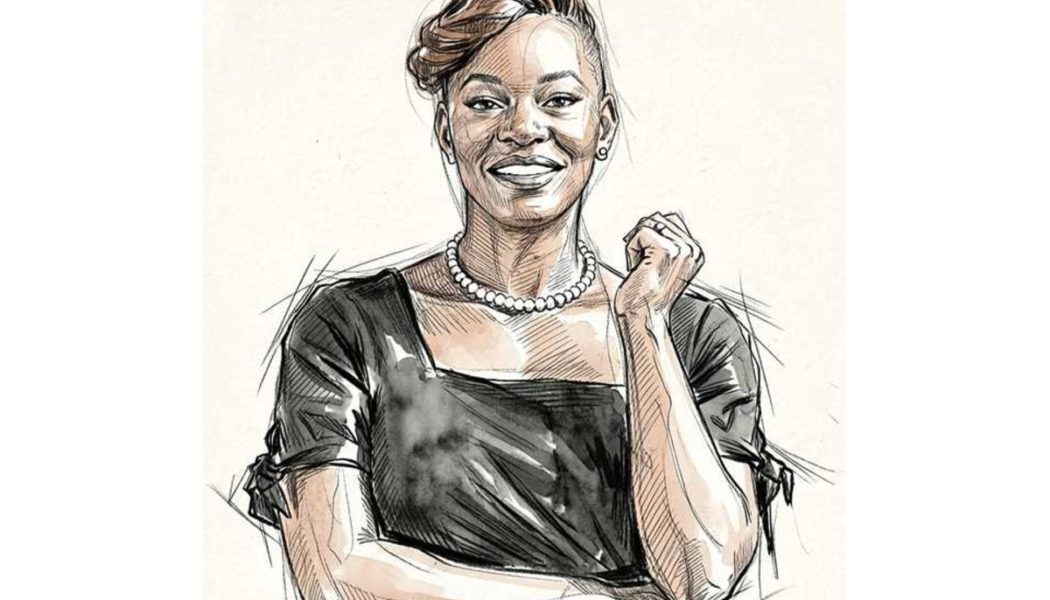
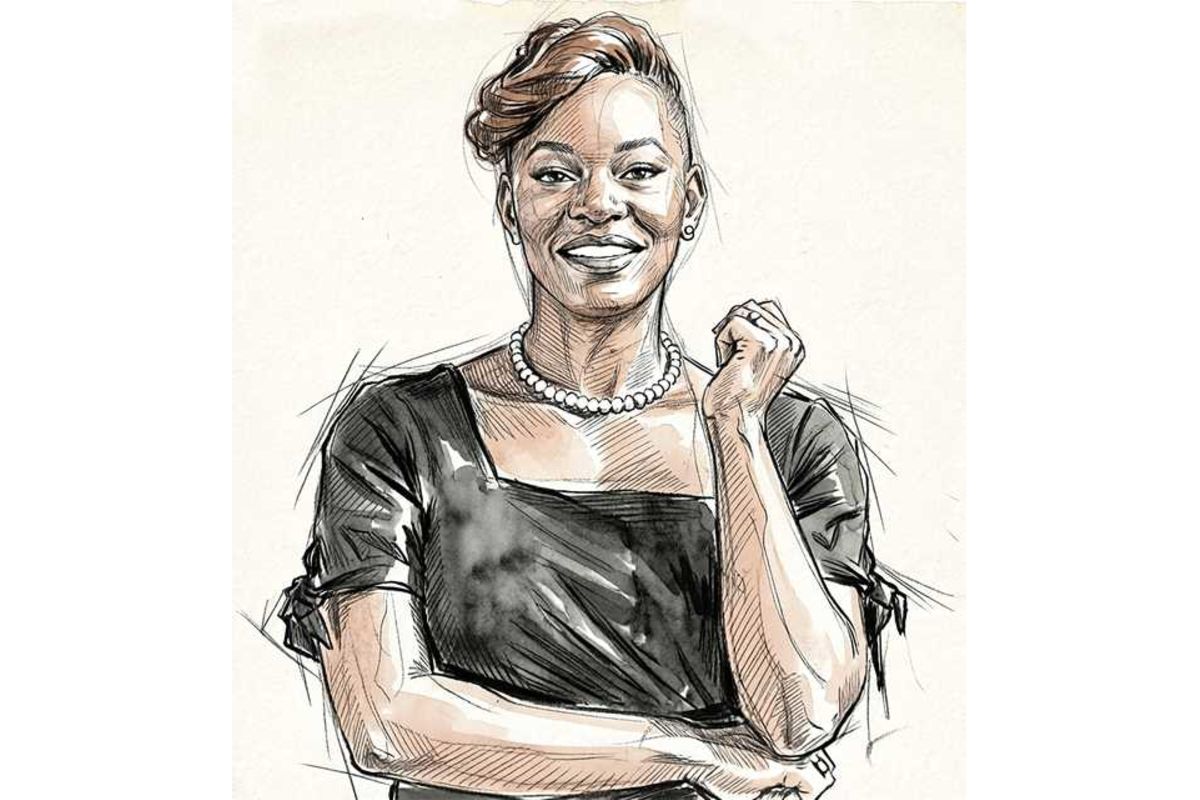
Esther Masese Waititu was just 23 when she joined the banking world as a graduate trainee.
Young, ambitious and fearless, she stunned the bank’s CEO during an introductory meeting by declaring that she intended to take his job one day.
In an earlier interview, Ms Waititu recalled that, even then, she believed the best job anyone could aspire to was that of a chief executive. When the CEO invited questions from the new graduate trainees, she wasted no time.
“I want to have your job. Can you show me how?” she asked.
It was a bold declaration from a fresh graduate, but one that would come to define a career marked by steady progression through Kenya’s corporate ranks.
Those who have followed Ms Waititu’s career may be forgiven for believing that she is edging closer to that childhood ambition after announcing she will leave Safaricom, where she has served as Chief Financial Services Officer since 2023.
Her departure ends a stint at Kenya’s largest telecommunications firm, fuelling speculation that a CEO role may be next.
“I wish to announce that Esther Waititu, our Chief Financial Services Officer, will be leaving Safaricom to pursue other opportunities. At her request, the company has agreed that her last working day will be July 31, 2026,” Safaricom Chief Executive Peter Ndegwa said in an email to staff.
Though her time at Safaricom lasted only three years, it coincided with some of the company’s most significant innovations. Before joining the telco, she had spent 13 years in banking, serving as KCB Group’s Director for Corporate Banking between September 2021 and February 2023 after holding several senior roles at Standard Bank of South Africa.
At Safaricom, she helped transform M-Pesa from a payment platform into a broader financial ecosystem, earning herself the title, “Mama M-Pesa”.
She oversaw the migration of the platform to the cloud-native Fintech 2.0 architecture, launched Daraja 3.0 to open M-Pesa’s rails to developers and championed products aimed at deepening financial inclusion, including Pochi la Biashara, Tuunza Mapato and device insurance.
Among her signature achievements was the rollout of Ziidi Trader, an integrated mini-app launched in February that allows M-Pesa customers to buy and sell shares on the Nairobi Securities Exchange directly from their phones.
Reflecting on her departure in a LinkedIn post, Ms Waititu said her goal had never been simply to build better payment technology but to make M-Pesa a platform that helps ordinary Kenyans save, borrow, insure themselves and build wealth.
“Three years ago, M-PESA was already Africa’s leading digital payment platform. I believed we could do more. With an exceptional team, we set out to make it a lifeline platform, one that helps people save for school fees, insure against risk, borrow to grow and build wealth for the next generation,” she wrote.
She said the launch of Ziidi Trader brought investing within reach of millions of Kenyans by placing the NSE “in the pocket of every M-Pesa customer,” while Fintech 2.0 and Daraja 3.0 laid the digital infrastructure for future innovations. The work, she added, reinforced her belief that financial inclusion and commercial performance are mutually reinforcing.
Long before she was helping reshape Africa’s largest mobile money platform, Ms Waititu was a young woman with big dreams.
Before joining banking, she briefly worked in a coffee shop, where she watched customers casually spend Sh250 on a cup of the beverage before ordering meals. Instead of seeing extravagance, she saw a future.
“I used to look at these guys spending Sh250 on just a cup of coffee before they had their sandwich,” Ms Waititu recalled.
“One day, it shall be me, and I will be served by someone like me on the other side. I wanted to be served with a smile and given options.”
Ms Waititu admits she did not grow up lacking. Her mother worked at property consultancy Knight Frank and the family enjoyed a comfortable upbringing.
Drivers picked them up from school. She attended Loreto Msongari Girls High School while her brothers studied at St Mary’s School, Nairobi. She later got admitted to the University of Eastern Africa, Baraton, though her first choice had been the University of Nairobi.
Her life has been guided by the same optimism that defines her career. She met her husband in the early 2000s at the popular Nairobi entertainment spot Kengeles, where a chance encounter blossomed into a lifelong relationship.
The two married, but not before learning one of life’s early lessons in managing the unexpected.
They had planned for about 400 guests at their wedding, only for almost 700 to turn up. Instead of panicking, they negotiated a payment plan with the venue before setting off on honeymoon.
Their destination was the Maldives, the idyllic Indian Ocean archipelago famed for its white sandy beaches, clear waters and luxurious overwater villas that have made it one of the world’s most coveted destinations.
“Things will not always work out perfectly,” she once said.
“But you have to negotiate and find your way to come out of there.”
That resilience would be tested again when she became a mother. Ms Waititu, who has twins, has spoken about the difficult pregnancy that left her hospitalised for several days after giving birth before she was finally discharged to join her newborns.
The experience deepened Ms Waititu’s appreciation for family and strengthened her resolve to pursue excellence at home and work.
Away from the office, she is an avid lover of music, art and travel.
Ms Waititu also enjoys dancing and admits that, after a demanding day, she does not mind stepping out for a night of dancing with family and friends.
Her love for music dates to the beginning of her career. One of the first major purchases she made after landing her first job was a sound system. She bought it on hire purchase.
She also developed a passion for collecting paintings and bought a car, much to the chagrin of her mother, who thought she should have invested in property instead.
“Money should be enjoyed,” she says.
“I have discovered as an adult that money is just a tool.”
Rather than measuring success by how much one earns, she believes people should focus on the quality of life they build.
“I shouldn’t be aiming to see how much money I am making. I should be aiming to see what type of life I want to lead,” she says.
That philosophy extends to travel. While many would rather use Sh1 million to buy land, she believes experiences are equally valuable.
“You have the plot, but I don’t know if you are going to have the experience and richness of life,” she says.
The confidence that led the 23-year-old graduate trainee to tell a chief executive she wanted his job has remained the defining thread of her life.
It carried her from serving coffee to leading one of Africa’s largest fintech businesses, through the demands of marriage, motherhood and executive leadership, and into the upper ranks of Kenya’s corporate world.
As she prepares to leave Safaricom after helping redefine the role of M-Pesa in Kenya’s financial system, the question is no longer if she is ready to lead a company.
It is which board will hand the ambitious graduate trainee the chief executive’s office she first set sights on more than two decades ago.
“I look forward to sharing more about my next adventure soon,” she said in her LinkedIn post.